
Indonesia’s digital payments market is projected to reach US$595 billion in 2026, marking a 13% increase from US$524 billion in 2025. Yet growing demand also brings tougher competition. Established players already have loyal customers, extensive merchant networks, and substantial advertising budgets.
For FinTech marketers, attracting new users requires more than competitive promotions. Brands need to understand local payment habits, reach relevant audiences, build trust, and give customers compelling reasons to keep using their products.
In this guide, we explore six practical FinTech marketing strategies for competing in Indonesia’s digital payments market.
- Indonesia’s Digital Payments Market: Growth and FinTech Potential
- Why FinTech Marketing in Indonesia Is Becoming More Competitive
- 6 FinTech Marketing Strategies to Grow Your Business in Indonesia
- Capture High-Intent Customers Through SEO and Google Ads
- Use Meta and TikTok Ads to Build Demand
- Reach Financial Audiences Through Telegram Ads
- Build Trust Through Financial Education and Influencer Marketing
- Improve Retention Through Lifecycle Marketing
- Grow Through Strategic Partnerships and Co-Marketing
- FinTech Advertising Regulations in Indonesia
- Wrapping Up
- FAQ
Indonesia’s Digital Payments Market: Growth and FinTech Potential
QRIS adoption in Indonesia shows how quickly digital payments are becoming part of everyday life. The country’s standardised QR payment system now connects 71.91 million users with 51.31 million merchants. QRIS transaction volumes grew by 70.95% year over year in October 2026.
For FinTech brands, this digital payments growth in Indonesia means a larger potential customer base and rising demand for convenient financial services. As digital transactions become more common, consumers and businesses expect financial services that are fast, reliable, and easy to use.
Indonesia’s expanding digital payments market makes it an attractive destination for FinTech businesses looking to acquire customers and grow their presence in Southeast Asia. However, competition in Indonesia’s FinTech market remains strong. Established providers already serve much of this demand, so brands entering the Indonesian FinTech industry need a clear value proposition and a marketing strategy tailored to local customer needs.
Why FinTech Marketing in Indonesia Is Becoming More Competitive
Indonesia’s FinTech market is growing fast, and so is the competition. Here’s what makes attracting and retaining customers more challenging:
Established digital wallets have a strong market position. GoPay, DANA, OVO, and ShopeePay are among Indonesia’s most widely used digital payment services. Their brand recognition, merchant networks, and integration with everyday transactions make digital wallet competition in Indonesia particularly challenging for new entrants.
Consumers expect more from their financial apps today. Indonesian consumers look for convenient onboarding, transparent fees, reliable transactions, and broad merchant acceptance. Competitive promotions may attract initial interest, but customers also evaluate how well a product fits their daily financial needs.
Building trust takes time and transparent product information. Financial services require customers to share sensitive information and, in many cases, complete identity verification. Unclear product terms, security concerns, or complicated registration processes can discourage potential users before they make their first transaction.
Acquiring users doesn’t guarantee long-term engagement. Discounts, cashback offers, and referral incentives can generate registrations, but some customers stop using an app once the initial promotion ends. To improve FinTech customer retention, brands need to give users compelling reasons to keep using their products after the initial incentive.
Addressing these FinTech marketing challenges requires relevant audience targeting, clear product positioning, and a focus on customer acquisition that delivers long-term value.
6 FinTech Marketing Strategies to Grow Your Business in Indonesia
FinTech customers may discover a product through search, social media, trusted influencers, or services they already use. These six strategies show how to reach them at different stages and encourage lasting engagement.
1. Capture High-Intent Customers Through SEO and Google Ads
People searching for financial products often have a specific need in mind. Google Ads allows FinTech brands to reach potential customers who are actively comparing providers or looking for financial solutions. SEO supports this by attracting organic traffic through relevant product pages, comparisons, and educational content.
Here’s how to turn search demand into customers:
- Target keywords based on search intent. Separate searches related to product comparisons, pricing, registration, and general information. Prioritise commercially relevant terms in paid campaigns and use negative keywords to filter out irrelevant traffic.
- Match landing pages to customer needs. Someone comparing payment providers should find information about fees, features, and integrations. Merchants searching for registration instructions need clear eligibility requirements, necessary documents, and application steps.
- Create useful localised content. Publish Bahasa Indonesia guides addressing questions about QRIS payments, transaction fees, account verification, and payment processing. This can attract relevant organic traffic and introduce potential customers to your services.
- Measure conversions that contribute to revenue. Track completed applications, verified accounts, and first transactions alongside acquisition costs. Use these results to identify which keywords and campaigns attract customers who actually use your product.
SEO and Google Ads work best when they inform each other. Use paid search data to identify high-converting keywords, then develop organic content around those topics to attract relevant traffic over the long term.
2. Use Meta and TikTok Ads to Build Demand
Meta and TikTok Ads allow FinTech brands to reach millions of potential customers in Indonesia, including those who aren’t actively searching for financial services. Instagram alone had an estimated advertising reach of 116 million users in late 2026.
For brands exploring how to market a FinTech app, these platforms provide ways to demonstrate everyday financial use cases, introduce product benefits, and encourage registrations or downloads.
To improve campaign performance, focus on these practices:
- Segment audiences by customer needs. Develop separate campaigns for consumers, merchants, and business owners where targeting options permit. Each audience should see a relevant product benefit and a clear next step.
- Demonstrate your product in action. Use short vertical videos that show the product and its main benefit within the opening seconds. Test different approaches, such as product demonstrations, customer scenarios, and explanations of fees or features.
- Retarget interested users. Reconnect with people who watched your videos, visited your website, or started registration without completing it. Address common concerns about security, costs, or onboarding requirements.
- Optimize for meaningful conversions. Track completed registrations, verified accounts, and first transactions. For example, TikTok’s App Promotion campaigns allow eligible advertisers to optimize for specific in-app actions, such as completed registrations or purchases, instead of focusing solely on app installs.
Before launching, check financial advertising eligibility. TikTok requires advertisers promoting certain banking and credit products in Indonesia to be registered with Bank Indonesia or OJK. Other financial products may face additional restrictions.
3. Reach Financial Audiences Through Telegram Ads
Telegram has a strong presence in Indonesia. In 2026, 52% of Indonesian internet users aged 16 and above reported using the app during the previous month. And for FinTech brands, the appeal goes beyond audience size. Telegram is home to thousands of active communities focused on business, technology, investing, and personal finance, where advertisers can connect with people interested in related topics.
With Telegram Ads in Indonesia, brands can reach these audiences through sponsored placements in channels, bots, and Search. Targeting options include specific channels, users, bots, and search keywords, which gives advertisers flexibility to reach people based on their interests and activity on the platform.
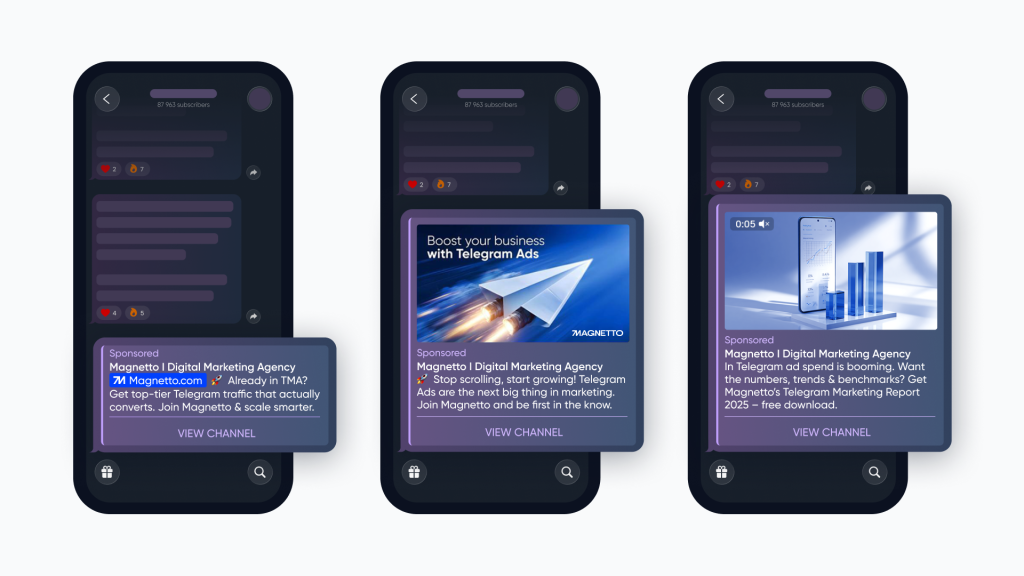
To illustrate, a digital banking app could target personal finance channels to promote its savings features, account benefits, or budgeting tools. Interested users could then be directed to the app’s website to learn more and open an account.
The choice of Telegram Ads account determines which destinations advertisers can promote. Fragment accounts support Telegram-only destinations, while Business Telegram Ads accounts, provided exclusively by Magnetto, offer euro-based billing and support external websites, landing pages, and app stores. This allows FinTech brands to direct potential customers straight to registration or onboarding pages, shortening the path from ad engagement to account creation.
Telegram also supports customer communication beyond advertising. FinTech brands can build their own channels to share financial education, product updates, and practical guides. Bots provide answers to common questions and guide users through available services. Such regular, useful communication keeps customers informed and encourages ongoing engagement with the brand.
4. Build Trust Through Financial Education and Influencer Marketing
People are cautious when choosing financial services. Before opening an account or making a transaction, they want to understand how the product works, what it costs, and whether they can trust the provider.
FinTech brands can address these concerns through educational content. Publish practical guides in Bahasa Indonesia covering payment security, account verification, transaction fees, and common financial questions. Use familiar examples and step-by-step demonstrations to explain complex features.
Influencer marketing can also play an important role in building trust. In 2026, 69% of surveyed Indonesians expressed trust in online financial influencers, compared with a global average of 44%. Their recommendations can also influence brand perceptions. Across 28 markets, 57% of people who trusted a financial influencer said they would trust or consider trusting a financial company they previously distrusted if that influencer endorsed it.
Telegram influencer marketing is particularly valuable for reaching people interested in specific financial topics. By partnering with channel owners who cover personal finance, investing, entrepreneurship, or technology, brands can share product reviews, expert insights, and educational content that addresses their audience’s needs. This approach builds brand credibility, generates interest among relevant audiences, and encourages potential customers to explore the product.
When choosing Telegram influencers, look beyond subscriber counts. Check how many views their posts receive, how actively their audience engages, and whether their content aligns with your product. Use trackable links to measure registrations and review sponsored content for accurate financial claims before it goes live.
5. Improve Retention Through Lifecycle Marketing
Getting people to sign up is only the beginning. If they never complete their first transaction or stop using your app after a few days, your acquisition costs can quickly add up.
Keep customers engaged with timely, relevant communication throughout their journey. For example, a digital wallet could introduce useful payment features after registration, while a digital bank might send step-by-step instructions for activating an account. If someone starts onboarding but doesn’t finish, a well-timed reminder could encourage them to return.
Use email, push notifications, and in-app messages based on customer behaviour. Someone who has just registered needs different information from a customer who hasn’t made a transaction in several weeks.
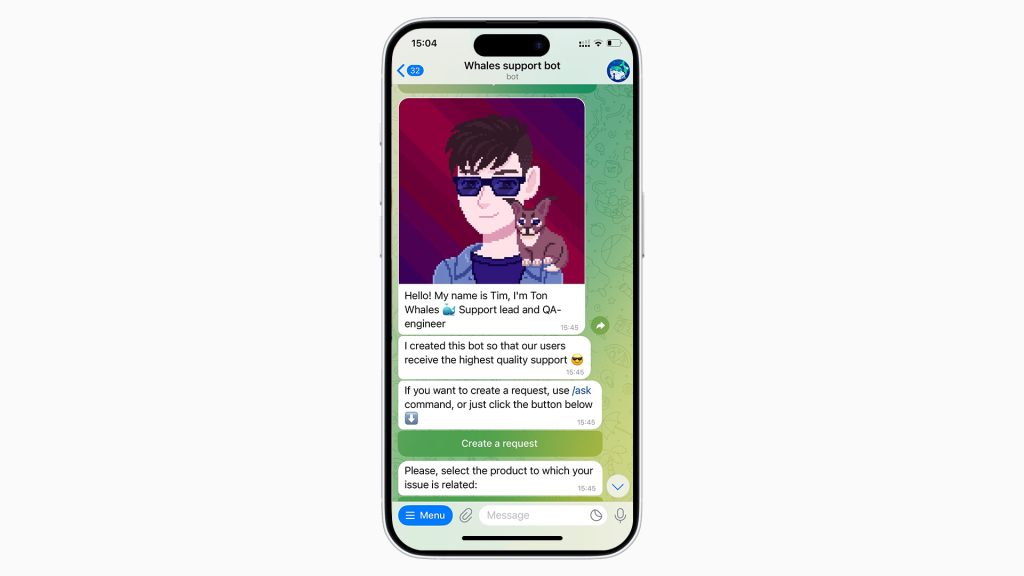
Telegram bots also make customer communication more convenient. FinTech brands use them to answer frequently asked questions, guide users through account setup, provide transaction updates, and direct customers to support when needed. With user consent, bots can also send personalised reminders and relevant product updates, keeping customers informed without requiring them to open the app.
Referral programs can bring in new users through existing customers. Offer rewards tied to meaningful actions, such as completing verification or making a first qualifying transaction, and clearly explain the conditions. This way, you reward customers who actually use your product and encourage them to stick around.
6. Grow Through Strategic Partnerships and Co-Marketing
Partnerships with established businesses are another valuable addition to FinTech customer acquisition strategies. They give brands access to potential customers through platforms and services those customers already use. In Indonesia, relevant partners include e-commerce platforms, retailers, business software providers, and other financial companies.
Take Bank Jago, for example. The Indonesian digital bank has partnered with GoTo Financial, Bibit, and Stockbit to integrate its banking services into popular payment and investment platforms. This approach has played an important role in customer acquisition. As of July 2024, 66% of Bank Jago’s more than 10 million funding customers had come through its partner ecosystem.
Focus on partnerships where your product solves a genuine customer need. The closer the connection between the two services, the easier it becomes to encourage adoption and continued use.
FinTech Advertising Regulations in Indonesia
FinTech advertising in Indonesia comes with specific rules, and overlooking them can lead to rejected ads, campaign delays, or regulatory problems.
Two main authorities oversee the sector: the Financial Services Authority (OJK), which regulates financial services, and Bank Indonesia, which supervises payment systems and related providers. FinTech marketing regulations in Indonesia vary depending on the product and the advertiser’s licensing status.
Before launching a campaign, check that your business has the necessary licences and that your ads clearly explain relevant fees, eligibility requirements, and product conditions. Be careful with promises about financial returns, and follow applicable rules for customer consent and personal data.
Each advertising platform also has its own policies. For example, Telegram’s advertising guidelines prohibit misleading financial claims, predatory lending, and other harmful financial promotions.
Review your ads and landing pages together to catch inconsistencies before submission. Involve your compliance team early, especially when promoting regulated financial products. This helps maintain FinTech compliance in Indonesia, reduces unnecessary revisions, and prevents avoidable campaign delays.
Wrapping Up
Indonesia’s FinTech market continues to grow, but attracting customers is only part of the challenge. Brands also need to earn their trust, encourage regular product usage, and compete with established financial platforms.
A strong marketing strategy combines relevant advertising channels, useful content, partnerships, and customer retention efforts. The right mix depends on your product and the audiences you want to reach.
As a Telegram Infrastructure Partner, Magnetto brings extensive FinTech advertising expertise, advanced AdTech, and AI-powered solutions to help brands reach relevant audiences, acquire customers, and drive measurable growth.
Looking to grow your FinTech business in Indonesia? Contact Magnetto to discuss your Telegram advertising strategy.
FAQ
How much should a FinTech company spend on marketing in Indonesia?
Your marketing budget depends on your product, target audience, customer acquisition goals, and expected customer value. New entrants should reserve enough budget to test several campaign approaches and collect meaningful conversion data. Include creative production, tracking, and campaign management costs alongside advertising spend.
How long does it take to see results from FinTech marketing campaigns?
Paid advertising may generate traffic and registrations within days, but evaluating customer acquisition quality usually takes longer. Financial products with identity verification or lengthy approval processes need more time to demonstrate results. Set an evaluation period based on your typical customer journey and the volume of completed conversions.
How can FinTech brands research competitors before launching campaigns?
Review competitors’ product features, pricing, onboarding processes, promotional offers, and customer feedback. Examine their advertisements and landing pages to understand which benefits they emphasise. Customer reviews and recurring complaints may reveal unmet needs that your product addresses. Use these findings to refine your positioning and campaign messages.
How can FinTech companies prevent fraudulent registrations and referral abuse?
Use appropriate verification checks, monitor unusual registration patterns, and review suspicious transaction activity. Referral programmes should have clear eligibility conditions and safeguards against duplicate or fraudulent accounts. Evaluate promotional campaigns using verified customers and legitimate transactions to avoid spending acquisition budgets on artificial activity.
What should FinTech companies test before scaling an advertising campaign?
Test different audience segments, creative messages, and landing page approaches to identify what attracts relevant customers. Change one major variable at a time where possible, so the results are easier to interpret. Before increasing budgets, check that your conversion data is reliable and that the campaign generates enough completed customer actions to support a decision.