A click tells you that someone noticed your ad and took action, but for businesses with long sales cycles, the real decision may still be months away. The B2B buyer journey has expanded from 211 to 272 days, while marketers now influence 81% of the full journey. Buyers spend roughly the first 220 days consuming content and educating themselves before entering the sales pipeline. For advertisers, this means the job extends well beyond generating the initial click.
Telegram can support that longer consideration period through ads, channels, bots, mini apps, and external destinations. In this article, we look at how to use those formats across different stages of the sales cycle, choose the right destination as buyer intent develops, and measure progress before the final conversion happens.
Why Choose Telegram for Long Sales Cycles
Long sales cycles require more than broad exposure. Advertisers need enough audience scale to keep acquisition efficient, precise targeting that can reach relevant audiences, and enough flexibility to move prospects toward different next steps as intent develops. Telegram brings those pieces together in one platform.
These are some of the main Telegram advertising benefits for brands working with longer decision periods:
- Strong global adoption. Telegram is the third-most downloaded messenger app worldwide, which gives brands access to a large audience across a wide range of markets.
- Direct access to niche communities. Telegram Ads can place campaigns in relevant channels, bots, and search environments, helping advertisers reach users based on the communities and topics they actively engage with.
- Strong fit for specialist and high-consideration categories. The app hosts multiple active communities around finance, crypto, technology, investing, education, property, and more. That makes Telegram Ads well suited to high-consideration products where buyers spend more time researching before they act.
- Multiple destinations for different levels of intent. Early-stage prospects can be directed to content, while higher-intent users can move to a bot, mini app, landing page, app store, or another conversion destination.
- Strong potential for market-by-market testing. Telegram campaigns can be structured around different geographies, languages, audiences, and messages, which matters for businesses selling across several markets with different buying cycles.
For brands using Telegram Ads for long sales cycles, the platform can support the stages between acquisition and conversion, including education, product evaluation, qualification, and higher-intent actions.
How Telegram Ads Work in a Long Sales Cycle
Telegram Ads are paid placements shown across the Telegram ecosystem, including channels, bots, and search. Telegram Ads targeting can be built around geography, language, topics, selected channels, and other available options, giving advertisers several ways to reach relevant audiences.
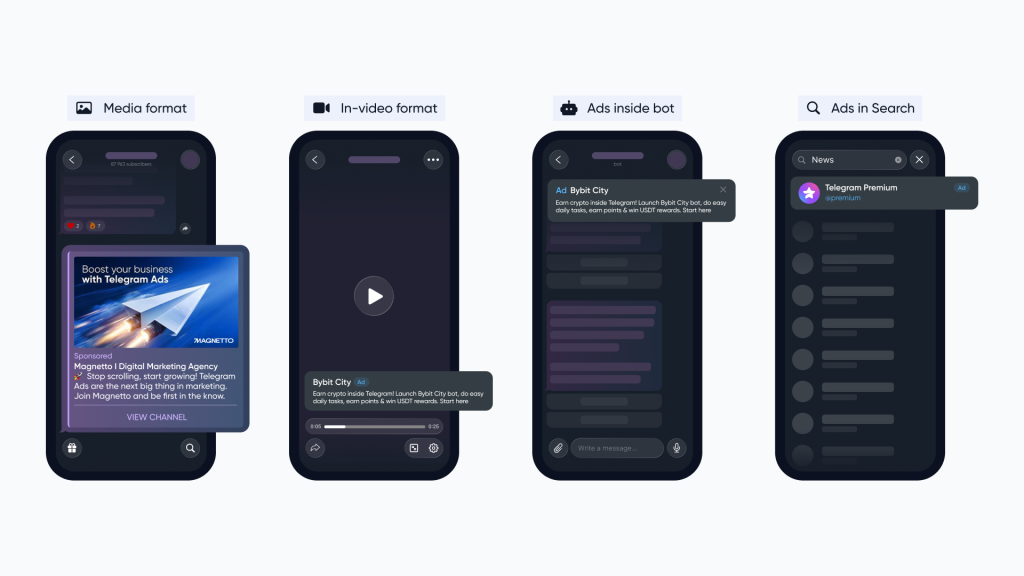
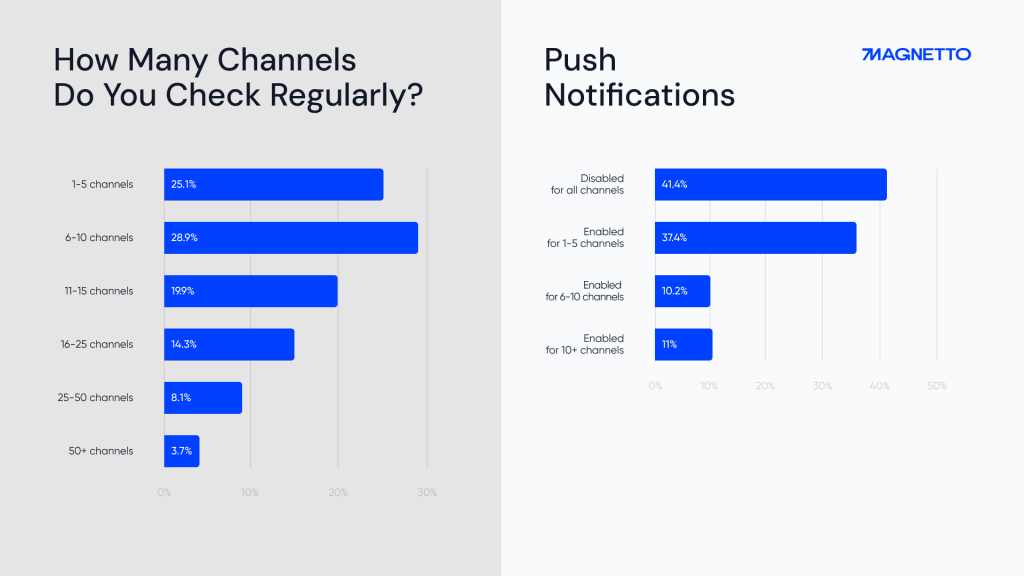
One of the biggest advantages of Telegram Ads placements is context. Ads appear alongside content users have actively chosen to follow, which can make the message more relevant from the start. Public broadcast channels generate 1 trillion views each month, while more than half of users regularly check between 1 and 10 channels, with many also keeping push notifications enabled. That gives advertisers repeated access to active, interest-led audiences in environments they already return to regularly.
The destination depends on the account type and campaign goal. Users can be sent to a Telegram channel, individual post, bot, mini app, website, app store, or another supported destination. This flexibility is central to a Telegram Ads funnel, because each destination can support a different stage of the buying journey.
For businesses with longer sales cycles, this setup creates a useful progression from discovery to action. The ad introduces the brand to a relevant audience, while the destination can support the next step, whether that is further research, qualification, product interaction, or a direct conversion.
How to Choose Telegram Ads Destinations by Buyer Intent
The Telegram Ads destinations should match what the buyer is ready to do next. In a long sales cycle, that can shift from learning and comparison to qualification, product interaction, and conversion. A well-structured Telegram marketing funnel should reflect those changes in intent.
Telegram Channels for Education and Continued Consideration
A channel can be useful when the main objective is to keep prospects engaged with relevant information over time.
90% of B2B buyers use social media while considering a purchase. That makes the quality of the content surrounding an acquisition campaign an important part of the overall strategy. A strong channel should help answer the questions buyers have as they move through the journey.
Early content might explain the problem or category. Later content can cover:
- case studies;
- product comparisons;
- customer results;
- common objections;
- industry developments;
- pricing considerations;
- implementation questions;
- product updates.
Over time, the channel becomes a live consideration environment where prospects can build confidence at their own pace.
Individual Posts for a Specific Decision or Message
Sometimes a prospect does not need an entire content environment. They need one specific answer.
An individual post can work well when the campaign is built around a particular question, offer, case study, comparison, product feature, event, or research finding.
The strength of this destination is focus. Instead of asking a prospect to explore a broad channel, the campaign can take them directly to the information most relevant to their current question. For example, an ad promoting a particular service could lead to a case study demonstrating how a similar customer achieved a result.
The post should then provide a logical next step. That could be joining the channel, starting a bot, requesting more information, visiting a website, booking a consultation, or taking another relevant action.
Bots for Qualification and Guided Next Steps
Telegram chatbots become more valuable when the business needs structured interaction. They can collect information, ask qualification questions, recommend the right product or service, distribute relevant resources, or route stronger prospects toward a salesperson or conversion page.
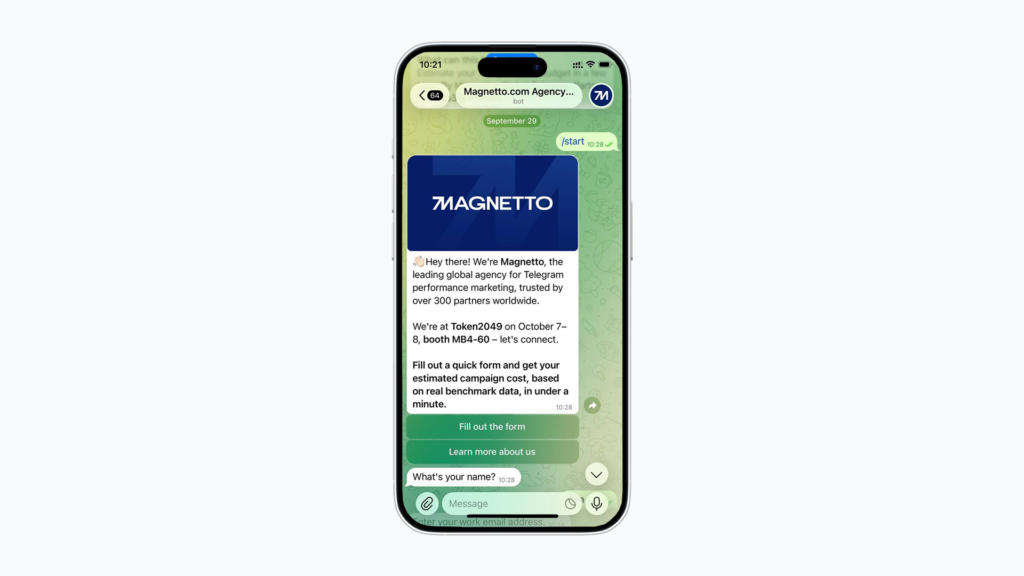
This makes bots especially useful in the middle of a longer funnel. A user may have moved beyond general education but still need help identifying the right option. A bot can guide them toward the next step before a sales conversation is needed.
That balance between self-service and human support matches current buyer behavior. While many buyers prefer to research independently, they still seek human input for decisions that require context or validation. The destination strategy should therefore make it easy for people to move from self-directed research into higher-touch support when they are ready.
Mini Apps for Interactive Evaluation
Each month, more than 500 million users interact with Telegram mini apps — lightweight web applications that run directly inside Telegram and let users complete tasks without switching to another app. Depending on the product, prospects can explore services, use calculators, transfer money, register, complete onboarding, or interact with key product features within the Telegram experience.
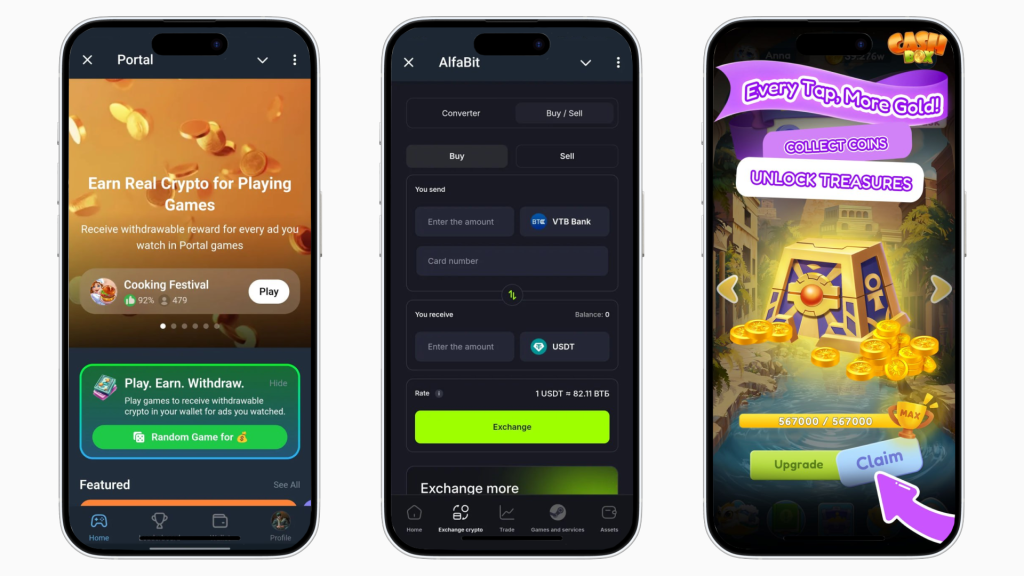
Mini apps are most useful when a prospect needs to do something before they can make a decision. Reading more content may no longer be enough. At this stage, the buyer may want to test a feature, calculate an outcome, explore available options, check eligibility, compare scenarios, or begin part of the onboarding process.
That makes mini apps a strong fit for product evaluation. They let advertisers turn passive interest into a more concrete interaction and can surface stronger intent signals than a simple page view. A user who completes a calculator, checks a product configuration, or starts onboarding is giving you more information about purchase readiness than someone who only reads another piece of content.
Websites and App Stores for High-Intent Actions
For prospects with stronger intent, an external destination may be the most efficient option. If a business using Telegram Ads already has a proven landing page, application funnel, checkout, booking system, CRM form, or app-store flow, sending qualified traffic directly there avoids adding unnecessary steps.
The key distinction is account type. Standard Telegram Ads accounts keep destinations within Telegram, such as channels and bots. Business Telegram Ads accounts, provided exclusively by Magnetto, extend those options to external websites, app stores, and lead-generation pages, while also supporting more stable euro billing.
That flexibility is particularly valuable in long sales cycles because the optimal destination can change as intent develops. Early-stage campaigns may work better with content or community. Later-stage campaigns may need to drive directly into an application, consultation, purchase, or install flow.
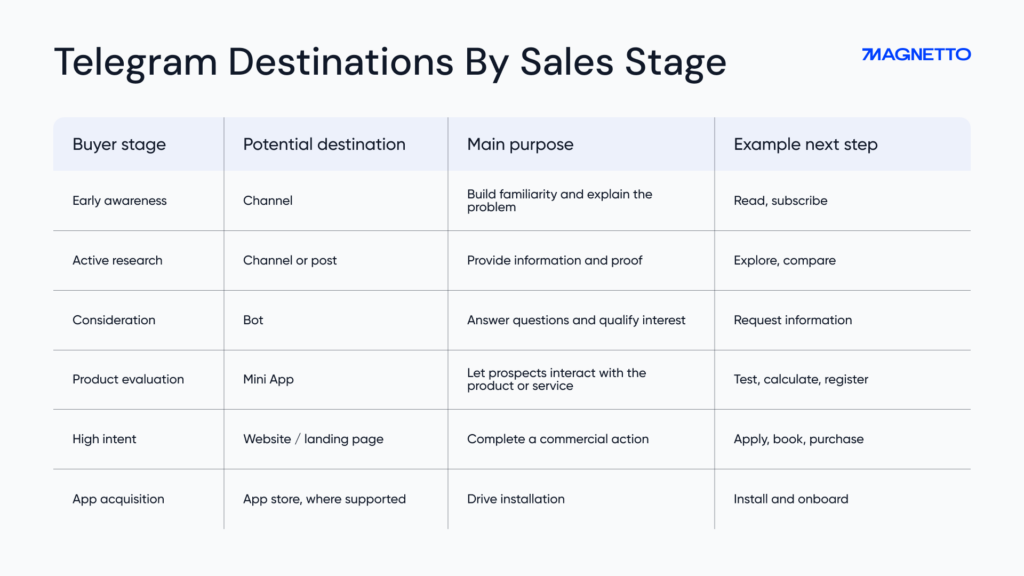
Different stages call for different destinations. Early in the journey, buyers may need more context and time to explore. As intent grows, the next step can become more focused, interactive, and conversion-oriented. The table below summarizes where each Telegram destination fits best across the sales cycle.
How to Measure Telegram Ads Across a Long Sales Cycle
Long sales cycles make campaign reporting harder because spend happens now while revenue may arrive weeks or months later. Waiting for closed sales slows optimization, while focusing only on cheap clicks or leads can push budget toward audiences that never convert into valuable customers.
A stronger approach is to define intermediate signals and track how well they predict later results. For Telegram campaigns, the first layer includes CPM, CTR, CPC, and campaign-level conversions. Telegram Ads analytics should then go deeper into actions such as channel joins, bot starts, completed qualification steps, mini app activity, website forms, registrations, or demo requests.
From there, measurement should move closer to revenue. A FinTech advertiser might track lead, verified account, and funded account. An education business could follow inquiry, application, acceptance, and enrollment. A property company may track qualified lead, consultation, viewing, reservation, and completed transactions. These long sales cycle metrics help marketers see whether early campaign activity is turning into stronger commercial outcomes.
The difference can be substantial:
| Metric | Campaign A | Campaign B |
| Leads | 500 | 300 |
| CPL | €20 | €30 |
| Qualified leads | 50 | 90 |
| Qualified lead rate | 10% | 30% |
| Cost per qualified lead | €200 | €100 |
Campaign A looks stronger if the report stops at CPL. Campaign B, however, generates qualified prospects at half the cost. That is why long-cycle advertisers should connect campaign IDs, UTMs, landing destinations, lead sources, and CRM data wherever possible. Stronger Telegram Ads attribution makes it easier to understand how early interactions contribute to qualified leads, pipeline, and eventual revenue.
Cohort analysis adds another useful layer. Compare users acquired during similar periods and give each group enough time to progress through the funnel. The same logic applies when testing markets: one country may deliver cheaper traffic, while another produces more verified users, applications, or paying customers several weeks later. Looking at those downstream outcomes gives advertisers a more accurate view of Telegram Ads ROI and helps them decide where to increase or reduce spend.
Wrapping Up
For businesses with long sales cycles, the goal is to keep the right prospects moving forward, even when the final conversion is still weeks or months away. Telegram Ads can support that process across education, evaluation, qualification, and higher-intent actions.
That makes destination choice and measurement just as important as the ad itself. When campaigns reflect the buyer’s level of intent and track progress beyond the first click or lead, it becomes much easier to see which interactions are actually contributing to qualified demand and revenue.
FAQ
What should advertisers test first when building a Telegram strategy for a long sales cycle?
Start with the biggest strategic variables: audience, message, destination, and conversion path. Once those are working, refine creative, qualification steps, market segmentation, and measurement. Testing small creative details too early can distract from larger funnel problems.
How long should a Telegram Ads campaign run before performance is evaluated?
There is no universal timeframe. The evaluation window should reflect the actual sales cycle and the stage being measured. Early metrics can be reviewed quickly, while qualified leads, pipeline, and revenue may need several weeks or months to develop.
How can advertisers tell whether Telegram is attracting the right audience?
Look beyond clicks and subscriber numbers. Stronger signals include completion of qualification steps, repeat engagement, visits to high-intent pages, applications, consultations, verified accounts, or other actions that are meaningfully connected to revenue.
How often should Telegram Ads creative be refreshed?
Creative should be refreshed when performance starts to weaken, the offer changes, or the audience needs a different message. In longer buying journeys, it also helps to vary the angle over time so prospects are not repeatedly exposed to the same claim while their questions and priorities are changing.
Can Telegram Ads support cross-sell or upsell journeys?
They can support existing customers with product education, feature updates, new offers, and additional services where the audience relationship already exists. The campaign structure should reflect the customer’s current stage and existing relationship with the brand.