.png?width=4758&height=806&name=Frame%202131330738%20(1).png)

Telegram Ads

Business communication doesn’t stop at office hours. Customers reach out when it’s convenient for them, and brands are expected to respond just as quickly. Chatbots make this easy: they automate routine conversations, enhance marketing and customer interactions, and keep engagement high around the clock. The outcome? Teams can save up to 30% of time and remove 100% of manual work from routine processes.
Chatbots are changing the way brands interact with people, and in this article, we’ll see how they work and how to use them to drive growth.
Think of a chatbot as a virtual assistant that answers questions, guides users, and keeps communication with a business smooth. The best part is that these interactive tools work right where your audience spends time regularly. For example, Telegram: the app keeps users engaged for more than 40 minutes daily and has a vast ecosystem of bots.
More and more brands use chatbots to enhance business processes. The market is projected to reach over $32 billion by 2031, with a CAGR of 23.15%.
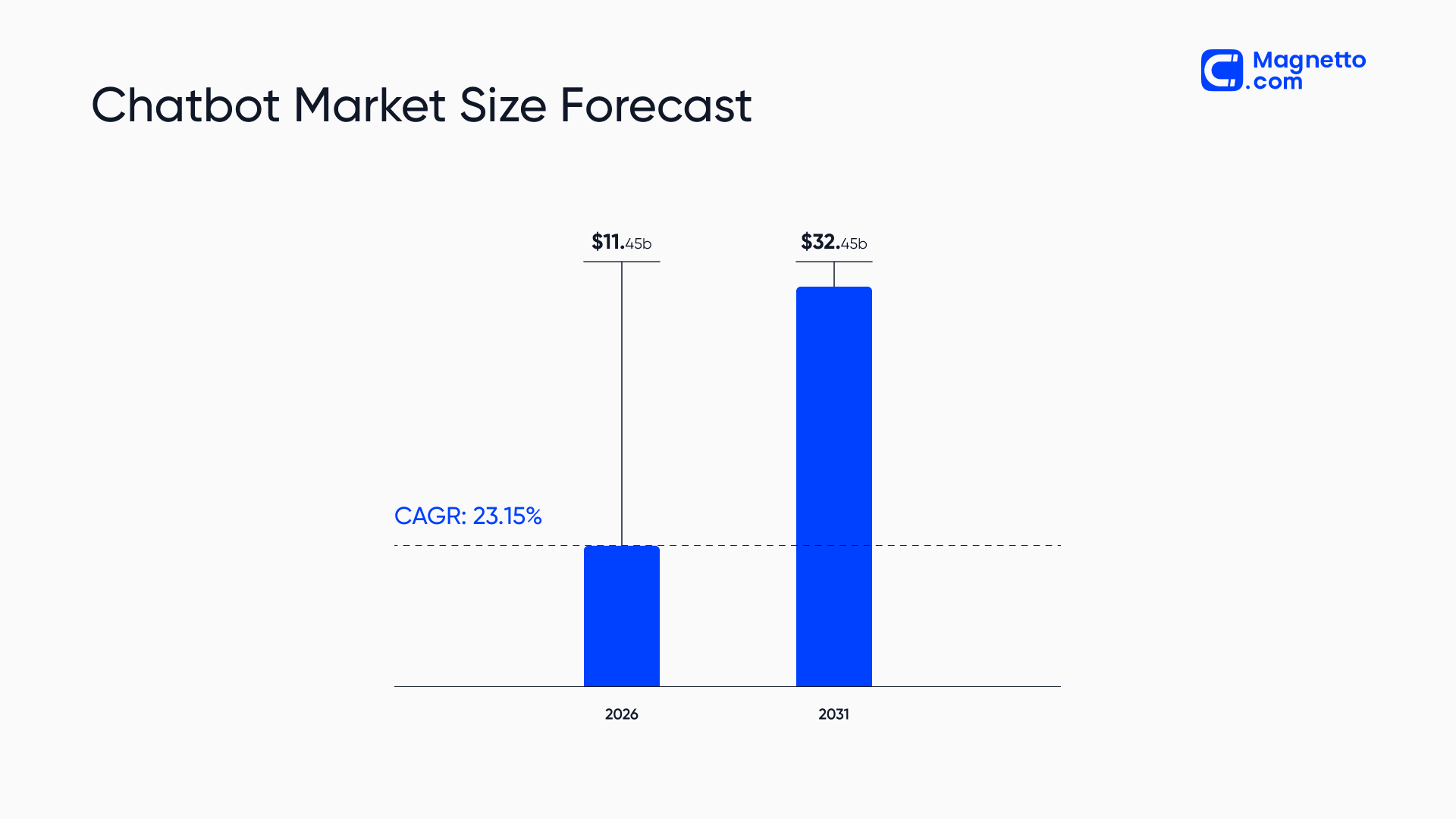 Chatbot market size forecast
Chatbots may seem just a fancy tech add-on, but in fact, they can deliver real, measurable value for businesses of all sizes.
Overall, chatbots make day-to-day operations easier and open up new doors for engagement, sales, and customer satisfaction.
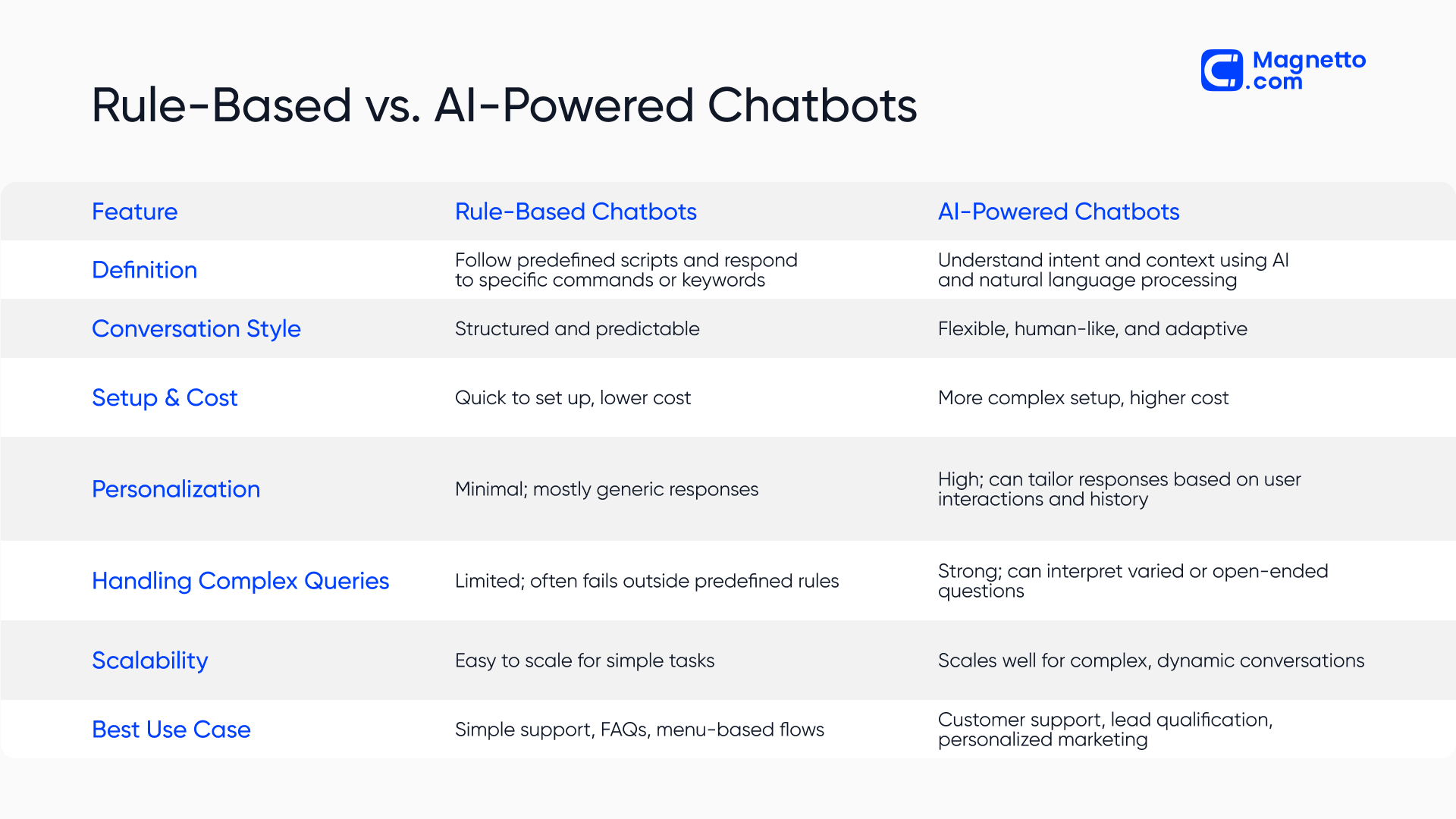
Not every chatbot works the same way: some respond to keywords, while AI chatbots can understand context and carry more natural conversations.
Rule-based bots rely on predefined instructions. A user selects an option or types a keyword, and the tool responds with a scripted answer. Rule-based chatbots don’t understand intent but instead recognize triggers. They are often used as entry-level solutions, where questions are repetitive and predictable.
AI-powered chatbots, on the other hand, use machine learning and natural language processing to understand what a user actually means. Instead of reacting to fixed commands, they analyze how people speak, what they ask, and how they behave over time. Many modern chatbots are influenced by large language models like ChatGPT, which help make conversations feel more natural and context-aware. On Telegram, this adaptability can turn a simple tool into a long-term communication channel.
Here’s a closer look at the differences between rule-based and AI chatbots:
Want a chatbot that actually works for your business? At Magnetto.com, we craft custom rule-based and AI Telegram bots that boost engagement, increase lead conversions, and cut operational costs. Contact us today and let’s turn your idea into a growth engine.
Client expectations are changing fast. According to recent research, 62% of consumers would rather chat with a bot than wait for a human agent. Let’s take a closer look at how chatbots can help streamline support and create happier, more loyal customers.
Your customers use your product or service at nights, on weekends, and during holidays, and questions can come up at any time. Chatbots can offer instant responses around the clock, so users don’t have to wait. Simple requests like password resets, order tracking, shipping updates, or basic troubleshooting can be handled automatically.
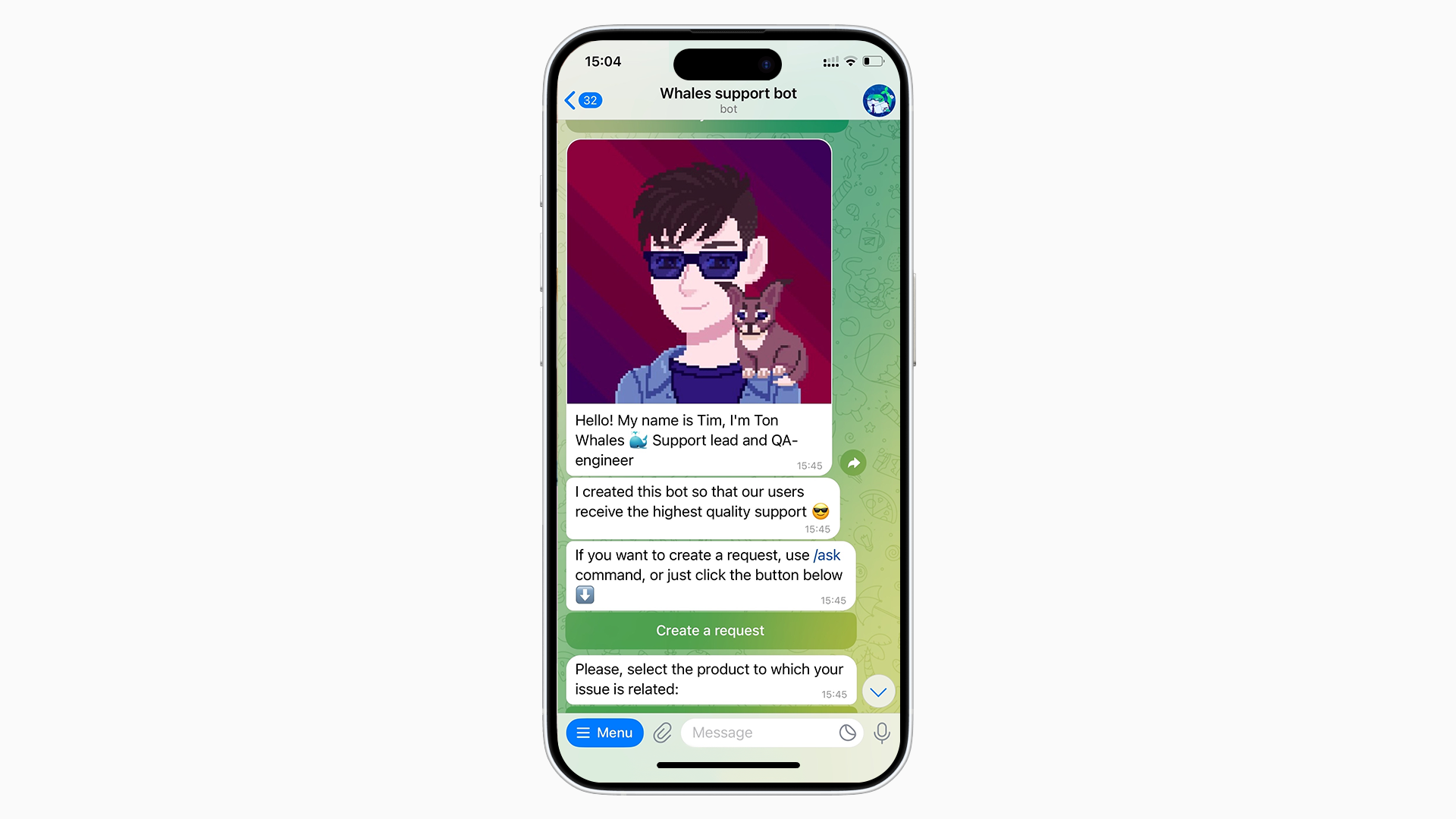 Whales support bot on Telegram
Waiting is one of the biggest sources of user frustration. Chatbots can respond instantly, even during peak traffic or sales campaigns. In fact, chatbots can provide answers up to three times faster than human agents. That speed may reduce drop-offs, lower complaint rates, and create a smoother experience — especially for customers who just need a quick answer.
When chatbots handle routine questions, human agents can spend more time on complex or sensitive issues. The result? Higher-quality interactions, better problem resolution, and more satisfied customers overall. Instead of reacting to volume, teams can focus on value.
Chatbots nowadays are much more than digital help desks. They’re powerful marketing tools that can engage users, generate leads, and drive sales.
Forms and landing pages can feel boring and impersonal. Visitors start filling them out, get distracted, and sometimes never finish. Chatbots can fix that. Instead of a static form, a bot can ask a few simple questions in a friendly, natural way, guiding people toward the right product or offer.
On Telegram, this feels more like chatting with a helpful assistant than filling out a form. People stay engaged, enjoy the process, and businesses get higher-quality leads.
AI chatbots can remember user behavior and adapt messaging accordingly. This allows brands to create personalized experiences without manually segmenting every customer. For example, a returning visitor might receive a tailored product suggestion, while a first-time visitor gets a more educational or onboarding-style conversation.
Getting new users started can be tricky. Long emails and static tutorials often go ignored. Chatbots, however, can walk customers through onboarding step by step, answering questions in real time. Users see value faster and are more likely to stick around.
Marketing chatbots can deliver promotions or upsell products in a conversational, natural way. To illustrate, after a user makes a purchase, a bot may suggest complementary products, share limited-time offers, or invite the customer to join a loyalty program.
Retargeting also becomes more effective. Instead of generic ads, chatbots can reach out to users who interacted with your business but didn’t convert, starting a one-on-one conversation that feels personal.
Telegram has over 10 million active bots across various industries, including crypto and Web3, finance, gaming, entertainment, e-commerce, education, lifestyle, and more. Many of them are powered by AI, which makes interactions smarter and more personalized. Let’s take a closer look at some real examples and see how they’re being used.
A wallet-bot for managing digital assets and processing crypto payments directly on Telegram.
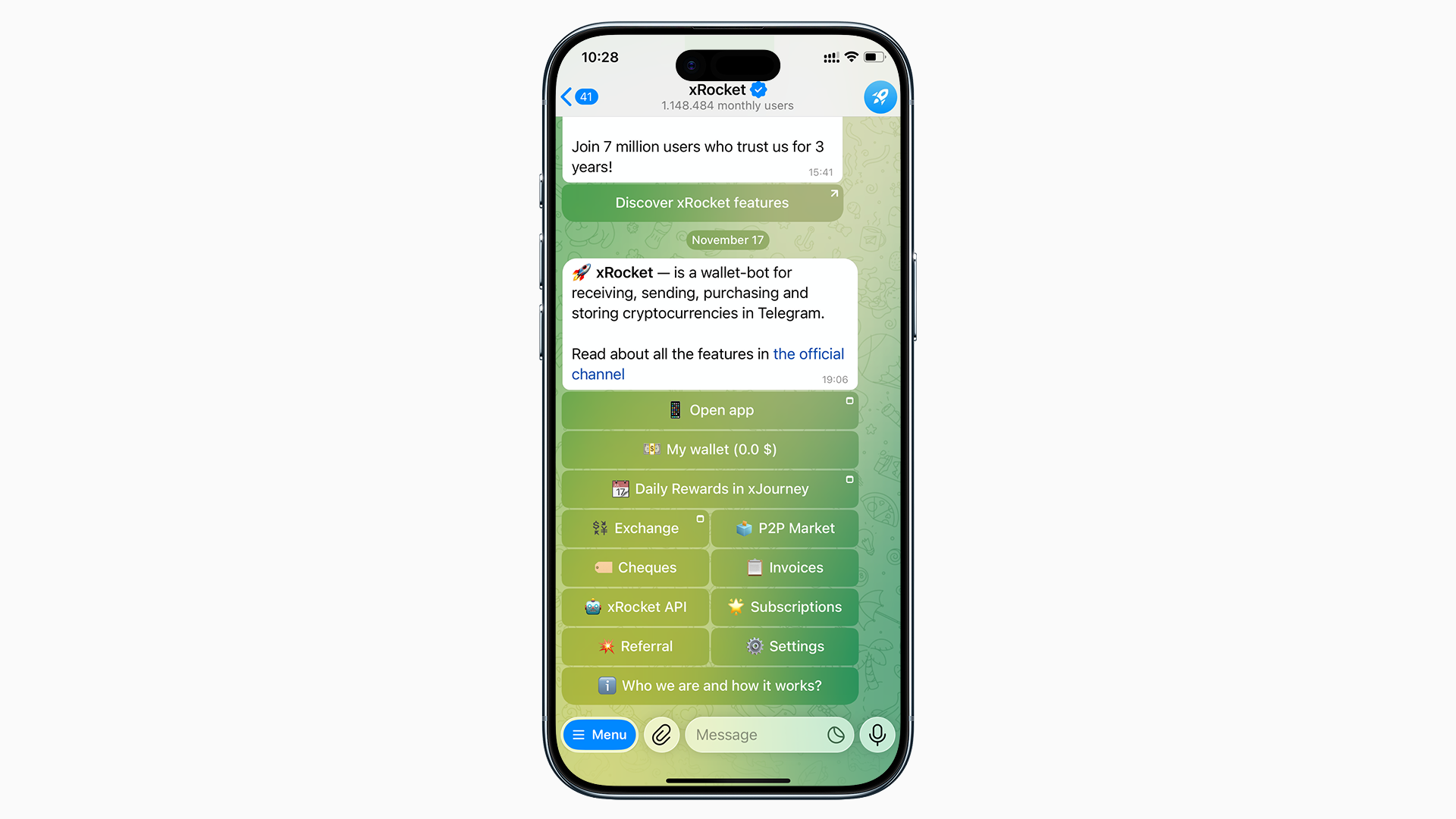 xRocket
A Telegram bot for finding flights and receiving price drop notifications.
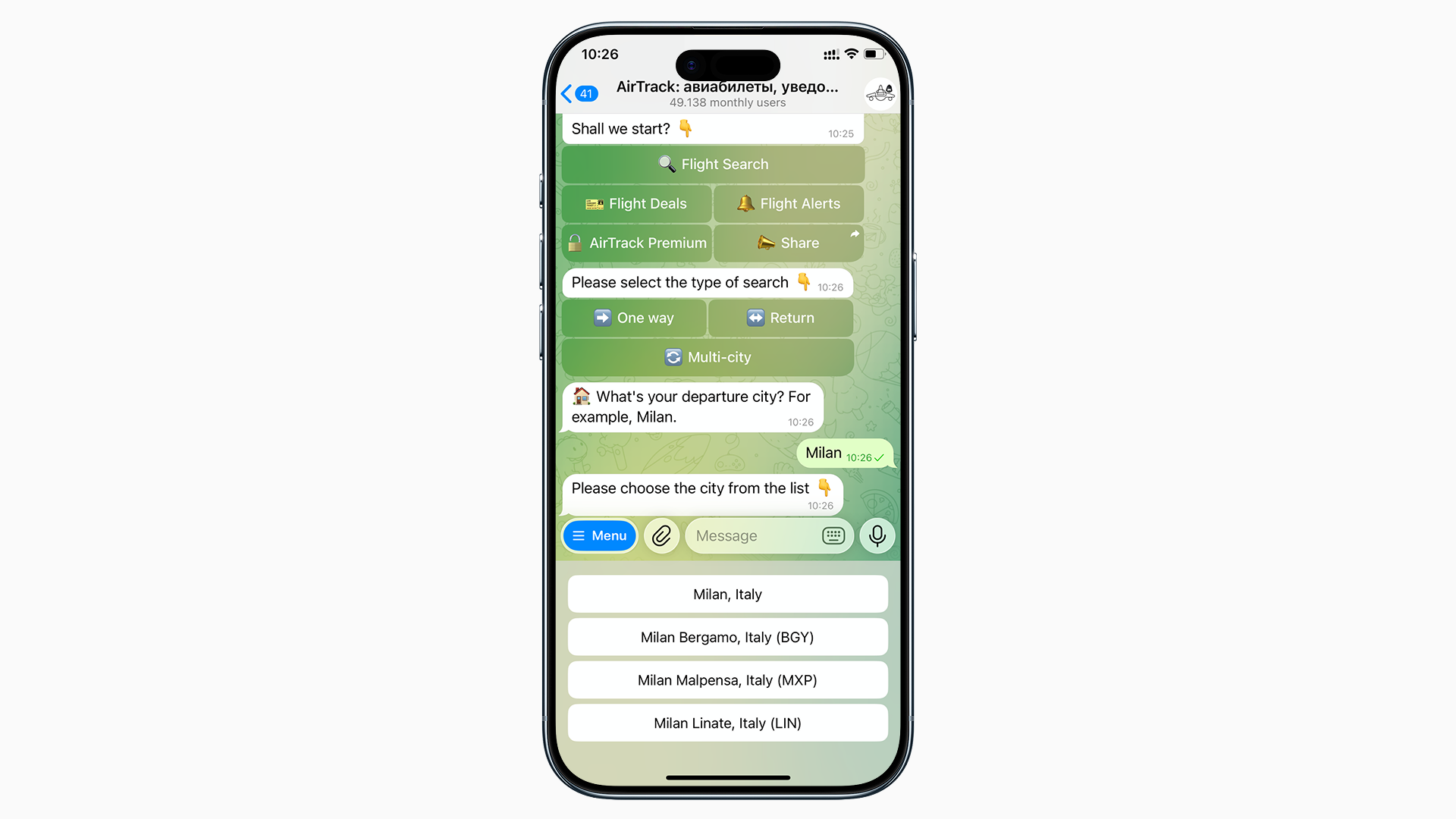 AirTrack
A personal AI English tutor that lets users practice spoken English anytime by sending voice messages on Telegram and having real-time conversations that make learning effortless and fun.
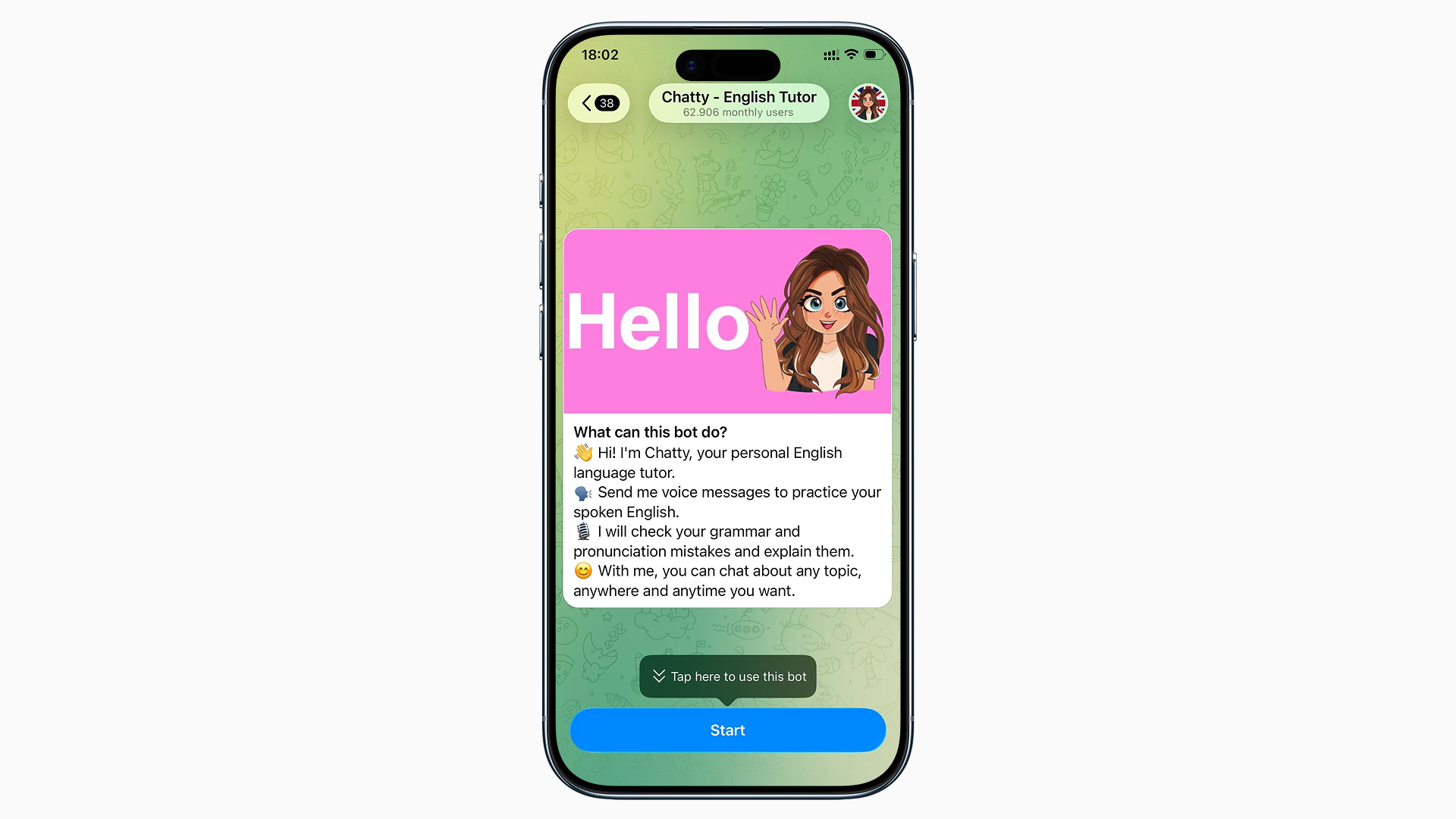 Chatty
An AI look editor that creates multiple styled versions of a user’s photo.
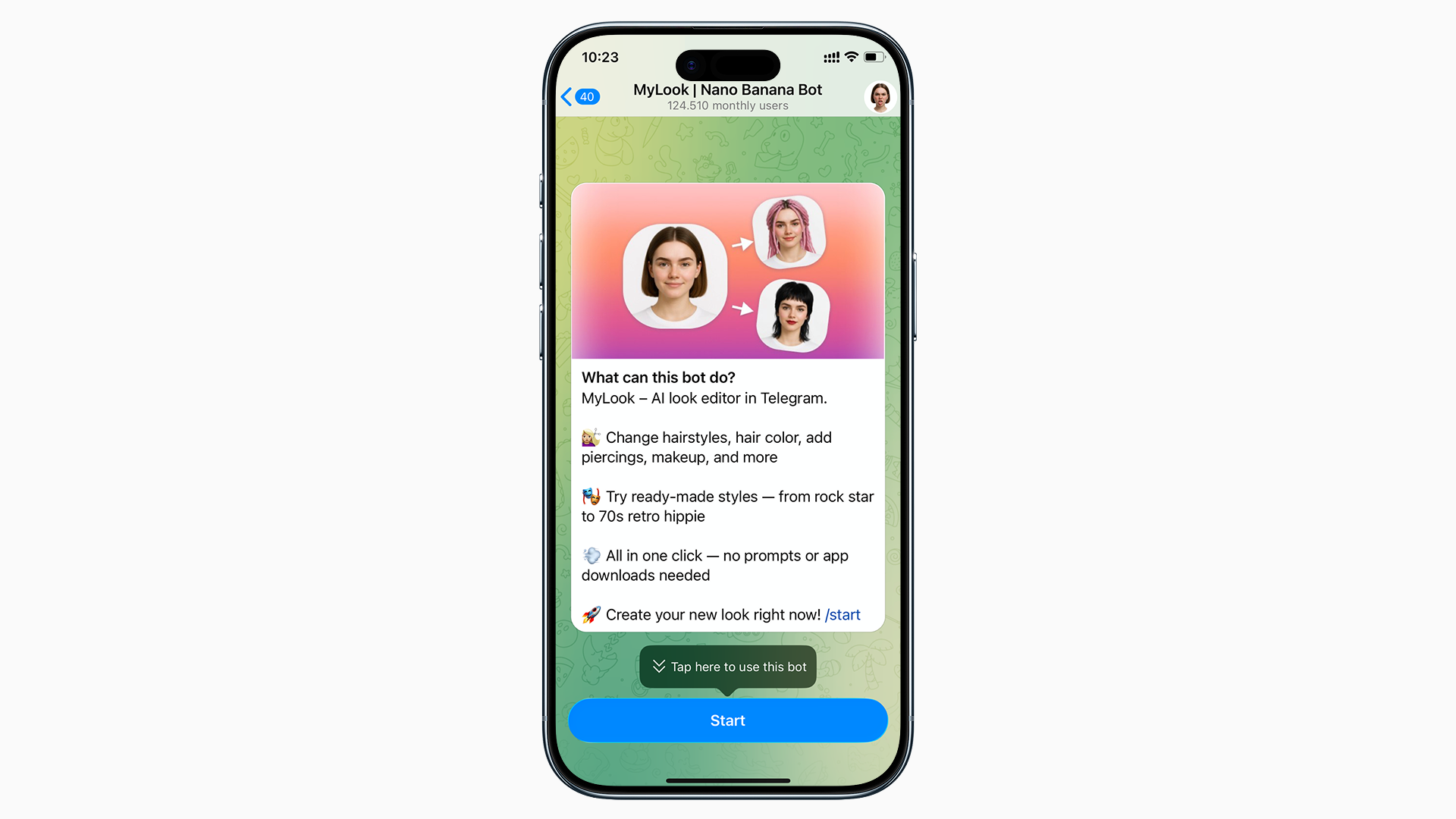 MyLook
This Telegram assistant monitors products from stores like Amazon, Flipkart, Ajio, and Shopsy, with instant notifications when prices drop.
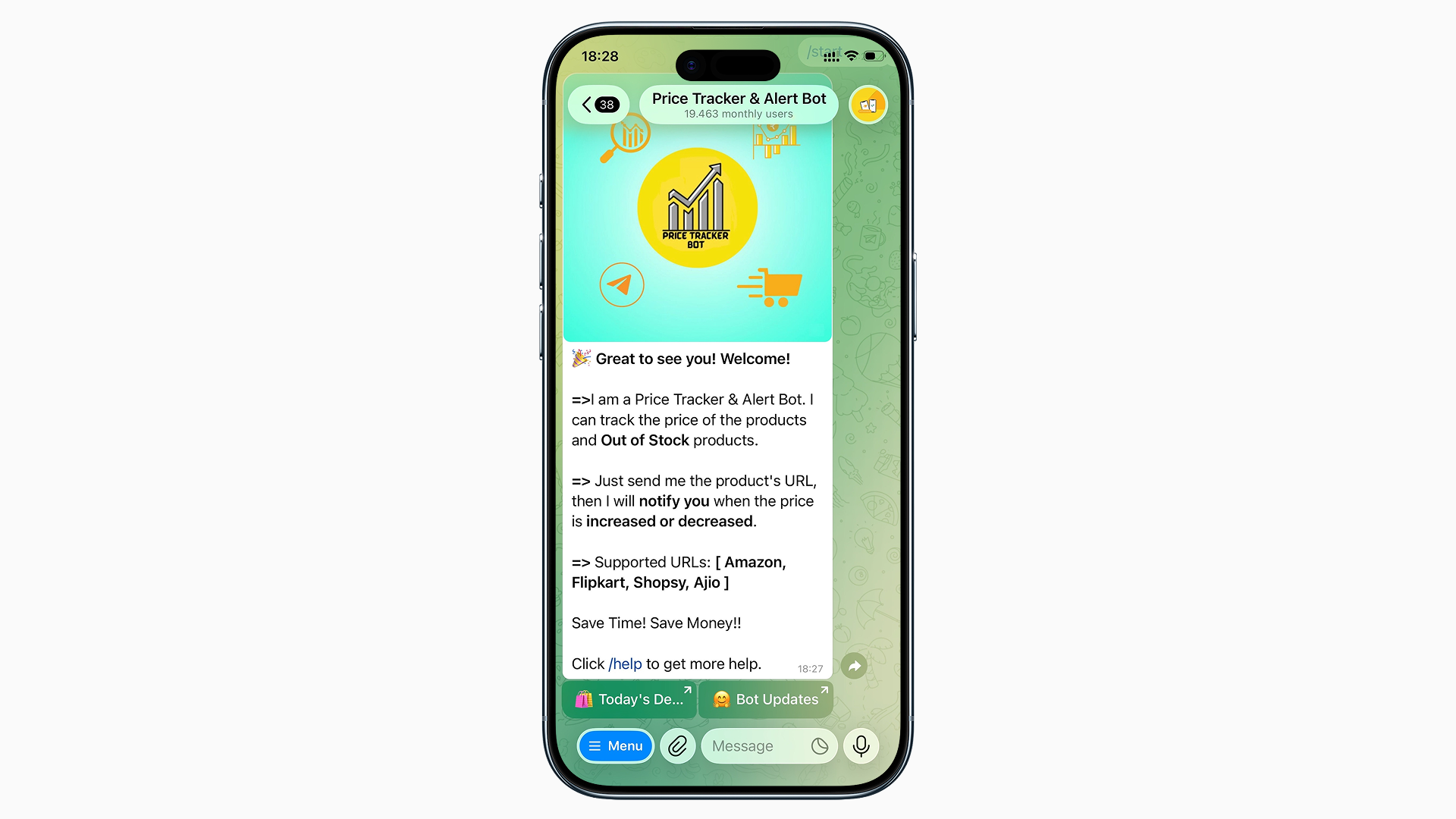 Price Tracker & Alert Bot
To get the most out of your chatbot and make sure it genuinely adds value, there are several practices worth following:
Before you build anything, think about why your business needs a chatbot in the first place. Are you trying to capture leads? Reduce support load? Improve onboarding? Knowing your goals helps you design a tool that actually solves real business problems.
When someone starts a chat, they should instantly understand what the bot can do. A quick greeting helps prevent confusion and keeps people engaged. Too many qualifying questions up front can feel like busywork. This is why it’s important to keep it simple and focused on the user’s needs.
A chatbot’s conversation should feel like a guided interaction. Think through the paths users might take, anticipate questions, and build flows that feel natural. Simple greetings that explain how the tool can help, clear options from menus or buttons, and clear call-to-actions can significantly improve engagement.
Your chatbot is not finished once it’s launched. Track performance metrics like completion rates, user drop-offs, and unresolved questions to see where improvements are needed. Look at real conversations to understand what people are actually asking and update your bot’s replies accordingly.
Chatbots can do a lot of good, but only when they’re implemented thoughtfully. Here are some of the most common mistakes to watch out for and how to avoid them:
Avoiding these mistakes doesn’t require advanced AI or massive budgets. It mostly comes down to empathy: thinking about how real people experience the conversation.
For brands, chatbots offer a way to scale without losing control. AI is an optional enhancement, but all chatbots help reduce pressure on marketing teams, keep leads active, and make everyday interactions smoother for customers. Over time, these small improvements add up: lower operational costs, better conversion rates, and a stronger overall user experience.