Around 13% of Telegram users are managers involved in company decisions, while 5.5% are business owners who are proactive, growth-focused, and open to new solutions. This audience is tech-savvy, engaged, and ready to interact with content that provides real value. On top of that, Telegram allows brands to move beyond one-way communication, encouraging meaningful interactions and long-term relationships.
In this article, we’ll take a closer look at why Telegram is becoming a key marketing platform for B2B brands and how to turn your channel into a powerful business tool.
What Makes Telegram A Key Platform for B2B Success in 2026
Telegram is a cloud-based messaging app known for its speed, encryption, and flexibility. With over 1 billion users accessing the app every month, it ranks as the world’s third most widely used messenger.
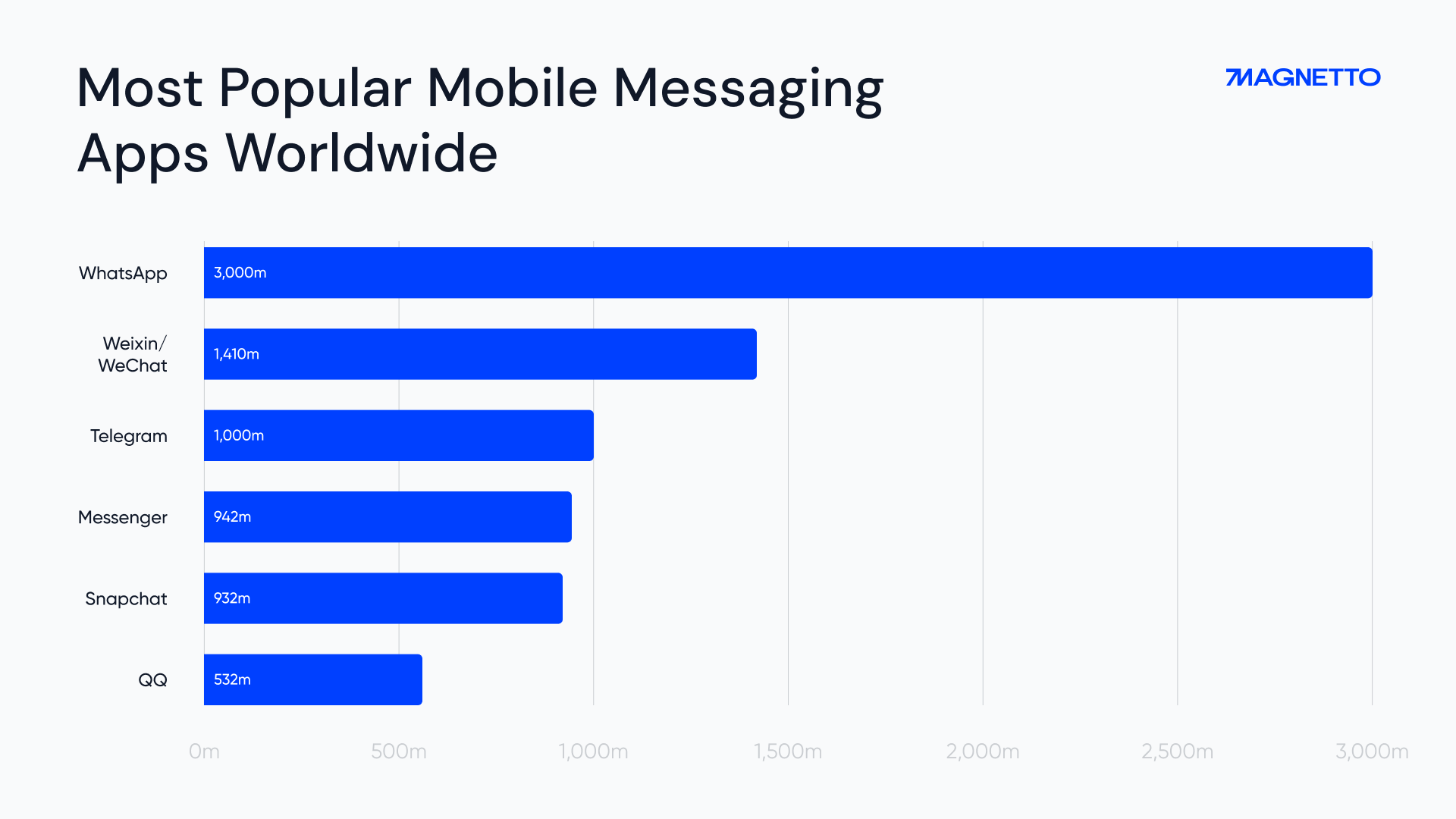 Most Popular Mobile Messaging Apps Worldwide
Let’s take a closer look at what makes Telegram a key platform for B2B business growth and why more companies are integrating it into their marketing, communication, and customer engagement strategies.
A Professional, Tech-Savvy User Base
Telegram appeals to a highly professional, tech-oriented community. About 1 in 5 users work in IT or internet-related fields, 12% are in marketing and PR, and 4% are in finance. For B2B brands, that’s a direct line to people who understand your solutions and are more likely to respond, convert, and stick with your service.
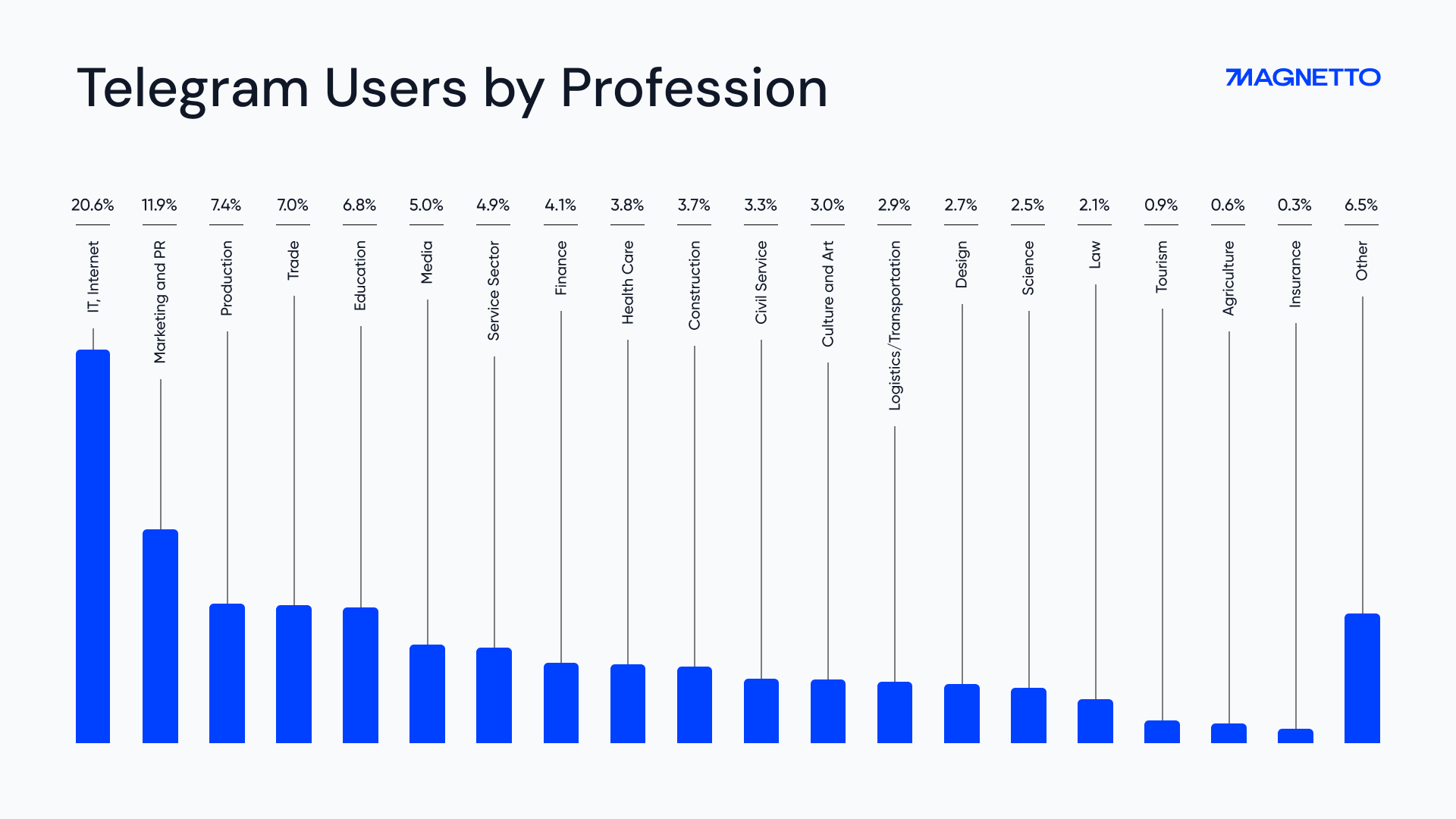 Telegram users by profession. Source: Telegram Marketing Statistics and Trends: The 2025–2026 Report
High Engagement Rates
Every month, Telegram channels attract more than 1 trillion views, and posts are opened by 55–60% of their audience. To put that into perspective, the average email open rate across industries is only 42.35%. The key takeaway? Telegram doesn’t just deliver your messages to the right professionals; it also maximizes the chance they will pay attention and respond.
Integrated Lead Capture Tools
Besides channels, Telegram gives businesses multiple ways to connect with prospects. Chatbots make it even easier by automating lead capture, answering questions, qualifying leads, and guiding people through products or services.
Here are some of the key benefits of incorporating bots into your marketing strategy:
- Save time and resources. Bots take care of routine tasks, which can free up 30% of your time and reduce manual effort.
- Boost conversions. Automated guidance and timely responses can increase conversion rates by up to 50%.
- Improve customer service. With bots, customers get quick answers and help right when they need it, which makes their experience smoother and more enjoyable.
- Increase retention and loyalty. Bots deliver timely information and interactions that keep users coming back and staying loyal.
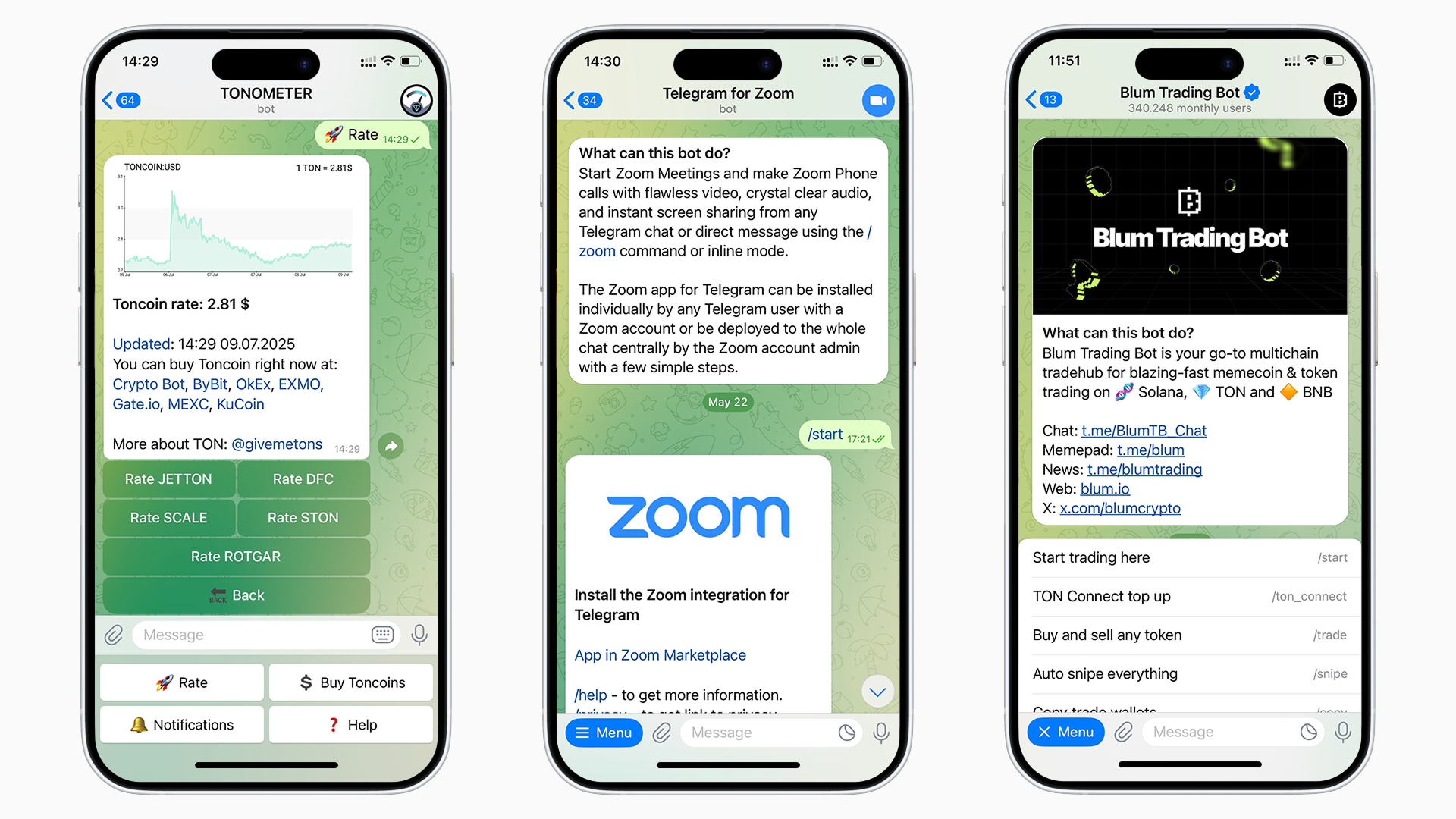 Telegram bots
Telegram Mini Apps
These lightweight, interactive applications run directly inside Telegram: people access them instantly through chats, channels, and bots. Mini apps have quickly become a core part of the platform’s ecosystem. Currently, over 500 million users launch them not only to play viral tap-to-earn games like Hamster Combat, but also to book services, transfer money, trade crypto, and more.
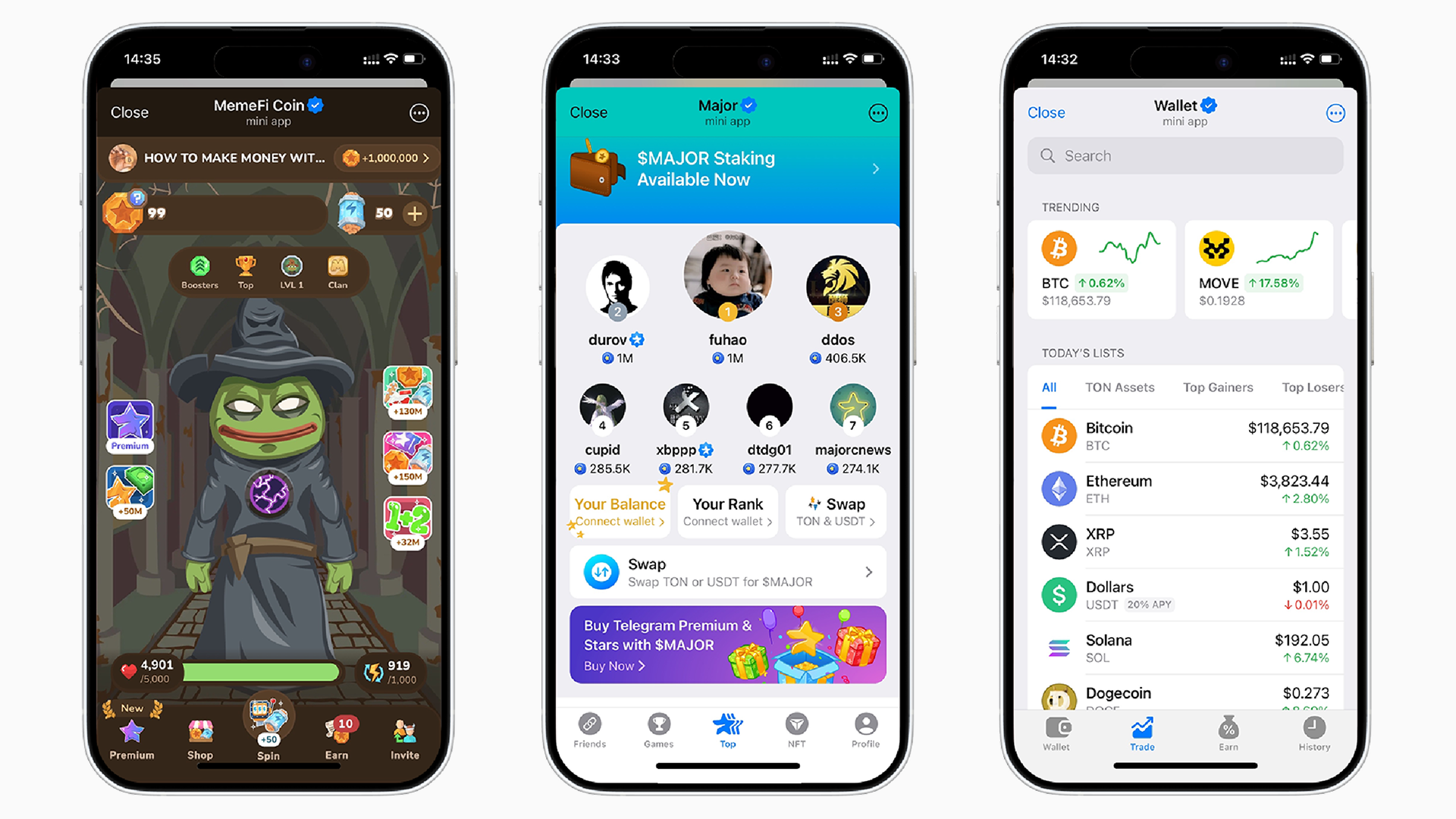
Telegram mini apps
Creating a mini app is an investment that pays off in efficiency and engagement. They allow you to create a fully functional, in-app experience that mirrors a website, streamlines every step of the customer journey, and lowers acquisition costs. This makes it easier to engage prospects, nurture leads, and drive conversions without sending users to external sites or mobile apps.
Security and Privacy
Strong encryption and privacy features make Telegram a trusted platform for business communications. All messages are securely protected, and the platform gives users control over who can see their information. When sensitive information and client conversations remain protected, B2B brands gain credibility and confidence from both customers and partners.
Overall, Telegram’s growth in B2B niches, especially crypto, fintech, and SaaS, is fueled by its tech-savvy users and interactive features like bots and mini apps, which let businesses engage audiences more effectively than traditional B2B marketing platforms.
How to Use Telegram for Community Building and Lead Generation
Step 1: Set Up Your Telegram Funnel
Creating a multi-layer Telegram structure is the first step to turning conversations into leads:
- Branded channels. Use a Telegram channel to broadcast content in a one-way format, such as industry insights, product updates, case studies, event announcements, or thought leadership posts that provide value to your audience. Keep in mind that even in B2B, people connect with people, not companies. Make sure your content is human, relatable, and engaging.
- Telegram groups. A group gives you a space to interact directly with your audience instead of only broadcasting updates. Your customers can connect with you and each other, get answers quickly, and feel part of a community. You can also organize your community into distinct topics like product updates, FAQs, industry insights, or support requests. This keeps conversations organized, makes it easier for members to find relevant information, and helps your team engage more efficiently.
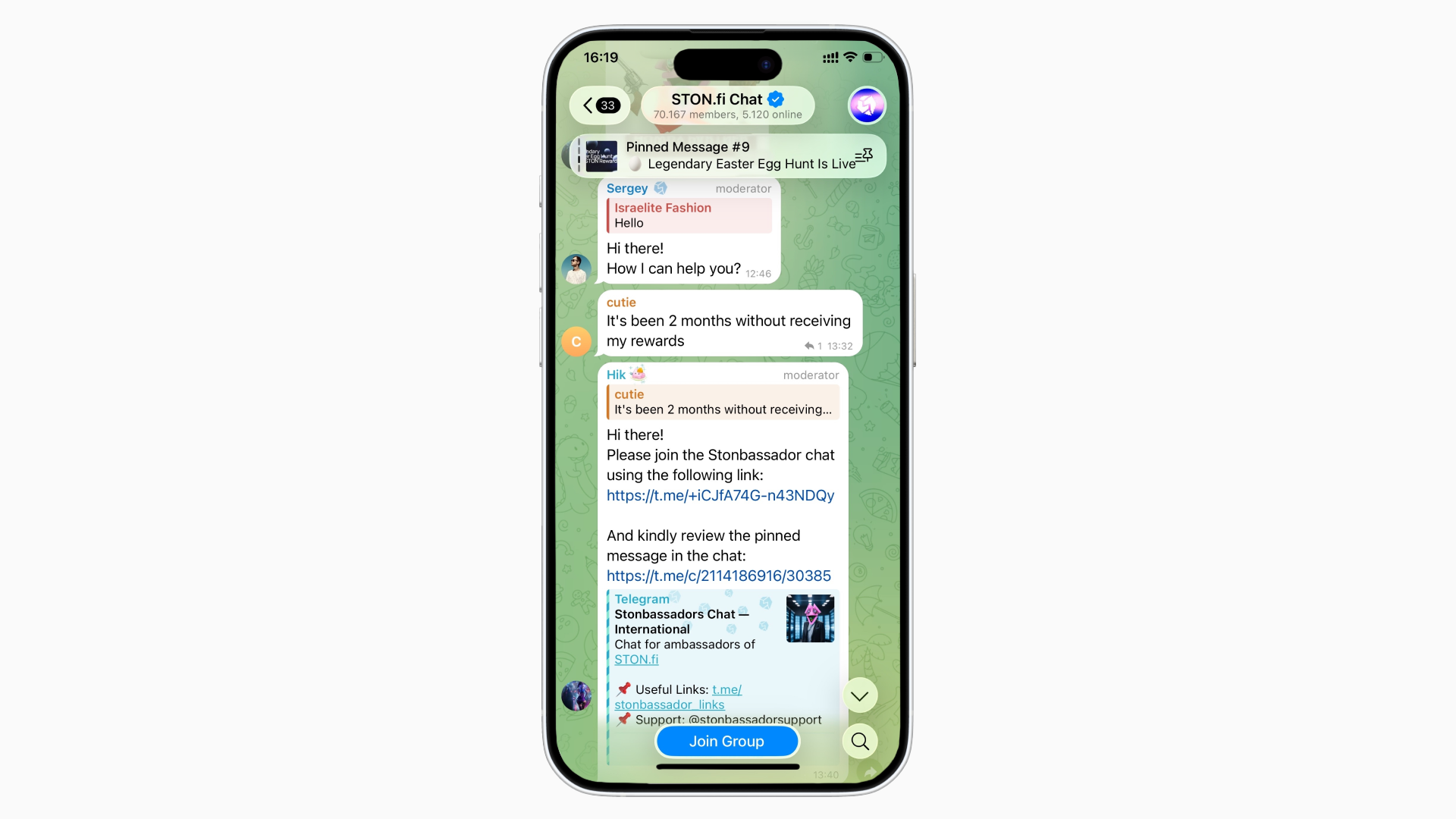 A Telegram group
- Telegram bots. Use chatbots to qualify leads automatically, deliver relevant content based on user behavior, and keep conversations going even when your team isn’t online. This matters more than ever, as 42% of B2B buyers say poor customer service is a key reason they look for alternative vendors. Consistent, responsive support through bots helps improve the customer experience and reduce the risk of losing prospects or clients due to slow or fragmented communication.
When you use a branded channel, discussion group, and bots together, you create a Telegram funnel that consistently reaches, engages, and nurtures your prospects at every stage.
Step 2: Drive Targeted Traffic to Telegram
Once your funnel is set up, the next step is bringing the right audience to it. Promote your Telegram channel across multiple touchpoints to reach prospects where they already spend time:
- Website. Include a Telegram widget or CTA button so visitors can join directly.
- Email signature. Add a link to your Telegram channel to capture leads from every newsletter you send.
- Social media. Share your Telegram link in your bio on LinkedIn, Twitter, Facebook, Instagram, and other social media platforms.
- Content marketing. Mention your Telegram in blog posts, YouTube videos, or podcasts to guide engaged audiences to your channel.
- QR codes. Nearly 6 in 10 people habitually scan QR codes. Use them on event materials or presentations to direct people straight to your community with ease.
Beyond organic promotion, Telegram offers multiple ways to reach highly relevant audiences through paid strategies. At Magnetto.com, we set up and manage Telegram Ads, mini app ads, and carefully selected influencer partnerships to help B2B brands reach the right decision-makers, drive qualified traffic, and move audiences from awareness to action. And with exclusive access to Euro Telegram Ads accounts, we can expand your reach into Telegram’s top-performing markets, such as LatAm, MENA, Indonesia, and more.
Step 3: Engage and Nurture Your Audience
In B2B, sales cycles are often long and complex: buyers spend much time researching, comparing options, and building internal approval before they ever talk to sales. Studies show that B2B buyers often go through several months of decision-making and require multiple positive interactions before trusting a provider. This makes ongoing engagement and relationship-building through channels and bots crucial.
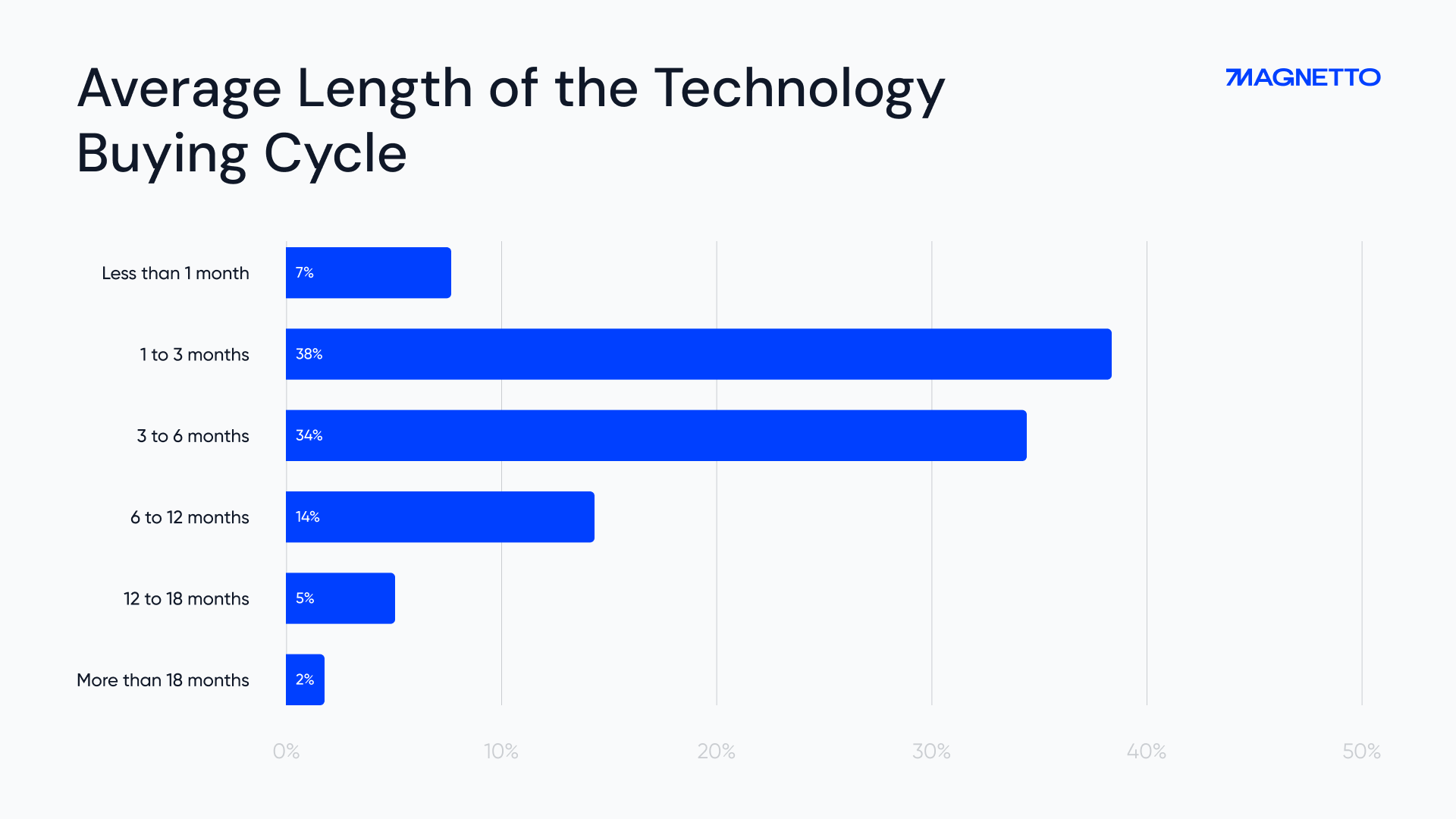 Average length of the technology buying cycle
Share content that genuinely helps your audience. Industry insights, practical tips, short case studies, or answers to common questions all work well. The goal isn’t to sell in every message, but to stay relevant and useful so people keep paying attention.
It’s also important to use personal follow-ups to move conversations forward. Bots, for example, can be triggered based on user behavior, such as clicked links, replies, or expressed interests. This allows you to offer tailored content, answer specific questions, and guide prospects naturally toward the next step.
Step 4: Score and Segment Leads
The next step is to segment leads to focus on the most promising prospects. To illustrate, someone who often downloads resources may be considered a “hot lead,” while others who are still exploring general content can be placed in a long-term nurture group.
Sync high-potential leads directly to your CRM or sales pipeline so your sales team can follow up at the right time with personalized outreach. Meanwhile, continue sharing valuable content with prospects who aren’t ready to buy yet: it will keep them interested and gradually move them toward conversion.
Key Metrics to Track for Telegram Marketing
To create meaningful engagement, it’s essential to know what’s working, and Telegram makes this easy. Built-in analytics provide clear, actionable insights into how your content is performing and how your audience interacts with it. You can track engagement, see how many users have enabled alerts for your posts, identify when your subscribers are most active, understand where the traffic comes from, and more.
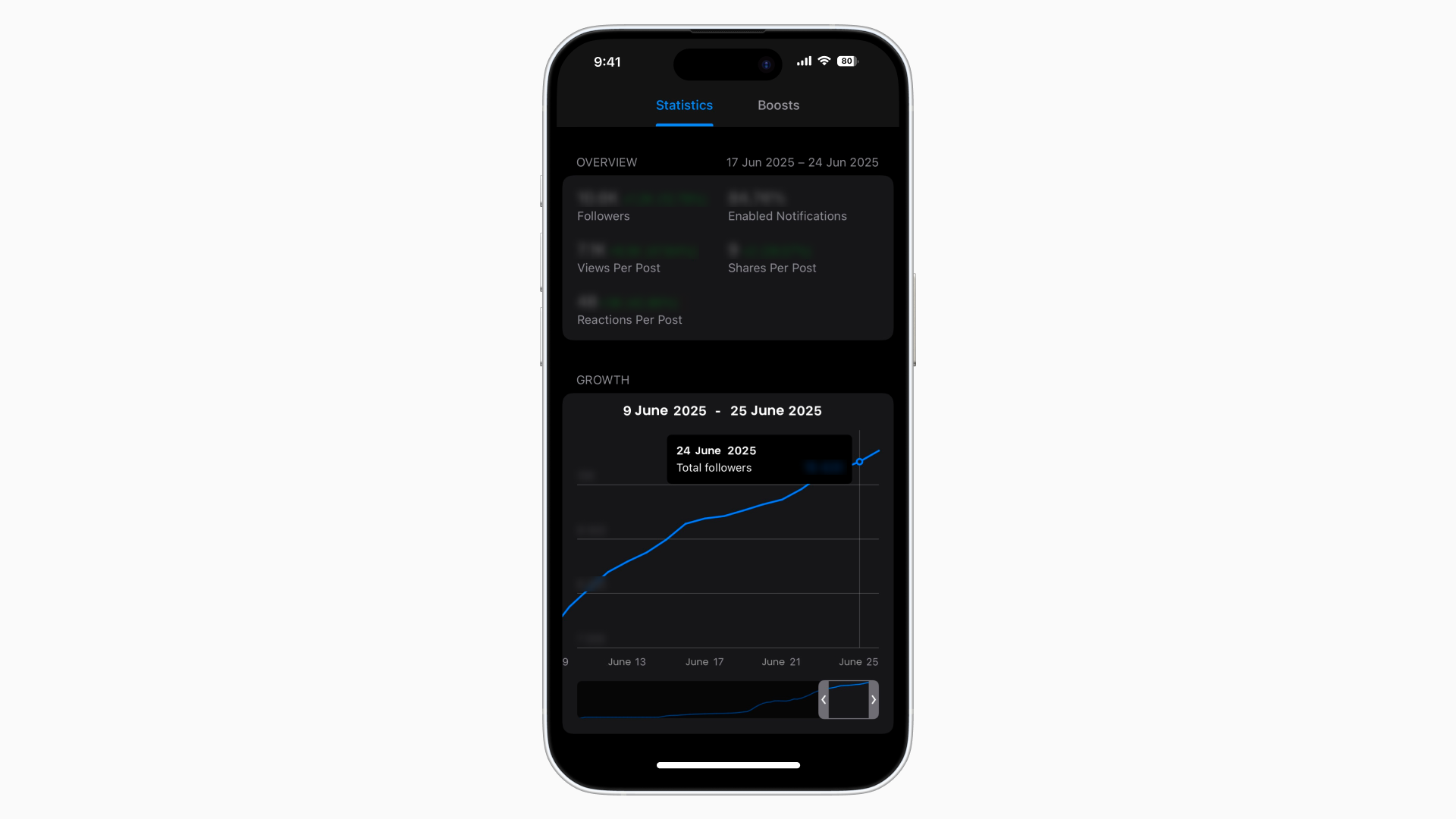 A Telegram channel statistics
Another important marketing metric to track is retention, which is a strong indicator of both content quality and lead quality. High retention is a sign that the content resonates and the channel is reaching the right people. Low retention, on the other hand, signals that you may need adjustments in the type of content shared in your channel or how you target and acquire subscribers.
Common Mistakes B2B Teams Make on Telegram
Even though Telegram can be a powerful tool for B2B marketing, many teams fall into the same pitfalls:
- Using Telegram as just an announcement channel. Simply broadcasting messages misses the opportunity to engage, educate, and nurture your audience.
- Not segmenting your audience. When messages aren’t tailored to different groups, they can feel generic and fail to grab attention or inspire action.
- Relying on manual outreach that doesn’t scale. Personal engagement is important, but doing it all manually limits growth and efficiency.
- Poor integration with CRM or marketing systems. Without syncing leads and interactions to your existing tools, you risk losing valuable data and failing to follow up effectively.
Addressing these issues early helps you maximize Telegram’s potential as a lead generation and customer engagement tool.
Conclusion
To sum up, Telegram’s user base is a strong match for B2B businesses — tech-savvy, engaged, and open to meaningful interaction. With the right strategy, it allows companies to move beyond one-way broadcasting and use their Telegram channels to build lasting connections that support long sales cycles.
.png?width=4758&height=806&name=Frame%202131330738%20(1).png)