
TikTok has become a major sales channel for e-commerce brands. In the US alone, TikTok Shop generated an estimated $15.82 billion in sales in 2025, making up 18.2% of the country’s social commerce market. The number of Americans purchasing through TikTok is forecast to reach 57.7 million in 2026.
For online retailers, this creates opportunities to introduce products to new audiences, generate demand, and convert interest into purchases. TikTok Ads can direct shoppers to an online store or help them complete purchases within TikTok Shop, depending on the market and campaign strategy.
However, attracting views and clicks doesn’t automatically translate into profitable sales. Brands need to choose suitable ad formats, develop creatives that demonstrate product value, and optimize campaigns around customer acquisition costs and revenue.
In this guide, we’ll explore why TikTok works for e-commerce, which advertising formats to use, and five practical ways to improve your TikTok Ads performance in 2026.
Why TikTok Works for E-Commerce Brands
People frequently discover products on TikTok while watching videos about topics they’re already interested in. With users spending an average of 1 hour and 37 minutes per day on TikTok’s Android app, brands have plenty of chances to reach potential customers before they actively search for something to buy. This makes TikTok product discovery one of the main TikTok advertising benefits, as relevant demonstrations and recommendations can influence purchasing decisions during everyday browsing.
The connection between the app’s content and shopping behavior is substantial. Among people who use TikTok for inspiration, 83% say it has led to a purchase. Another 41% of users who turn to TikTok to find out where to buy something complete their purchase directly on the platform.
These TikTok shopping trends show how closely product discovery and purchasing decisions are connected. Shoppers can encounter an unfamiliar brand, watch demonstrations, explore customer opinions, and decide whether they want the product during the same session.
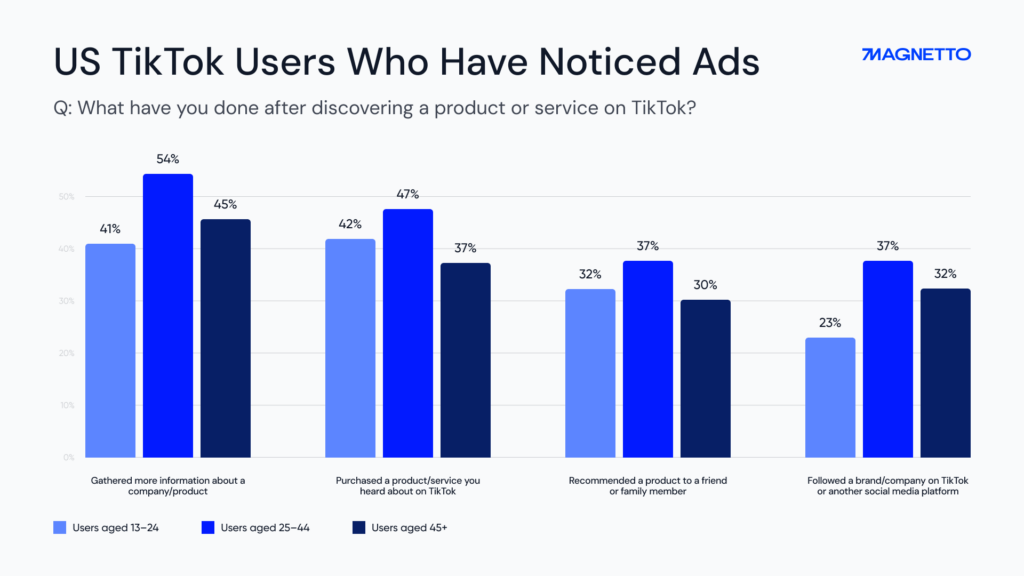
TikTok’s influence also extends beyond younger consumers. Among US users aged 25–44, 47% have purchased a product they first heard about on the platform.
The video-first experience is particularly useful for products that benefit from explanation or demonstration. Fashion retailers can show fit and styling, beauty brands can demonstrate application and texture, and electronics sellers can explain features through real-world examples.
Paid advertising builds on these viewing habits. Brands can promote native-style videos, use creator content, and direct interested shoppers to relevant product pages. In supported markets, TikTok Shop lets customers buy directly in the app, adding another option to a brand’s TikTok e-commerce marketing strategy.
TikTok Ad Formats for E-Commerce
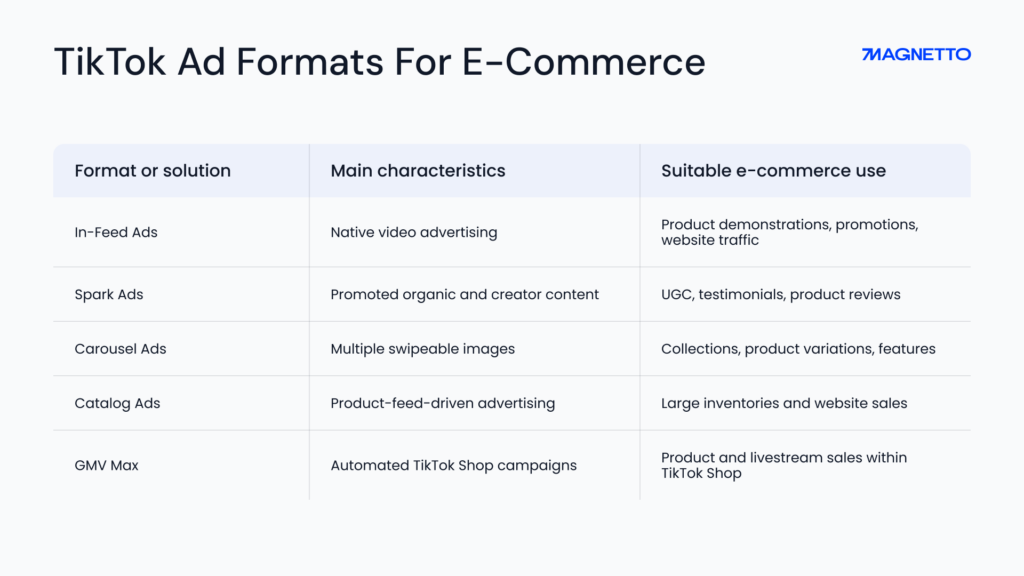
TikTok offers several ad formats for e-commerce, from product demonstrations and creator content to catalog-based advertising and TikTok shopping ads. Understanding the different types of TikTok ads can help retailers choose how to showcase their products and reach potential buyers.
In-Feed Ads
In-Feed Ads appear among organic videos as people browse TikTok. The format works particularly well when videos show the product being used and communicate its benefits immediately. For example, a clothing retailer could demonstrate several outfits using one product collection, while an electronics brand might highlight a practical feature through a short demonstration.
Spark Ads
Spark Ads promote existing organic TikTok posts, including eligible creator content used with the appropriate authorization. They retain the identity and engagement associated with the original post, including likes, comments, and shares. For brands running TikTok Ads for e-commerce, Spark Ads can extend the reach of product reviews, demonstrations, and creator recommendations. They are particularly useful when a video has already attracted relevant engagement and communicates the product’s benefits convincingly.
Carousel Ads
Carousel Ads display multiple images that users can swipe through. Among TikTok e-commerce ad formats, they’re particularly useful for showcasing product variations, collections, features, or different uses of the same item. A furniture brand, for example, could present several room settings featuring one product, while a fashion retailer could display different colors or styles.
Catalog Ads
Catalog-based advertising uses product information from a retailer’s catalog to build ads for website sales campaigns. Depending on the campaign configuration, products may appear through different supported creative formats. This approach suits businesses managing extensive product inventories, especially when prices, availability, and product selections change frequently.
TikTok Shop Ads and GMV Max
Brands selling through TikTok Shop can use GMV Max, TikTok’s automated advertising solution for driving shop sales. Since July 2025, GMV Max has been the default and only supported campaign type for new TikTok Shop Ads campaigns.
Product GMV Max promotes individual products or product selections, while LIVE GMV Max supports sales through livestream shopping. Both use automated campaign optimization to help advertisers manage delivery and sales performance.
GMV Max operates at the campaign level, so it should be distinguished from creative formats such as In-Feed Ads and Spark Ads. Availability of TikTok Shop and individual advertising features varies by country.
For website sales campaigns, brands can also use Smart+, TikTok’s AI-powered solution that automates audience targeting, bidding, creative delivery, and campaign optimization. Advertisers can adjust the level of automation depending on their campaign needs and available features.
5 Best Practices for TikTok Ads for E-Commerce
1. Create TikTok Ad Creatives That Drive Product Sales
TikTok users scroll quickly, so your ad needs to communicate what you’re selling and why it matters within the opening seconds. In fact, 63% of videos with the highest click-through rates highlighted their key message or product within the first three seconds. For e-commerce brands, this means making the product immediately recognizable and giving viewers a clear reason to keep watching.
These TikTok e-commerce marketing tips can improve how your products come across in ads:
- Show the product early. Put the product front and center in the opening seconds of the video.
- Demonstrate specific benefits. Show how the product works, what problem it solves, or how customers can use it.
- Include customer experiences. Reviews, creator demonstrations, and testimonials can address common purchase concerns.
- Communicate the offer clearly. Highlight relevant discounts, bundles, delivery benefits, or product advantages.
- Give viewers a clear next step. Direct them to explore the product, visit the store, or complete a purchase.
Monitor performance as campaigns run. Falling engagement alongside rising acquisition costs may indicate creative fatigue, although audience changes and competition can produce similar patterns.
Introduce new demonstrations, opening messages, and customer perspectives when existing creatives begin losing traction. Use purchase data to decide which approaches deserve continued investment.
2. Use UGC and Creator Content to Build Trust
TikTok users regularly see products featured in creator content, from hands-on demonstrations to everyday recommendations. E-commerce brands can use this familiar content style to show how their products perform in real situations and answer questions that influence purchase decisions.
A skincare brand, for example, could partner with creators who show how they use a product, describe its texture, and share their impressions, including what they like and what could be better. These details can help shoppers decide whether the product suits their needs.
Spark Ads are particularly useful here because brands can promote existing creator posts while retaining their original engagement. However, authenticity also depends on how the content is produced. Overly scripted testimonials, exaggerated claims, and creator partnerships that feel disconnected from the product can undermine credibility.
Choose creators whose content and audience fit your products, give them room to communicate in their usual style, and prioritize demonstrations over promotional claims. Genuine customer experiences can also reveal which product features matter most to potential buyers.
3. Test TikTok Ad Creatives to Improve Conversions
Different shoppers respond to different messages. Some want to see how a product works, others look for customer reviews, and price-conscious buyers may be more interested in discounts or bundles. Testing these approaches helps you identify what influences purchasing decisions and how to optimize TikTok Ads around actual customer behavior.
Experiment with distinct creative angles to understand which product benefits resonate with your audience. For example, an electronics retailer promoting wireless headphones could test several approaches:
- Product demonstrations. Show the headphones in everyday situations, such as commuting, working, or exercising.
- Feature-focused videos. Highlight noise cancellation, battery life, or sound quality through real-world use cases.
- Customer testimonials. Share genuine experiences that address common questions about comfort, durability, and performance.
- Product comparisons. Demonstrate differences between models to help shoppers choose the right option.
Each variation tests a different reason someone might consider buying the product. To make the results easier to interpret, change one major element at a time, such as the opening hook, product benefit, or offer. Keep other campaign conditions as consistent as possible, and allow enough time and conversion data before drawing conclusions.
Look beyond views and click-through rates when comparing performance. A video with fewer clicks may generate more purchases if it attracts shoppers with stronger buying intent. Track conversion rates, cost per purchase, and ROAS to identify which creative approaches attract customers who buy.
4. Optimize the Shopping Experience for TikTok Ad Conversions
A compelling TikTok ad can bring shoppers to your store, but a frustrating buying experience can quickly erase that interest. Slow pages, confusing navigation, or unexpected costs can prevent even motivated customers from completing a purchase. That’s why TikTok Ads conversion optimization should extend beyond the ad itself.
For website campaigns, the landing page should match the advertised product and offer. If someone clicks an ad featuring a particular pair of shoes, they should arrive directly at a page showing that product, its available sizes, and the advertised price. Sending shoppers to a general homepage adds unnecessary steps and increases the chance they’ll leave.
Most people browse TikTok on their phones, so your online store should be just as easy to use on a small screen. Pages should load quickly, display clear product images, and make essential information easy to find. Shipping costs, return policies, and payment options should be visible before checkout, so shoppers can make informed decisions without encountering unexpected charges.
For TikTok Shop campaigns, product listings serve a similar purpose. Clear descriptions, accurate pricing, high-quality images, and up-to-date inventory help customers evaluate products and complete purchases within the app.
One practical way to spot conversion barriers is to test the entire buying process on your phone. Follow the ad, select the product, and proceed through checkout. Look for confusing product options, unnecessary registration steps, or missing information. Removing these obstacles can help generate more sales from your existing advertising traffic without increasing your budget.
5. Use TikTok Retargeting Ads to Recover Potential Sales
The average online shopping cart abandonment rate reached more than 70% in 2026. Some are comparing prices or browsing options, while others have concerns about delivery costs, product quality, or payment methods.
Retargeting can address these different reasons for hesitation. As part of a TikTok e-commerce advertising strategy, it allows brands to reconnect with potential customers using messages tailored to their previous interactions. Through Custom Audiences, advertisers can reach people who have engaged with eligible TikTok content, visited their website, or taken specific shopping actions.
The closer someone gets to checkout, the more specific your message can become:
- Video viewers. Introduce another product demonstration or creator review to build familiarity and answer initial questions.
- Product page visitors. Highlight customer feedback, product comparisons, or features that help them make a purchase decision.
- Cart abandoners. Address common checkout concerns, such as shipping fees, return policies, or delivery times. A relevant incentive may also encourage shoppers to return.
Exclude recent purchasers when promoting products they have already bought, unless your campaign specifically focuses on repeat purchases or complementary items.
Retargeting also requires sufficient audience volume. TikTok currently requires at least 1,000 matched users in a Custom Audience for ad-group targeting, so smaller retailers may need to combine relevant audience segments rather than creating highly specific groups.
Final Thoughts
TikTok can introduce your products to thousands of potential customers, but getting those viewers to buy requires careful planning. The right creative can capture attention, authentic content can build trust, and well-timed retargeting can bring interested shoppers back to your store.
Want to turn TikTok traffic into more e-commerce sales? Magnetto helps brands build and manage ad campaigns, develop effective creatives, and optimize advertising around measurable business results. Contact our team to discuss your advertising goals and discover how we can drive more sales through TikTok Ads.
FAQ
What types of e-commerce products perform best on TikTok?
Products that can be demonstrated visually or explained through customer experiences often suit TikTok’s video format. These include fashion, beauty, lifestyle, home products, and consumer electronics. Performance still depends on demand, pricing, and campaign execution.
What is the difference between Spark Ads and In-Feed Ads?
In-Feed Ads appear among organic TikTok videos and can direct viewers to an advertiser’s website or product page. Spark Ads allow brands to promote existing TikTok posts, including authorized creator content, while retaining the original post’s identity and engagement.
How much does it cost to advertise on TikTok in 2026?
TikTok requires campaign-level daily budgets above $50 and ad-group daily budgets above $20. These are platform minimums, so the amount needed to generate meaningful sales data may be higher. Actual advertising costs depend on competition, audience, campaign objectives, and product category.
Can I run TikTok Ads without posting organic videos?
Yes. Businesses can create paid advertisements through TikTok Ads Manager without maintaining an active organic content schedule. However, publishing organic videos can provide additional opportunities to test product messaging, build a brand presence, and identify content suitable for Spark Ads.
How long does it take to see results from TikTok Ads?
Campaigns can generate purchases shortly after launch, although building a reliable performance picture often takes longer. The timeline depends on product demand, daily budgets, conversion volume, and the campaign’s existing data.