
68% of daily TikTok users say ads on the platform have prompted an immediate purchase. The platform can move people from interest to action quickly, which makes it a strong channel for lead generation.
The harder part is making sure that response comes from people who are actually worth pursuing. A campaign can generate a healthy volume of form submissions and still fall short if too many leads are unreachable, poorly matched, or unlikely to progress.
This article looks at how to improve that part of the funnel: attracting stronger prospects, filtering out weaker leads, and measuring TikTok performance by what happens after the form is submitted.
What Are TikTok Lead Generation Ads?
How to Generate More Qualified Leads on TikTok
1. Start With the Right Audience
2. Use TikTok Ad Creative to Qualify Leads
3. Add Qualification Questions to the Form
4. Use Higher Intent Forms for Better Lead Quality
5. Make the Next Step Clear Before the Lead Submits
6. Test Different TikTok Lead Ad Messages
TikTok Lead Generation Metrics and Performance Optimization
Track the Metrics That Reflect Lead Quality
What Are TikTok Lead Generation Ads?
TikTok Lead Generation Ads give advertisers a direct way to turn in-feed attention into measurable customer actions. They can shorten the path from discovery to inquiry, reduce unnecessary friction in tte conversion journey, and give businesses more control over how prospects are qualified and moved into the sales funnel.
The value can extend beyond the initial form submission. Two in five TikTok users have gone on to follow a brand after submitting a form on the platform, showing that TikTok lead generation can also deepen the relationship between a prospect and the advertiser after the first interaction.
The TikTok Lead Generation objective supports several ways to capture customer information: native lead generation through TikTok Instant Forms, website lead generation, and messaging ads.
TikTok Instant Forms
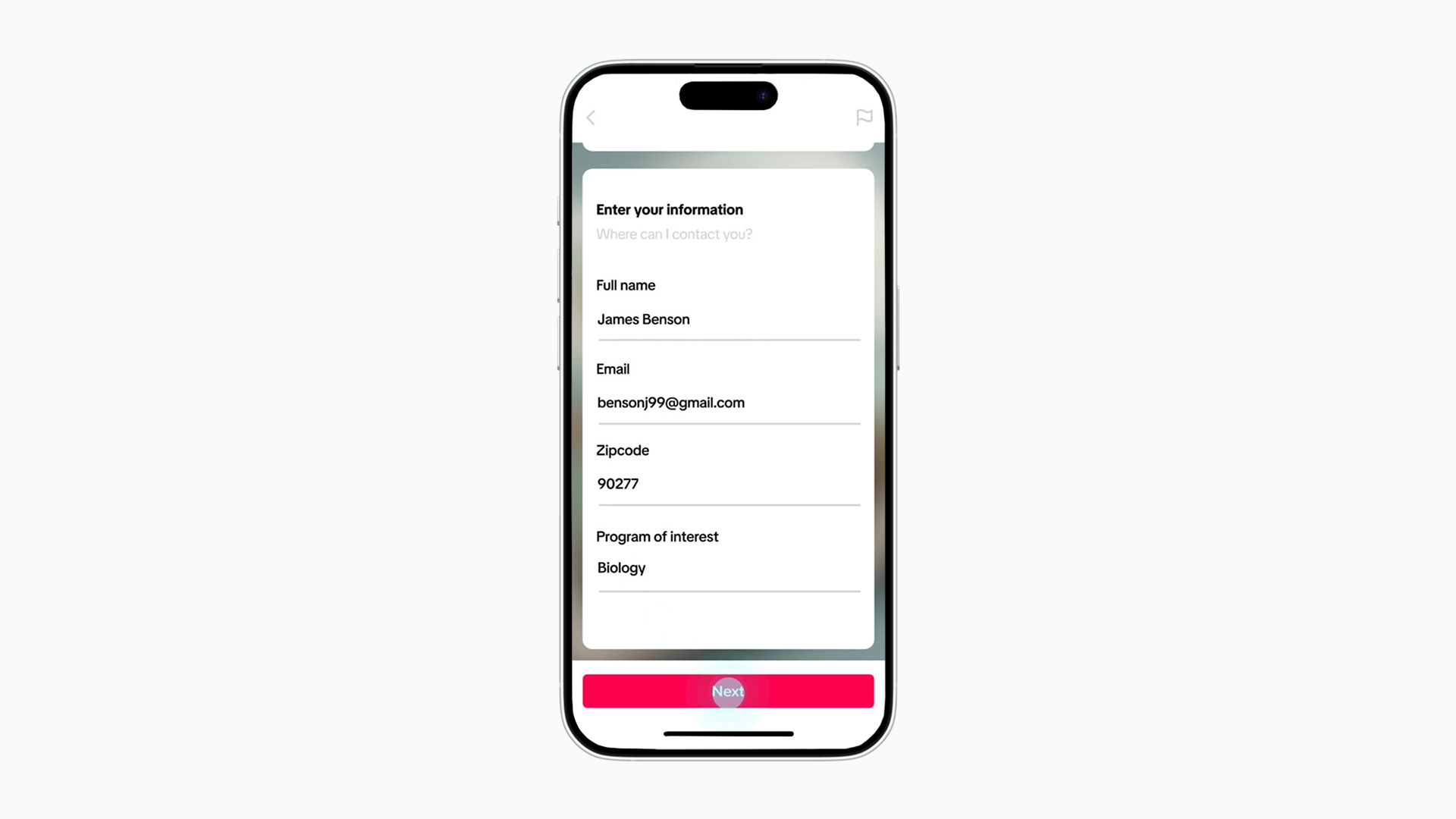
Instant Forms keep the lead journey inside TikTok. Users tap the CTA, provide their details, answer any additional questions, and submit without loading an external landing page.
The lower friction makes this format useful for consultations, registrations, quotes, applications, product enquiries, and other campaigns where advertisers want to capture interest quickly through TikTok Lead Ads.
TikTok also allows some information to be pre-filled when available, reducing the amount users need to enter manually.
Website Lead Generation
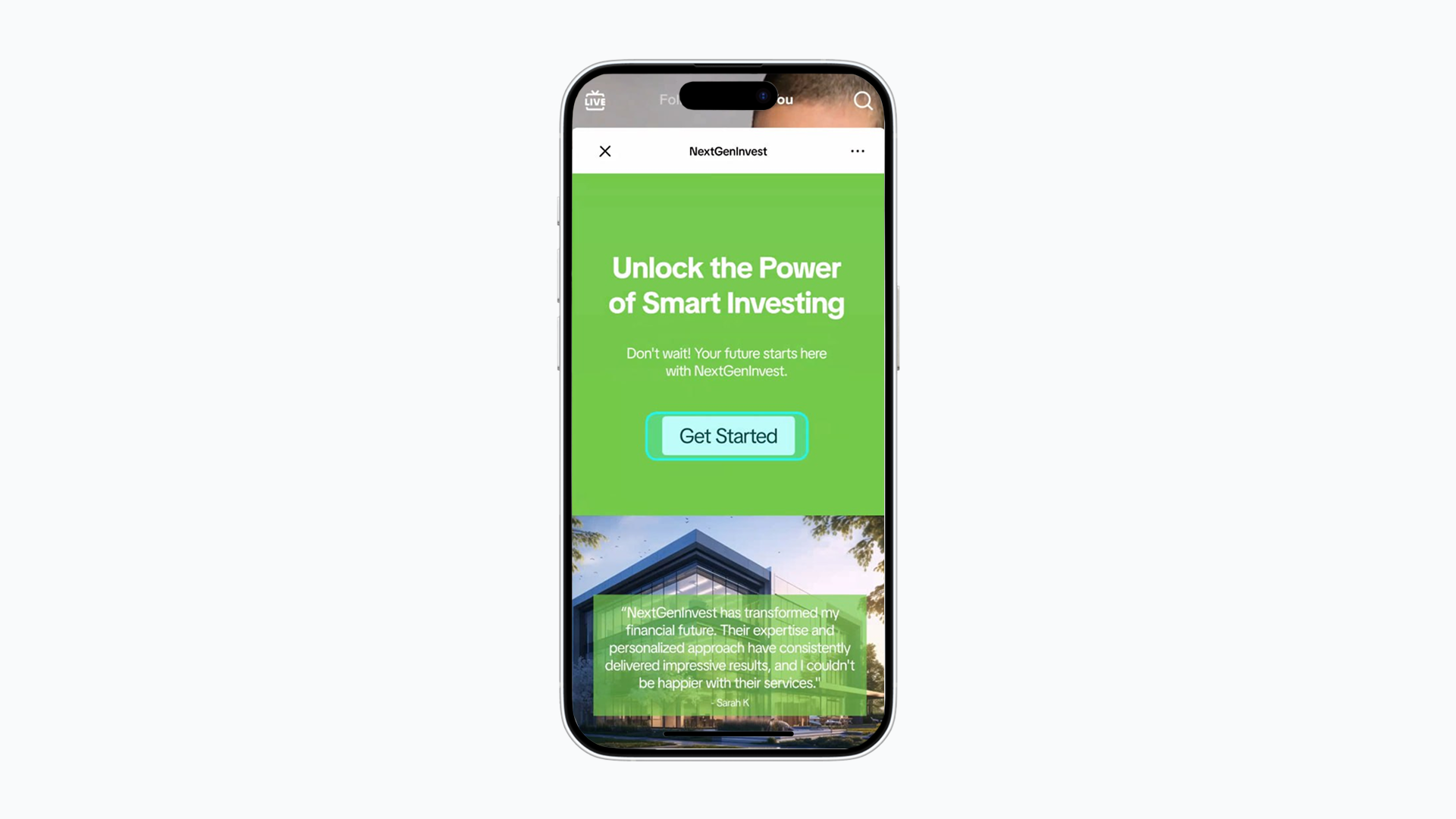
Website campaigns send users to an advertiser’s own landing page or form.
This route gives businesses more control over qualification logic, page content, analytics, and the post-conversion experience. Website forms are especially useful when advertisers need more detailed qualification questions than an Instant Form can support.
That flexibility matters for higher-consideration products such as mortgages, property investments, university programs, financial services, or complex B2B offers.
Messaging Ads
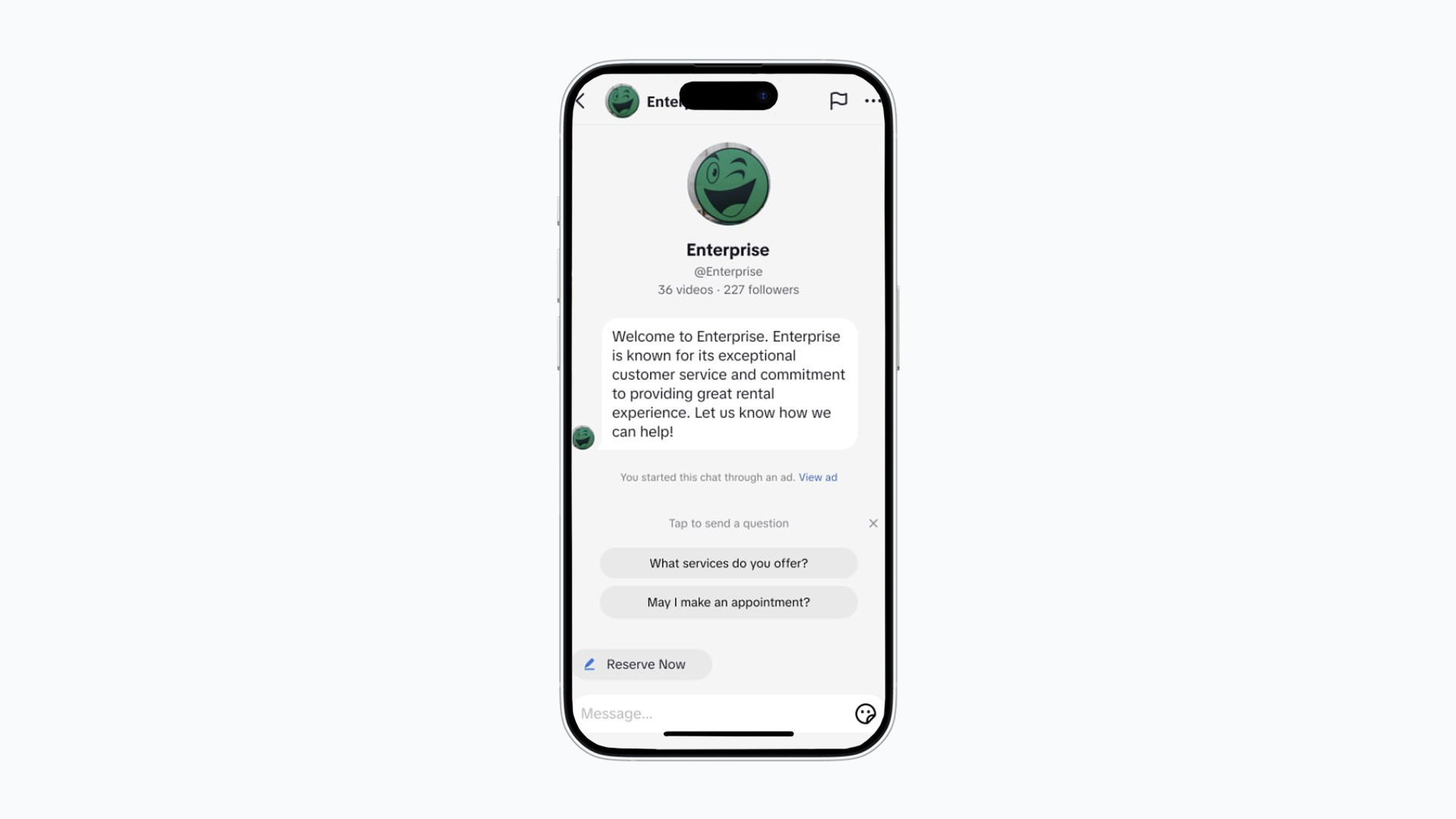
TikTok can also optimize lead generation campaigns toward TikTok Direct Messages and supported external messaging apps.
Messaging can suit businesses where qualification naturally happens through conversation. Real estate agents can discuss property requirements, education companies can answer program questions, and service businesses can qualify prospects before booking a call.
The right TikTok lead generation format depends on how much information you need to collect, how complex the qualification process is, and what should happen after the first response.
How to Generate More Qualified Leads on TikTok
Lead quality starts before a user ever reaches the form. The audience, creative, message, offer, and conversion journey all influence who responds and how likely they are to become a qualified prospect. For brands looking at how to generate leads on TikTok, the focus should be on attracting the right response from the very first impression.
Let’s explore six TikTok lead generation best practices.
1. Start With the Right Audience
Narrow targeting can feel safer when lead quality matters, yet excessive restrictions reduce the data available to TikTok’s delivery system.
Start with the audience parameters that genuinely matter to the business, then use campaign data to identify where stronger leads are coming from.
That does not mean removing important qualification criteria. Location, language, age or eligibility criteria, existing-customer exclusions, and other commercially relevant filters should remain when they reflect real business requirements.
The key is to distinguish genuine qualification criteria from assumptions about who is likely to convert.
For example, a property advertiser selling Dubai investment units may need geographic or financial qualification. Adding multiple speculative interests on top of those requirements, however, can unnecessarily narrow the audience without guaranteeing stronger TikTok qualified leads.
2. Use TikTok Ad Creative to Qualify Leads
Creative starts filtering your audience before anyone opens the form.
If the ad makes a broad promise but leaves out the details that determine who the offer is actually for, you can end up paying for plenty of clicks from people who were never likely to become customers. A clearer ad gives users enough context to decide whether it is relevant to them before they submit their details.
For a mobile app, that might mean showing the main use case, supported market, pricing model, or who the product is designed for. A FinTech advertiser can make the product’s core use case, supported customer type, or key eligibility criteria clear upfront. Real estate ads can include the location, property type, or starting price when those details influence whether a lead is realistic.
You may see fewer clicks when the message becomes more specific, but the leads that do come through are more likely to match what the sales team is actually looking for.
3. Add Qualification Questions to the Form
TikTok Instant Forms support custom questions alongside standard personal-information fields. Use those questions to collect information that genuinely changes how the lead is handled.
Depending on the business, that could include:
- product or service interest;
- expected purchase timeframe;
- program or property preference;
- budget range;
- business type;
- intended use;
- location.
Every extra field introduces friction, so avoid treating a longer form as a shortcut to higher quality. Ask for information that helps the business qualify, score, route, personalize, or prioritize the lead. If nobody uses a field after it enters the CRM, there is little reason to ask for it.
4. Use Higher Intent Forms for Better Lead Quality
TikTok currently gives advertisers two main Instant Form types.
More Volume removes the additional review page before submission. Higher Intent adds a review screen and CAPTCHA after the user clicks Submit, giving them another opportunity to confirm their information and helping verify that the submission comes from a real person.
For brands dealing with accidental submissions, weak contact rates, or large volumes of low-intent enquiries, Higher Intent can be more appropriate even when the total number of leads falls.
Measure what happens after making the change. Compare:
- qualified lead rate;
- cost per qualified lead;
- booked-call or appointment rate;
- sales opportunity rate.
A higher CPL may still improve the economics if a much larger percentage of those leads can actually be contacted and qualified.
TikTok also expanded phone-number verification in 2026. Instant Forms now validate phone-number formats globally before submission. In supported countries, TikTok can additionally check whether a submitted phone number is active after the form is completed. Numbers identified as inactive are removed from Lead Center and connected CRM systems and are not counted as leads or conversions.
This helps businesses cut wasted ad spend, improve lead quality, and give sales teams a higher share of reachable contacts. It can also reduce time spent chasing invalid numbers, making lead follow-up more efficient and improving the chances of turning leads into customers.
5. Make the Next Step Clear Before the Lead Submits
A lead can be technically valid and still be difficult to convert if the user has no idea what happens after they submit.
Tell prospects what to expect. If a sales representative will call them, say so. If they are requesting a quote, explain when and how they will receive it. If the next stage involves booking a consultation, make that clear before the final submission.
This helps filter out people who are curious about the offer but have little interest in continuing the process.
It also gives the sales team a warmer starting point. A lead who expects a call about a specific product or request is easier to follow up with than someone who submitted details after seeing a vague “Learn More” message.
The wider lesson is simple: optimize the journey for the lead you want sales to receive, not for the easiest possible form submission. Clear expectations can improve TikTok lead quality by reducing low-intent enquiries and giving users enough context before they convert.
6. Test Different TikTok Lead Ad Messages
TikTok campaigns need multiple creatives, but producing several near-identical versions rarely tells the advertiser much about lead intent.
Test different reasons to respond. One creative might lead with the problem. Another can focus on the product itself. A third might use customer proof, price, eligibility, or a specific use case.
For a FinTech advertiser, for example, separate creatives could focus on faster international payments, lower transaction costs, or a particular business use case. Comparing qualified lead rates across these angles can reveal which customer need attracts the strongest prospects.
The same applies to formats. Founder-led videos, demonstrations, customer stories, creator-style content, and direct product explanations can attract different audience profiles even when they promote the same offer.
This gives brands a better basis for creative decisions because they can judge ideas by the quality of the leads they generate, not just by click volume. That makes creative testing a practical way to improve TikTok lead quality over time.
TikTok Lead Generation Metrics and Performance Optimization
TikTok lead generation performance becomes much easier to evaluate when CPL is viewed alongside lead quality and downstream conversion metrics.
A campaign can generate cheap leads and still create expensive customers. Another campaign may look less efficient at the top of the funnel but produce more qualified prospects, more sales conversations, and a lower acquisition cost.
For that reason, TikTok lead generation metrics should be tracked across the full journey:
Click → form start → lead → contactable lead → qualified lead → opportunity → customer
The exact stages will vary by business, but the principle stays the same. Media metrics tell you how efficiently TikTok generates responses. CRM and sales data tell you whether those responses have commercial value.
Track the Metrics That Reflect Lead Quality
CTR, CPC, form completion rate, and TikTok cost per lead are still useful. They help identify issues with creative, delivery, or the conversion experience.
But once leads start entering the CRM, add metrics that reflect what happens next:
- Contactable lead rate: the percentage of leads your team can actually reach.
- Qualified lead rate: the percentage that meet your defined sales or eligibility criteria.
- Cost per qualified lead: total spend divided by qualified leads.
- Opportunity rate: the share of leads that progress into a real sales opportunity.
- Lead-to-customer rate: how many submitted leads eventually become customers.
- Customer acquisition cost: the total media cost required to acquire a customer.
These metrics often change how campaign performance looks.
A campaign generating leads at €12 may appear stronger than one generating them at €20. If the first campaign qualifies only 10% of leads and the second qualifies 40%, the cheaper campaign is actually producing qualified prospects at €120 each versus €50.
That is the level of comparison brands should use when deciding where to scale the budget.
Diagnose Performance by Funnel Stage
Strong TikTok lead generation optimization starts with identifying where performance is actually breaking down.
Problem | Likely cause | What to check |
High CTR, poor leads | Creative attracts too broad an audience | Message, offer, eligibility criteria |
High clicks, low form completion | Too much friction | Form length, questions, form type |
Low CPL, weak qualification | Conversion is too easy | Qualification questions, Higher Intent forms |
Strong leads, low sales | Post-lead process is weak | Response time, routing, sales follow-up |
Rising CPL, stable lead quality | Delivery costs or creative fatigue | CPQL, creative performance, audience saturation |
High lead volume, few customers | Optimization stops at submission | CRM signals, qualified lead and opportunity events |
Good form completion, low contact rate | Poor contact data | Phone verification, field validation |
Good qualification, few opportunities | Leads are not sales-ready | Offer, buying timeframe, lead scoring |
Generate Better Leads With TikTok Ads
The real value of TikTok lead generation shows up after the initial conversion. Brands need to look at who can be contacted, who qualifies, and who eventually turns into a sales opportunity or customer.
As a specialist TikTok Ads agency, Magnetto helps brands manage that full process with deep platform expertise, in-house creative production, audience strategy, continuous optimization, and clear performance reporting. Our TikTok Ads management approach is shaped by hands-on experience across FinTech, Web3, real estate, e-commerce, education, and other industries, helping us adapt campaign strategy to the acquisition challenges of each niche. Contact us to build your TikTok lead generation strategy.
FAQ
What are TikTok Lead Generation Ads?
TikTok Lead Generation Ads are campaigns designed to capture customer information directly from TikTok traffic. Advertisers can collect leads through Instant Forms, send users to website forms, or move them into conversations through TikTok Direct Messages and supported messaging apps.
Do TikTok lead campaigns need a separate landing page?
No. Instant Forms allow advertisers to collect leads entirely inside TikTok, so an external landing page is not required for that setup. A separate website becomes more useful when the journey needs richer content, more complex form logic, or a conversion experience that extends beyond what an Instant Form can support.
Does TikTok support automated lead generation campaigns?
Yes. Smart+ Lead Generation campaigns automate parts of campaign creation, management, and delivery. As of September 2026, Smart+ Lead Generation supports website conversions, TikTok Instant Forms, TikTok Direct Messages, and supported instant messaging apps.
Can TikTok lead audiences be used for future targeting?
Yes. Advertisers can create Custom Audiences from people who viewed or submitted an Instant Form. Those audiences can then be used for exclusions or to build Lookalike Audiences based on users who have already interacted with the lead campaign.
Can TikTok Lead Generation Ads connect directly to a CRM?
Yes. TikTok currently supports direct CRM integrations including HubSpot, Salesforce Sales Cloud, Salesforce Marketing Cloud, ActiveCampaign, Klaviyo, Google Sheets, Privyr, and Constant Contact. Advertisers can also connect through platforms such as Zapier, Make, LeadsBridge, and Albato, or use custom APIs and webhooks.