.png?width=4758&height=806&name=Frame%202131330738%20(1).png)


Telegram Ads


Nearly seven out of ten consumers trust recommendations from influencers, friends, or family far more than direct brand messaging. However, when running influencer campaigns, many companies face the same problem. Posts get thousands of impressions and likes, but they often fail to deliver real conversions and measurable business outcomes.
Over the years of working with Telegram influencers, we've identified the seven most common mistakes that tend to slow down campaign success. Let’s dive into these pitfalls and look at practical ways to fix them.
31.5% of users globally run ad blockers. People are tired of tons of ads that damage their experiences, which makes businesses find other ways to reach their target audiences. Telegram influencer marketing offers a solution: your brand gains access to engaged communities via key opinion leaders whose recommendations are heard and respected.
What makes Telegram especially effective for influencer collaborations is the platform's level of credibility: 73% of users trust specific public authors for news, industry insights, product discoveries, and expert opinions. This allows companies not just to get likes and become more recognizable players, but to influence real purchasing decisions, build long-term brand loyalty, and achieve stronger business results.
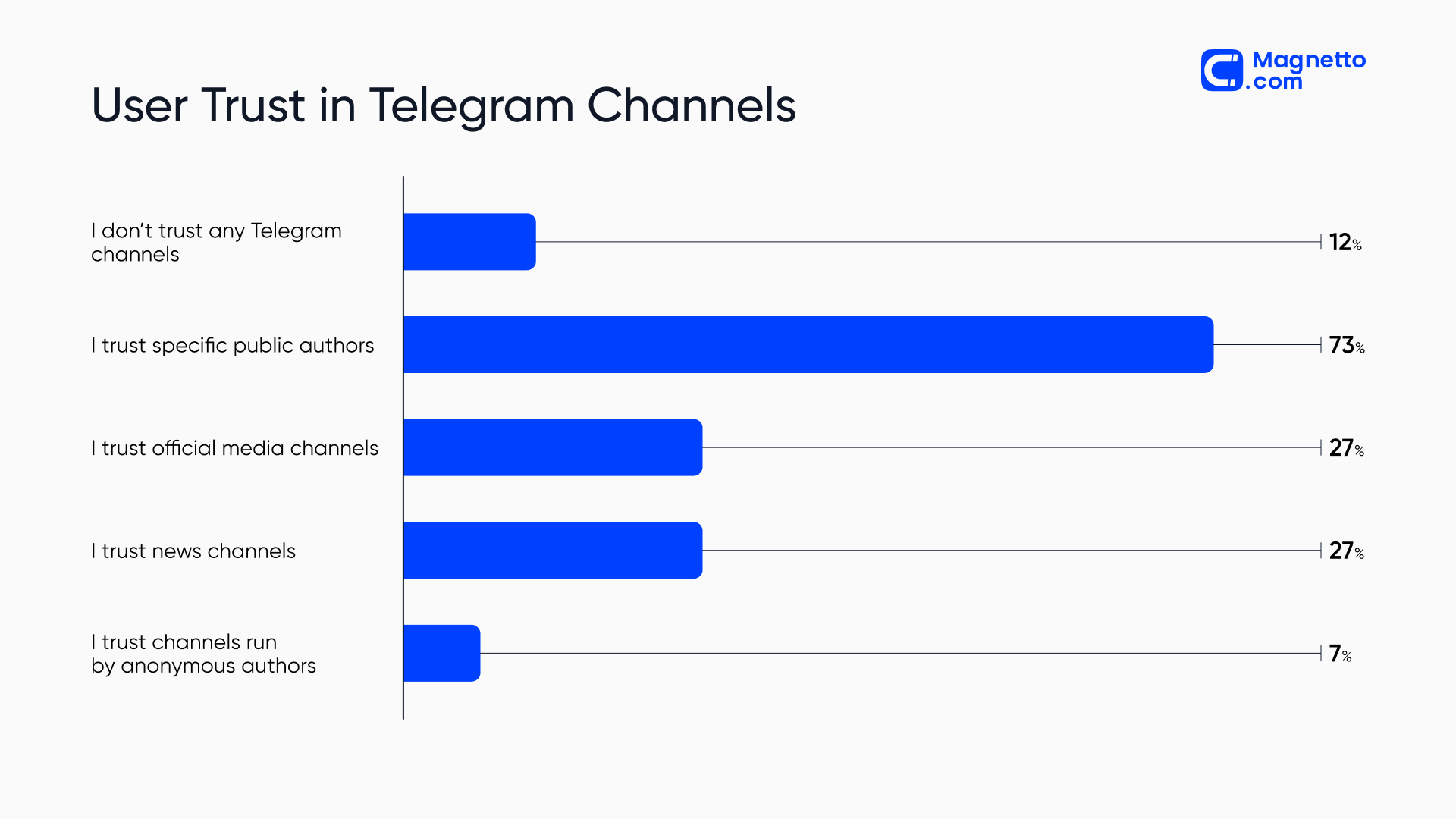 User trust in Telegram channels. Source: Telegram Marketing Statistics and Trends: The 2025–2026 Report
Influencers can help you reach a wide range of goals. You can launch a campaign for:
Today, influencer marketing has become one of the most profitable strategies. On average, companies earn close to $6 for every dollar they invest in collaborations with key opinion leaders.
In the next section, we’ll break down the key mistakes in running influencer ads and share expert tips on how to prevent or fix them.
Focusing only on follower numbers without digging deeper is one of the most common mistakes. From our experience, a small channel with a loyal and active audience can deliver strong business results from ads, sometimes even outperforming larger influencers.
Before you sign a contract with an influencer, take a closer look at these key performance indicators:
Frequency and quality of reactions. A high reaction count with thoughtful comments means the audience genuinely values the influencer’s content
To sum up, it’s important to take time and select a channel with an engaged community that actually listens and reacts rather than just scrolling by.
Some channels may have inflated subscriber numbers that come from bot accounts. Here’s how you can spot potential red flags:
When a part of an influencer’s audience is fake, your marketing budget goes toward empty impressions instead of potential customers. Even worse, inflated numbers can distort your performance data. Over time, this leads to costly mistakes, such as repeating failed tactics, overpaying for the wrong influencers, or abandoning Telegram when the platform itself isn't the problem.
One of the most costly marketing mistakes is launching an influencer campaign without first defining clear goals and deciding how you will measure success.
Here’s what to track depending on your campaign objective:
Choose a goal, set your metrics upfront, and select influencers whose audience closely matches your niche. When ads have clear targets, it becomes easier to evaluate results, identify and fix mistakes, and replicate success in future marketing campaigns with greater confidence.
Let’s say your post goes live, but 20 minutes later the influencer shares breaking industry news, a personal milestone, or a viral meme that sparks discussion. Naturally, the audience switches focus. Your ads may still generate views, but engagement and conversions can suffer.
This is what happens when posting boundaries aren’t discussed in advance. To prevent this, it helps to agree on a dedicated time window for your ad so that no other posts go live on the channel at least one hour before and one hour after your publication. This gives your content a better chance to gather attention and achieve meaningful results.
Before launch, double-check that the influencer isn’t promoting any direct competitors on the same day. This way, your post stays in focus rather than getting lost among similar ads.
Users arriving from ads expect a seamless, value-driven experience. If the audience response looks strong but conversions don’t follow, the issue may not be the influencer, but what happens after the click.
For example, if the next step in your marketing funnel is a chatbot, the transition needs to feel effortless and intuitive from the very first click. The bot should load quickly, greet users with a clear first message, and make the value obvious within seconds. If users land there and feel confused, overwhelmed, or unsure what to do, they may leave without a second thought.
To check if everything works fine, you can simulate the user journey: follow the influencer link as a new visitor, identify friction points, and fix mistakes if needed to make the experience seamless.
If you skip analyzing your influencer marketing campaign performance, you may miss critical signals: low CTR, weak conversions, or audiences that drop off right after the first click. Ignoring these signs creates repeated mistakes that can drain your budget. That’s why it’s important to track everything properly and fix issues as they arise.
Use UTM parameters, unique invite links, promo codes, or custom landing pages for each influencer. This helps you see what truly drives results, and it may reveal surprising insights. For example, sometimes a channel with fewer views generates stronger engagement and conversions because its audience is more aligned with your offer.
One of the biggest mistakes in influencer marketing is assuming your first version is sufficient. It might perform decently, but without testing alternatives, you may never know if it could have performed twice as well.
Rather than using just one version, try testing multiple ads in your campaign. You can experiment with different posting times, creatives, message styles, and calls to action. Even adjusting the opening sentence may influence how many users continue reading.
The key is to isolate one variable at a time. If you change everything at once, you won’t understand what actually improved performance and you won’t know what fix will make the biggest difference.
Success in influencer marketing comes down to a solid strategy: selecting KOLs with active, engaged audiences, making sure your landing page is optimized for conversions, and tracking performance to fine-tune results. By following this approach, you'll do more than just gather likes; you'll drive subscriptions, generate valuable leads, and increase sales.