6 out of 10 users click on Telegram Ads. With that level of user engagement, Telegram channel selection becomes one of the biggest variables advertisers can control.
Two channels with similar subscriber numbers can deliver very different outcomes because their audiences may differ in relevance, activity, history, and intent. A stronger evaluation process helps separate channels that simply look large from those that are more likely to deliver qualified traffic and conversions.
In this article, we break down the seven most common mistakes advertisers make when evaluating Telegram channels and show what to check before adding a channel to your targeting.
Mistake #1. Choosing Channels Based on Subscriber Count Only
Subscriber count shows potential scale, but it does not tell you how relevant that audience is to your offer. A Telegram channel with a large audience may still be a poor fit if most subscribers fall outside your target customer profile or show little engagement with the topics that matter to your brand.
Compare channels based on topic, audience interests, geography, and commercial intent before looking at size. Smaller communities in a tightly defined niche can be more valuable when they attract an active audience with stronger purchase or product relevance. A focused community of traders, Web3 developers, or property investors may therefore offer better reach than a much broader finance, crypto, or real estate channel.
The goal is to find a relevant audience first, then use subscriber count to judge how much additional scale the channel can contribute.
Mistake #2. Ignoring Channel Growth Patterns and Warning Labels
A strong subscriber total can hide weak subscriber growth quality. Before setting up your targeting, review the channel’s growth dynamics across several weeks or months and look for patterns that make sense.
Large sudden spikes are not automatically a problem. They may follow viral content, a major mention, giveaway, or advertising campaign. The key question is whether the increase can be linked to visible traffic sources and whether those new subscribers continue viewing content afterward.
That post-spike behavior matters. If subscriber numbers jump sharply while average views stay flat or fall, the channel may have added inactive users through artificial growth, purchased traffic, or other low-quality traffic. Stronger channels usually show some corresponding lift in reach after genuine audience growth. Pay attention to warning signs as well: Telegram places SCAM or FAKE labels on channels reported for fraud or impersonation.
Treat unexplained growth as a reason for deeper analysis rather than an automatic rejection. Trace where the audience came from, compare views before and after the spike, and check whether the new audience remained active.
Mistake #3. Not Checking Reach and Post View Patterns
Subscriber growth tells you how an audience was built. Average post views show how much of that audience still consumes the content.
Start by comparing recent post reach with the current subscriber count. Avoid treating one unusually successful post as representative. Look across a meaningful sample and see whether normal posts produce reasonably consistent visibility. Then examine post view patterns over time.
For many active channels, view growth rises fastest during the first few hours after publication and then slows as the post gets older. These view patterns can signal potential issues:
- Strange jumps in views long after publication
- Identical view totals across multiple posts
- Large view differences with no clear explanation
There is no universal reach percentage that separates healthy channels from weak ones. Posting frequency, niche, channel age, forwarding behavior, geography, and content format all affect the ratio.
Benchmark the channel against comparable publishers in the same category. What you want to see is an active audience, natural view accumulation, and enough engagement consistency to give your advertising predictable visibility.
Mistake #4. Failing to Review Channel History and Positioning Changes
The channel you see today may have built much of its audience under a very different identity. Historical analytics can reveal previous usernames, name history, and description history, helping you understand who originally subscribed and why the audience may have formed in the first place.
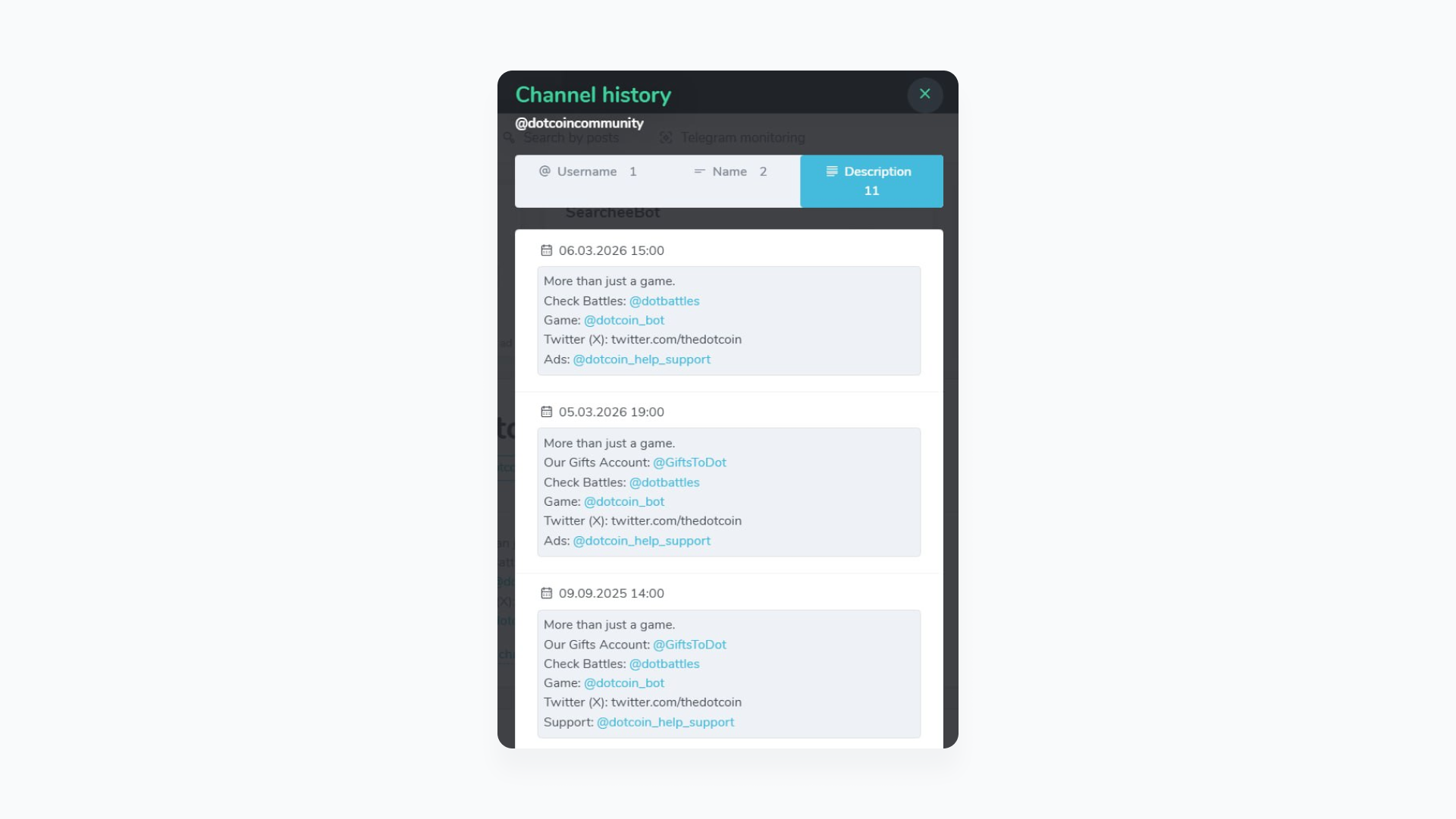 A Telegram channel history
Why is it important? A recent rebranding or major niche shift can leave a mismatch between the current content and the audience that was accumulated earlier. A channel now focused on investing may still carry thousands of subscribers acquired when it covered entertainment, gaming, or another unrelated topic.
A channel sale can create a similar problem if new owners change the editorial direction while keeping the existing subscriber base. Before buying ads, review the broader channel background and look for abrupt changes in topic, links, posting style, or positioning.
The key question is whether the current audience was actually built around the subject you want to target. A consistent history gives you stronger evidence of audience continuity and trustworthiness, while repeated identity changes should prompt deeper checks before budget is committed.
Mistake #5. Overlooking Channel Mentions and Audience Connection
Telegram channel mentions can show how a channel fits into the wider Telegram ecosystem. Before buying ads, check which publishers mention it, how often those mentions appear, and whether those publishers operate in the same or adjacent niches.
This helps clarify Telegram channel traffic sources. Mentions from credible, relevant communities indicate that subscriber growth came from audiences with similar interests, while repeated promotion through giveaways, unrelated channels, or low-quality networks may bring in users with weaker commercial relevance.
Mentions can also help you compare channels before launch. If several shortlisted channels are frequently referenced by the same publishers, they may share a large portion of the same audience. Reviewing that overlap gives you a clearer view of Telegram channel audience quality and helps minimize duplicated reach across multiple placements.
Mistake #6. Targeting Channels Without Reviewing Their Content
Strong reach does not automatically indicate high Telegram channel quality. Before targeting a channel, review what the channel publishes, how consistently it covers its niche, and whether the content gives subscribers a reason to keep paying attention.
So, how to evaluate Telegram channels? Focus on the editorial environment around the placement. Check the following:
- Whether the channel stays focused on a clear niche
- How much content is original versus reposted
- Whether posts provide useful depth or rely on clickbait
- How consistent the publishing style and topic mix are
- Whether recent content aligns with your customer’s interests
A proper Telegram channel audit should also include ad density. If sponsored posts appear too frequently, even an active audience may become less responsive, reducing visibility and making it harder for your message to stand out. Check several days of posts to see how often ads appear and whether they naturally fit the surrounding content.
Mistake #7. Not Testing and Optimizing After Launch
Even thorough channel selection cannot tell you exactly how your offer will perform.
Use test launches to turn your shortlist into real performance data. Track the metrics that align with your business goals: qualified leads, app installs, registrations, purchases, subscribers, or funded accounts.
Compare channels on outcomes rather than clicks alone. One placement may generate cheaper traffic while another sends fewer visitors who convert at a higher rate.
Your analytics should also feed back into channel selection. Identify which topics, audience profiles, geographies, and channel characteristics correlate with stronger campaign performance. Use those findings to optimize the next buying cycle.
When a channel repeatedly misses your benchmarks, pause it and redirect spend toward stronger placements or new candidates. Revisit previous winners as well. Audience composition, editorial direction, reach, and advertising volume can change.
That feedback loop creates continuous improvement. Over time, you develop your own evidence about which Telegram communities work for your product rather than relying on generic channel rankings.
Summary: Red Flags vs. Good Signs
Use this table to separate promising channels from placements that may look strong on the surface but carry hidden risks.
| What to Check |
Red Flags |
Good Signs |
| Subscriber base |
Large subscriber count with weak audience relevance |
Audience closely matches your niche and customer profile |
| Growth patterns |
Unexplained spikes, sudden drops, or suspicious growth |
Growth can stem from ads, mentions, or viral content |
| Reach and views |
Flat views after subscriber growth, irregular spikes |
Strong reach, natural view growth, and steady audience activity |
| Channel history |
Frequent rebrands, niche shifts, ownership changes, or unrelated past topics |
Consistent positioning and a clear history of attracting the same audience |
| Channel mentions |
Mentions from unrelated, low-quality, or giveaway-driven channels |
References from credible Telegram channels with relevant audience overlap |
| Content quality |
Clickbait, excessive reposting, weak topic focus, or too many ads |
Original, useful, niche-specific content with consistent editorial quality |
Magnetto.com brings hands-on Telegram Ads expertise across Web3, FinTech, E-commerce, Real Estate, and other niches, supported by direct Telegram infrastructure access and Business Telegram Ads accounts billed in euros. If you need help identifying stronger channel opportunities and building a more scalable Telegram Ads strategy, contact us to discuss your business goals.
.png?width=4758&height=806&name=Frame%202131330738%20(1).png)



.png?width=2400&height=1256&name=2400%D1%851256-1%20(3).png)