Email has supported customer nurturing for decades, and its average open rate of 30.7% shows that the inbox still holds commercial value. Telegram, meanwhile, has become one of the fastest-growing communication platforms: channel posts reach average open rates of 55% to 60%.
For businesses and any performance marketing agency, this raises a strategic question: should email remain the main channel for customer communication, or can Telegram add new opportunities for business growth? This article compares both channels across reach, audience interaction, automation, and business use cases to help you choose the right approach for your audience and goals.
Email Marketing: How It Works, Key Benefits, and Common Limitations
Email marketing continues to be one of the most established digital marketing channels. Brands use it to communicate with subscribers, promote products, recover abandoned carts, announce product launches, and build long-term customer relationships. Around 376 billion emails were sent and received every day worldwide in 2025, while the global number of users reached 4.55 billion and is projected to grow to 4.97 billion by 2028.
For companies with permission-based subscriber lists, email continues to generate measurable revenue. Research shows that it outperformed banner ads and SMS by 108% in revenue attribution, social media posts by 13%, and social media ads by 11%.
Daily habits also support the channel. 93% of users check their email every day, and 41% actively look for coupons and promotional offers from brands.
Benefits of Email Marketing
Let's explore the main benefits that make this marketing channel valuable for companies:
- Owned audience access. Brands maintain a direct communication channel with subscribers instead of depending on changing social algorithms, paid reach, or third-party platform policies.
- Advanced automation. Welcome sequences, abandoned-cart reminders, lead-nurture flows, renewal notices, and post-purchase messages can respond automatically to customer behavior, which allows you to deliver relevant communication at key decision points
- Detailed segmentation. Email platforms can combine CRM records, transaction history, product usage, acquisition source, and engagement data. Marketers can then tailor offers, content, frequency, and timing to specific customer groups
- Consistent performance. The average click-through rates typically range from 2.09% to 2.62%, depending on the platform and industry.
Limitations of Email Marketing
Despite its strengths, this marketing channel comes with several challenges that need to be managed carefully:
- Building a quality list takes time. Email performance depends on the size and quality of the subscriber database. Brands must earn sign-ups through paid acquisition, content, partnerships, product usage, lead magnets, or checkout activity.
- Spam complaints hurt deliverability. Around 80% of users mark emails as spam because they look suspicious or overly promotional. Another 55% report emails from senders without permission, while 47% flag messages that lack an unsubscribe link. These complaints damage sender reputation and limit reach across the entire subscriber database.
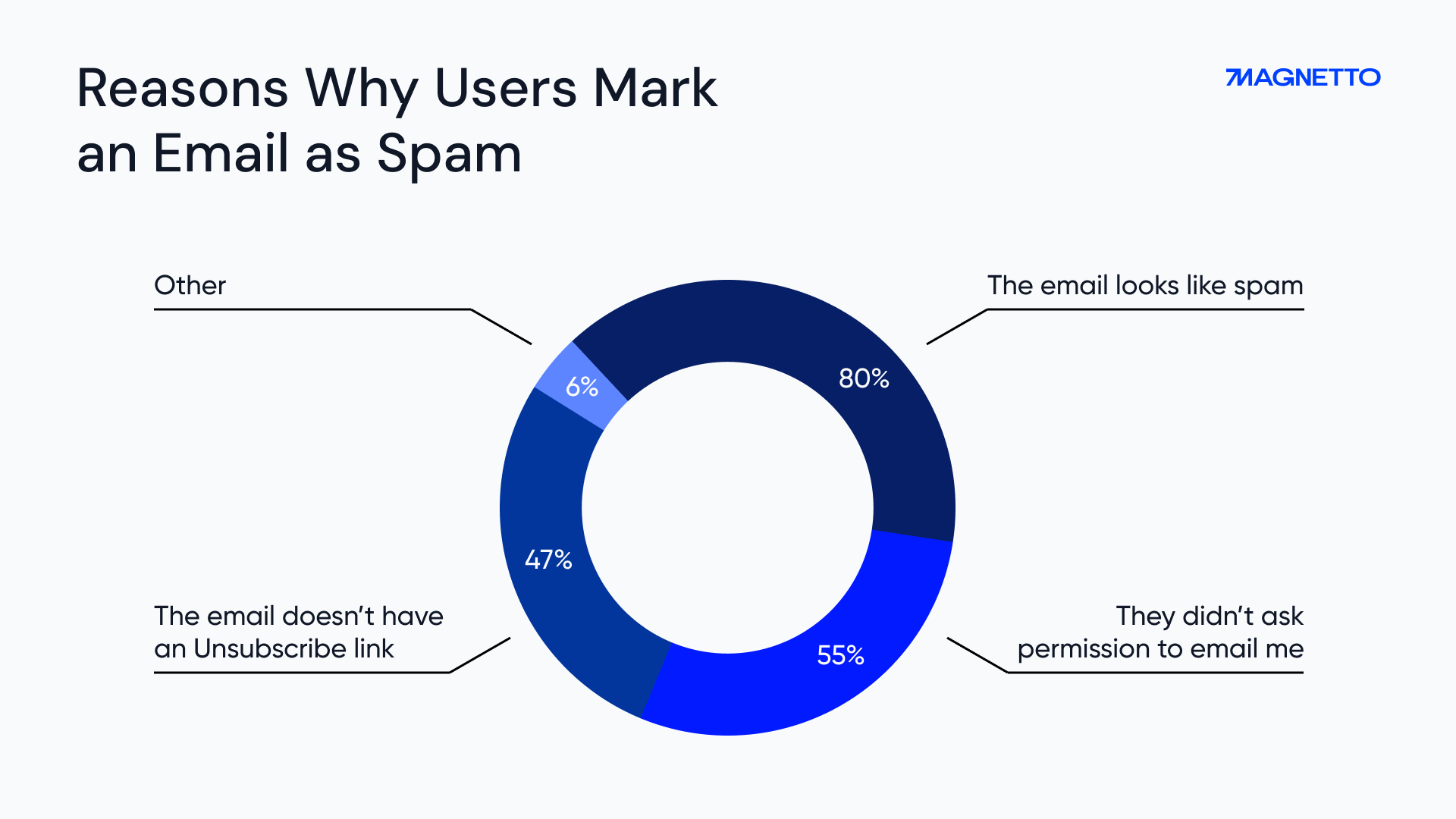 Reasons why users mark an email as spam
-
Frequent messages drive unsubscribes. 43% of users unsubscribe because brands contact them too often. When every promotion, update, and reminder goes to the full list, recipients quickly stop seeing the messages as relevant.
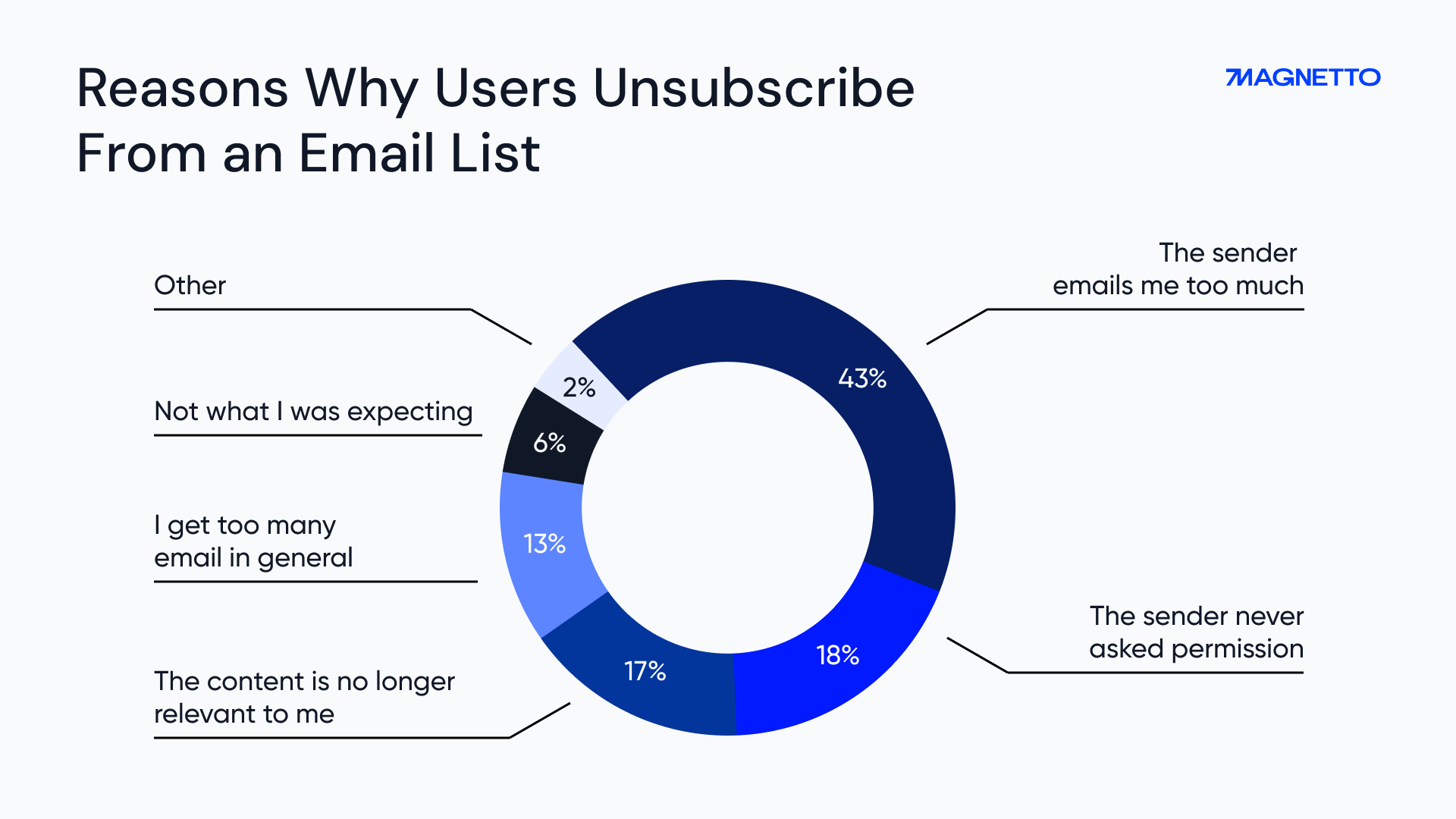 Reasons why users unsubscribe from an email list
Email marketing remains a reliable channel for building customer relationships and driving revenue. However, maintaining performance requires more than sending regular campaigns. List quality, customer consent, and message relevance all play a role in long-term success.
Telegram Marketing: How It Works, Key Benefits, and Common Limitations
Many of the world's leading brands already maintain active Telegram channels where they publish product updates, promotions, company news, educational content, and event announcements. This shift reflects how people use the platform: over 550 million people use Telegram daily, and an average user opens the app over 21 times a day, creating frequent opportunities for brands to reach their audience.
Creating a Telegram channel is only one part of a broader Telegram marketing strategy. You can build bots to automate customer support, qualify leads, answer FAQs, collect orders, and guide users through onboarding without human intervention. Telegram mini apps allow customers to browse products, make purchases, transfer money, complete registrations, or access services without leaving Telegram.
Brands can also run Telegram Ads to increase brand awareness, grow their subscriber base, drive traffic to websites or mini apps, and scale customer acquisition. Combined with channels and bots, Telegram Ads create a full-funnel marketing system that supports awareness, engagement, conversions, and long-term customer relationships.
Benefits of Telegram Marketing
Telegram offers several advantages for businesses looking to improve customer interaction and drive higher customer lifetime value:
- High visibility. Your Telegram updates appear on the platform where users already spend more than 41 minutes a day. Since Telegram isn't flooded with promotional messages like most email inboxes, your content has more opportunities to capture attention.
- Strong audience engagement. Subscribers expect regular updates from channels they follow: nearly 40% enable push notifications for up to five channels, while more than 10% keep notifications on for six to ten channels. Moreover, Telegram supports reactions, comments, polls, and group discussions, creating a more interactive experience.
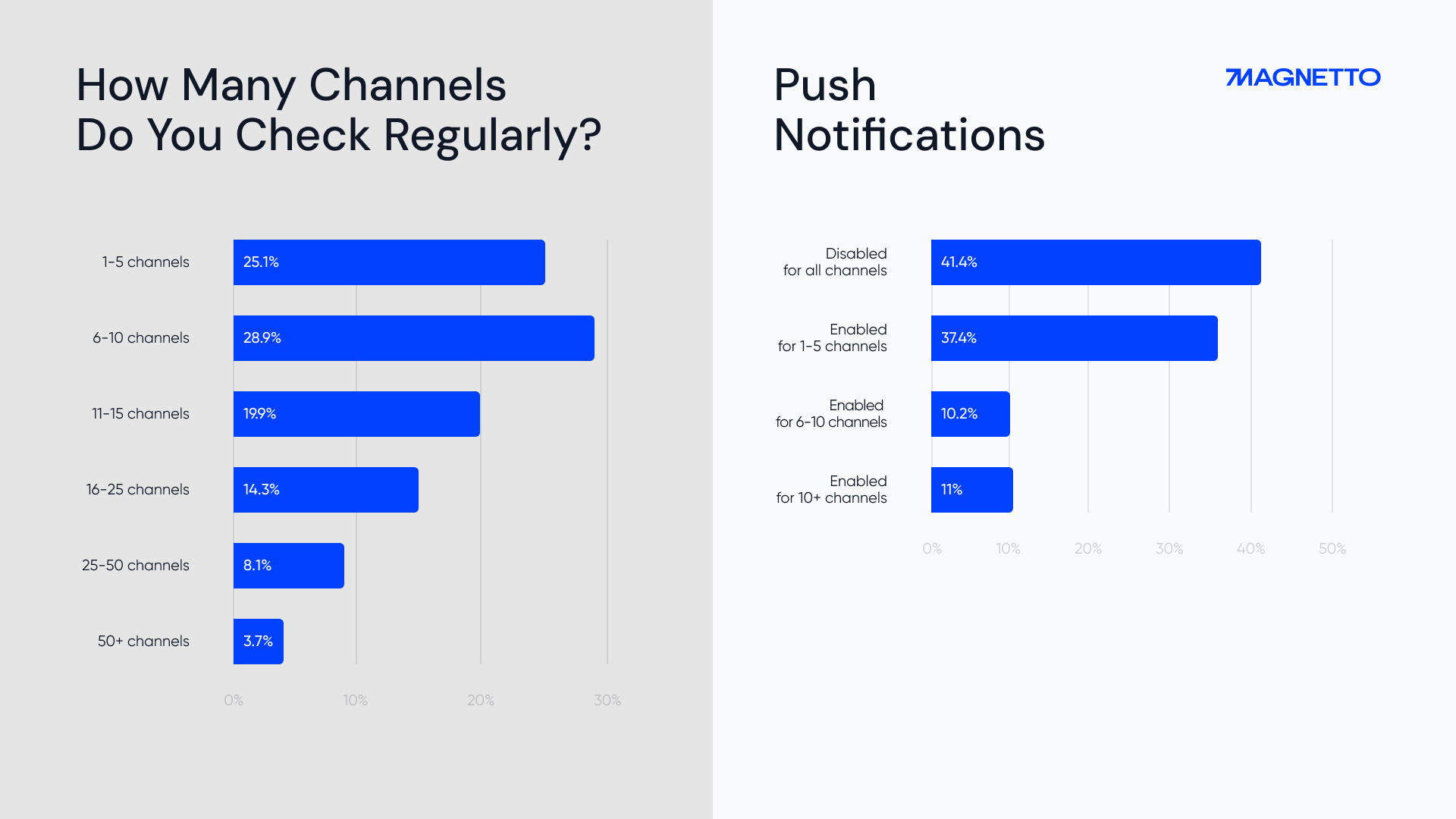
Telegram channel statistics. Source: Telegram Marketing Statistics and Trends: The 2025–2026 Report
- Fast communication. Product launches, limited-time offers, company updates, and breaking news are delivered instantly. Unlike email, there's no concern about spam filters delaying or blocking delivery.
- Lower customer acquisition costs. You can combine organic growth with Telegram Ads, influencer partnerships, and cross-promotions. In many industries, advertising competition remains lower than on mainstream digital channels, which helps reduce acquisition costs.
- Built for community growth. Telegram allows brands to build active communities where customers interact with both the company and one another, strengthening loyalty and increasing repeat engagement.
Limitations of Telegram Marketing
Telegram provides valuable tools for customer interaction and acquisition. However, like any marketing channel, it comes with a few challenges:
- Growing an audience takes consistency. A new Telegram channel starts with zero subscribers, so growth requires ongoing promotion. Businesses can accelerate the process by combining organic content with Telegram Ads, influencer collaborations, and support from an experienced agency.
- Regular publishing is essential. A Telegram channel grows through consistent, valuable updates. Long periods without new content can reduce subscriber activity and slow audience growth.
- Communities need ongoing management. Active groups can attract spam or off-topic discussions as they grow. Clear community rules and active moderators help maintain a positive experience.
Telegram gives businesses more ways to connect with their audience than a traditional update channel. With community management, automation, and paid acquisition tools available in one place, it has become an effective marketing channel for brands looking to build stronger customer relationships.
Telegram vs. Email Marketing: What's the Difference?
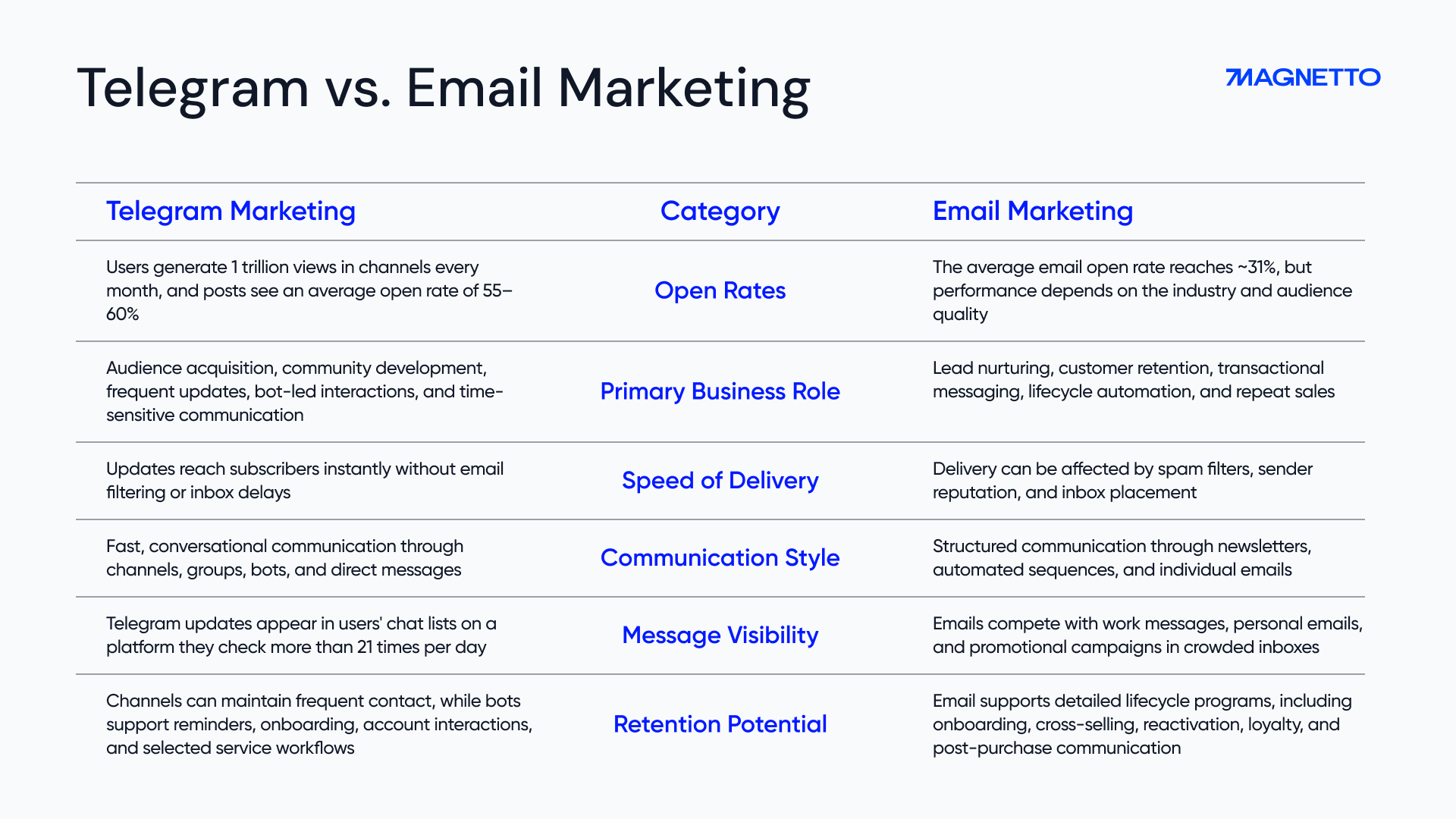
These two marketing platforms play different roles in how brands reach and engage their audiences. Email remains a strong channel for structured communication and lifecycle campaigns, while Telegram focuses on fast updates, community engagement, and direct interaction. Let’s have a look at the table below to understand the main differences between the two channels:
When You Should Use Email Marketing
Email marketing delivers the strongest results when businesses already have a permission-based relationship with a prospect or customer. After a user creates an account, downloads a resource, requests a quote, or makes a purchase, it provides a reliable channel for nurturing relationships and guiding them through the customer journey.
This makes this channel especially useful for longer buying cycles. A SaaS company can guide new users through onboarding, an e-commerce brand can recover abandoned carts and drive repeat purchases, and a real estate business can nurture leads until they are ready to book a viewing.
It is also the strong choice when the message needs detail, documentation, or easy future access. Pricing updates, receipts, account alerts, contracts, product education, and a multi-step nurture campaign are easier to review and retrieve in an inbox.
When Telegram Is the Better Choice
Telegram is particularly valuable for businesses that want to maintain direct, ongoing communication with their audience. A Telegram channel gives brands a dedicated space to keep subscribers informed through regular updates, including:
- Product launches and feature updates
- Industry news and market insights
- Educational content and expert tips
- Promotions and limited-time offers
- Event announcements and reminders
- Company news and important updates
For brands that already use newsletters, Telegram channels offer a more immediate distribution model. Subscribers receive updates directly within the app and can access previous posts at any time. Channels also support links, images, video, polls, reactions, and comments, which allows you to deliver information in more engaging ways and gather audience feedback. With a Telegram Ads campaign, you can go beyond organic growth by reaching new audiences, driving qualified traffic, and building a larger subscriber base faster.
Telegram bots extend these capabilities even further. They can collect lead details, qualify prospects, distribute gated content, recommend products, answer common questions, send reminders, and guide users toward a registration or purchase. This allows businesses to combine newsletter-style publishing with automated customer journeys inside the same platform.
Telegram becomes the stronger option when speed, interaction, and ongoing engagement are key marketing priorities. Channels distribute the content, while bots manage the next action. With targeted ads, consistent publishing, and thoughtful automation, brands can turn an engaged audience into qualified leads, loyal customers, and steady long-term growth.
Can Telegram Replace Email Marketing?
Telegram can replace some functions traditionally handled by email, particularly recurring newsletters, product updates, promotional messages, community announcements, and automated lead interactions. Channels give businesses a direct publishing format, while bots can manage qualification, reminders, content delivery, and selected customer journeys.
A complete replacement is less practical for use cases that require formal or highly structured communication. Receipts, contracts, account notifications, detailed onboarding sequences, and long-form educational content are usually easier to manage and retrieve through email.
For many brands, the two channels are most valuable when connected. Telegram can drive discovery, engagement, and immediate action through channels, bots, and ads, while email marketing supports lifecycle automation and long-term customer retention. When each channel has a clear purpose, brands can create a smoother customer experience and stay connected with their audience at every stage of the journey.
As a Telegram Infrastructure Partner, the Magnetto.com agency helps businesses scale on Telegram through deep platform expertise, exclusive access to euro-billed Business Telegram Ads accounts, and proprietary AdTech. Contact our team to explore how Telegram can support your growth objectives.
.png?width=4758&height=806&name=Frame%202131330738%20(1).png)