Every day, TikTok users spend an average of 95 minutes scrolling through their feeds. They're following favourite creators, discovering new products, comparing brands, and looking for recommendations before making purchasing decisions. For businesses, that's a unique opportunity to connect with potential customers while they're actively exploring what to buy next. With TikTok Ads, brands can place their products and services directly in front of these highly engaged audiences and drive measurable business results.
This guide will show you how to launch your first TikTok Ads campaign, avoid common mistakes, and create a foundation for lasting success.
Why Advertise on TikTok?
As the 5th most-used social network globally, TikTok gives brands access to a massive audience and strong opportunities for growth.
Large and Varied Audience
What was once considered a teen-focused app has become one of the world's most diverse social media platforms. In 2026, TikTok's advertising tools can reach approximately 2 billion users globally, which makes it one of the largest social media ad platforms available to marketers.
TikTok's audience continues to expand across different age groups, industries, and interests. While younger demographics remain highly active, professionals, parents, homeowners, and business decision-makers have become a growing part of the platform. Recent demographic data shows that TikTok's largest audience segment is aged 25–34.
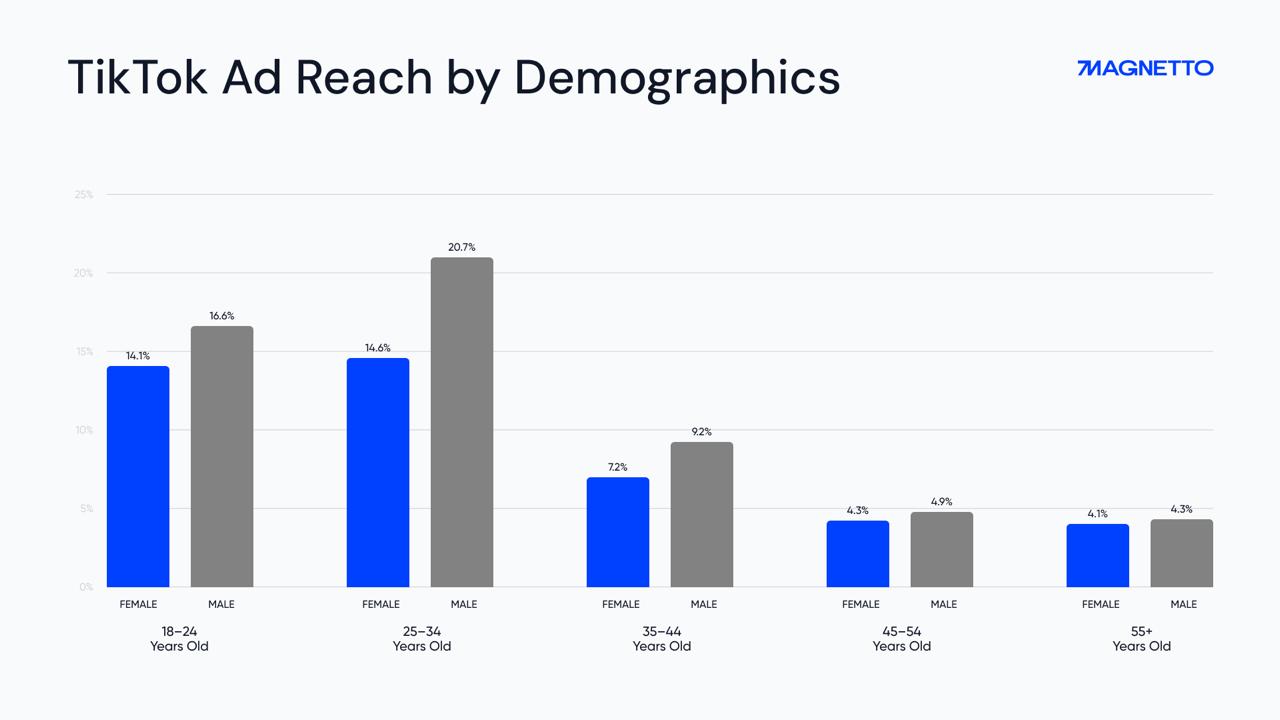 TikTok Ad Reach by Demographics. Source of data: DataReportal
For businesses, TikTok's diverse audience creates opportunities across many industries. Beauty brands can reach trend-conscious shoppers, SaaS companies can connect with young professionals, fitness brands can engage health-focused consumers, and financial services can reach users interested in investing and personal finance.
High Engagement Rates
While engagement rates continue to decline on most social platforms, TikTok remains a standout performer. In Q1 2026, it delivered a strong 3.40% engagement rate, while Instagram's ER fell from 0.52% to 0.45% year over year.
The platform's recommendation engine plays a major role in these results. TikTok's For You feed distributes content based on user behavior and interests. This allows businesses to reach large audiences even when they have a small following. Research shows TikTok can deliver 3 to 10 times more reach than Instagram or Facebook for new accounts, helping brands gain visibility faster.
Strong Purchase Intent
Recent data from TikTok shows that 70% of users discover new brands and products on the platform, while 83% say TikTok influences their purchase decisions. What's even more impressive, three out of four TikTok users say they're likely to make a purchase while using the platform.
This creates a short path from discovery to conversion. A user can watch a product demonstration, read comments from existing customers, visit a website, and complete a purchase within the same browsing session.
Lower Competition Than on Google and Meta
Google and Meta continue to dominate digital advertising budgets. Meta is expected to generate over $243 billion in global ad revenue in 2026, narrowly outperforming Google, which is projected to reach nearly $240 billion. This reflects the enormous number of advertisers competing for attention across these platforms.
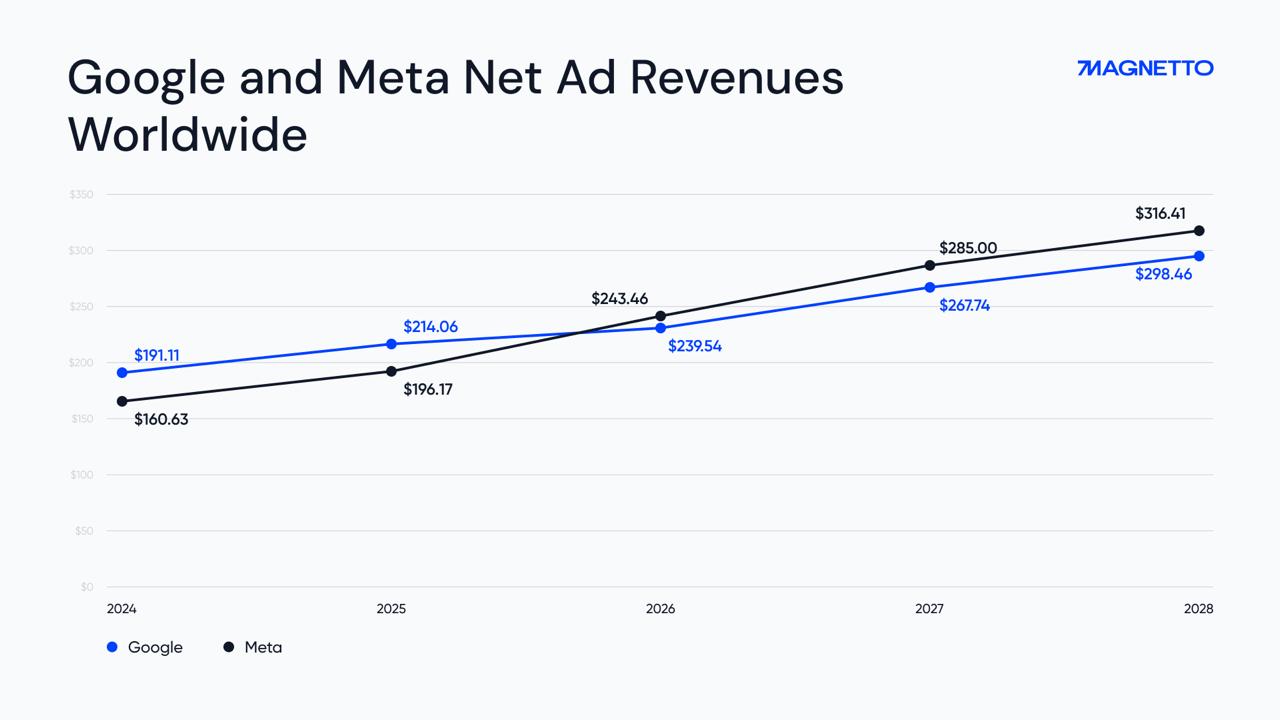 Google and Meta net ad revenues worldwide, 2024–2028. Source of data: Emarketer
By comparison, TikTok's advertising ecosystem is still less saturated. The US, which generates around 41% of TikTok's global ad revenue, is forecast to reach just $17 billion in total. For advertisers, this means more opportunities to stand out, reach engaged audiences, and achieve efficient results with less competition.
TikTok Ads: Campaign Objectives Explained
Your campaign objective tells TikTok's algorithm what result to prioritize. The platform uses that signal to determine who sees your ads and how delivery is optimized. Choosing the right objective from the start helps your ad spend work more efficiently and improves the quality of your results.
Objectives in Ads Manager are divided into three categories: Awareness, Consideration, and Conversion. Let’s look at how to choose the right objective when you launch your TikTok Ads campaign.
Awareness: Reach More People
Awareness campaigns are designed to maximize visibility. If your goal is to introduce a new brand, product, or service to a large audience, this objective helps deliver your ads to as many relevant users as possible.
Consideration: Generate Interest and Engagement
Once people become familiar with your brand, the next goal is encouraging them to take action. Consideration objectives help move users deeper into the customer journey. Depending on your business goals, you can optimize for website traffic, video views, or community growth.
Conversion: Turn Attention Into Revenue
Conversion objectives focus on measurable business outcomes. These campaigns are designed for users who are ready to take a high-value action, such as making a purchase, submitting a form, installing an app, or completing another conversion event.
Which Objective Should You Choose?
A simple way to decide is to match the objective to your stage of growth:
- Choose Awareness when you want maximum exposure.
- Choose Consideration when you want engagement, traffic, or leads.
- Choose Conversion when your priority is sales, sign-ups, or other revenue-driving actions.
Step-by-Step Guide to Creating a TikTok Ad Campaign
Let’s go through the key steps to launch a successful TikTok ad campaign.
Step 1: Create a TikTok Ads Manager Account
Visit TikTok Ads Manager and register using your business information. During setup, you will provide details such as company name, URL, industry category, and telephone number.
Step 2: Create Your First Campaign
Inside TikTok Ads Manager, click the "Create" button to start a new campaign.
Select your objective based on the outcome you want to achieve. Next, assign a campaign name that clearly identifies its purpose. Organized naming conventions make reporting much easier when multiple campaigns are active.
Choose an optimization goal to guide your bidding and budget strategy. Available goals vary by objective and include options such as Lead Generation or Website Conversions.
Step 3: Set Up Targeting and Budget
Once you've selected your campaign objective, the next stage is deciding who should see your ads and how much you're willing to spend to reach them. For most first-time advertisers, broad targeting often delivers stronger results than highly restrictive audience settings. TikTok's algorithm performs best when it has enough data and flexibility to identify users who are likely to engage with your ad or complete your desired action.
After defining your audience, choose a daily or lifetime budget. A daily budget controls how much you spend each day, while a lifetime budget spreads your spending across the entire campaign duration. Follow TikTok's minimum spending requirements:
- $50+ at the campaign level
- $20+ at the ad group level
If you’re launching your first TikTok campaign, start with a testing spend that gives the algorithm enough room to gather data. This will help you evaluate performance, identify winning audiences, and create a stronger foundation for optimization.
Step 4: Launch Your Campaign
Submit your ads for review. TikTok's review process typically takes a few hours for standard creatives, though complex campaigns with multiple ads can take up to 24 hours. Once approved, your campaign goes live.
Before hitting the launch button, take a few minutes to review your campaign carefully. Many ad rejections happen because of avoidable issues that can be identified in advance.
Before submitting, review the following:
- Ensure your landing page matches the offer and messaging in the ad.
- Check that all destination URLs work correctly and load quickly on mobile devices.
- Verify that pricing, discounts, product claims, and promotional details are accurate.
- Make sure branding is clear and consistent across the ad and landing page.
- Avoid misleading claims, prohibited content, and unauthorized use of copyrighted material.
Step 5: Monitor Results
Once your campaign is live, track performance inside TikTok Ads Manager. Focus on the metrics that align with your objective rather than monitoring every available data point.
Key metrics to watch include:
- Impressions to understand how many users saw your ads.
- CTR to measure how effectively your creative drives engagement.
- CPC to evaluate traffic acquisition costs.
- Conversion Rate to see how many visitors complete your desired action.
- CPA to measure the cost of generating a lead or sale.
- ROAS to assess campaign profitability.
Avoid making major changes during the first few days. TikTok's algorithm needs time to gather data and optimize delivery. When enough data is available, identify your best-performing audiences, creatives, and placements, then allocate more spend to the combinations driving the strongest results.
How to Optimize TikTok Ads for Maximum Performance
To maximize marketing performance and ROI, it's important to continuously test, analyze results, and refine your strategy based on data after you launch your ads.
A/B Testing Creatives
Run three to five different creatives per ad group. Keep the audience and budget the same across all of them so you're testing the creative variable in isolation. After testing, identify the top performer by cost per result and pause the others. Then create two or three variations of the winner with small changes, like a different hook or a different CTA.
Improving CTR
A CTR below 1% usually points to a creative problem. Audit the first two seconds of your video. Try leading with a customer testimonial clip, a fast product demo, or text overlay that states a specific outcome. Swapping the hook on an existing video is faster than creating an entirely new ad from scratch.
Audience Optimization
Leverage Custom Audiences to re-engage users who visited your website, watched your videos, interacted with your content, or added products to their cart. These users are already familiar with your brand and often convert at a lower cost than cold audiences.
Once you have enough conversion data, create Lookalike Audiences based on your customers, leads, or highest-value purchasers. This helps TikTok identify new users who share similar characteristics and behaviors with your existing customers.
Scaling Winning Campaigns
When a campaign is profitable, increase the daily ad spend by 20% every three to four days rather than doubling it overnight. Large increases can disrupt the learning phase and drive up costs, while a steady approach helps maintain performance and expand reach more efficiently.
Wrapping Up
TikTok's marketing potential extends far beyond brand awareness. The platform helps businesses reach highly relevant audiences, generate engagement, and drive real outcomes. The key to success lies in choosing the right campaign objective, creating content that feels native to the platform, and continuously optimizing based on performance data.
.png?width=4758&height=806&name=Frame%202131330738%20(1).png)