.png?width=4758&height=806&name=Frame%202131330738%20(1).png)


Telegram Ads


Keeping users engaged is getting more expensive every year, and many apps struggle to retain attention beyond the first few days. Telegram mini apps offer a smarter approach. They deliver instant, seamless experiences right inside chats, so users can interact with tools, content, or services without leaving the conversation or having to download a separate app. With over 50% of Telegram users active on mobile daily, brands have a unique opportunity to embed services seamlessly into everyday interactions, boost engagement, and drive revenue, all without the cost of traditional app development.
In this article, we’ll explore what makes Telegram mini apps so powerful, the key trends driving their growth, and the challenges businesses need to address to succeed.
At their core, Telegram mini apps are web‑based apps built with HTML, CSS and JavaScript. They run inside Telegram’s built-in WebView, which allows developers to deliver full-featured interfaces that can even replace traditional websites in many use cases.
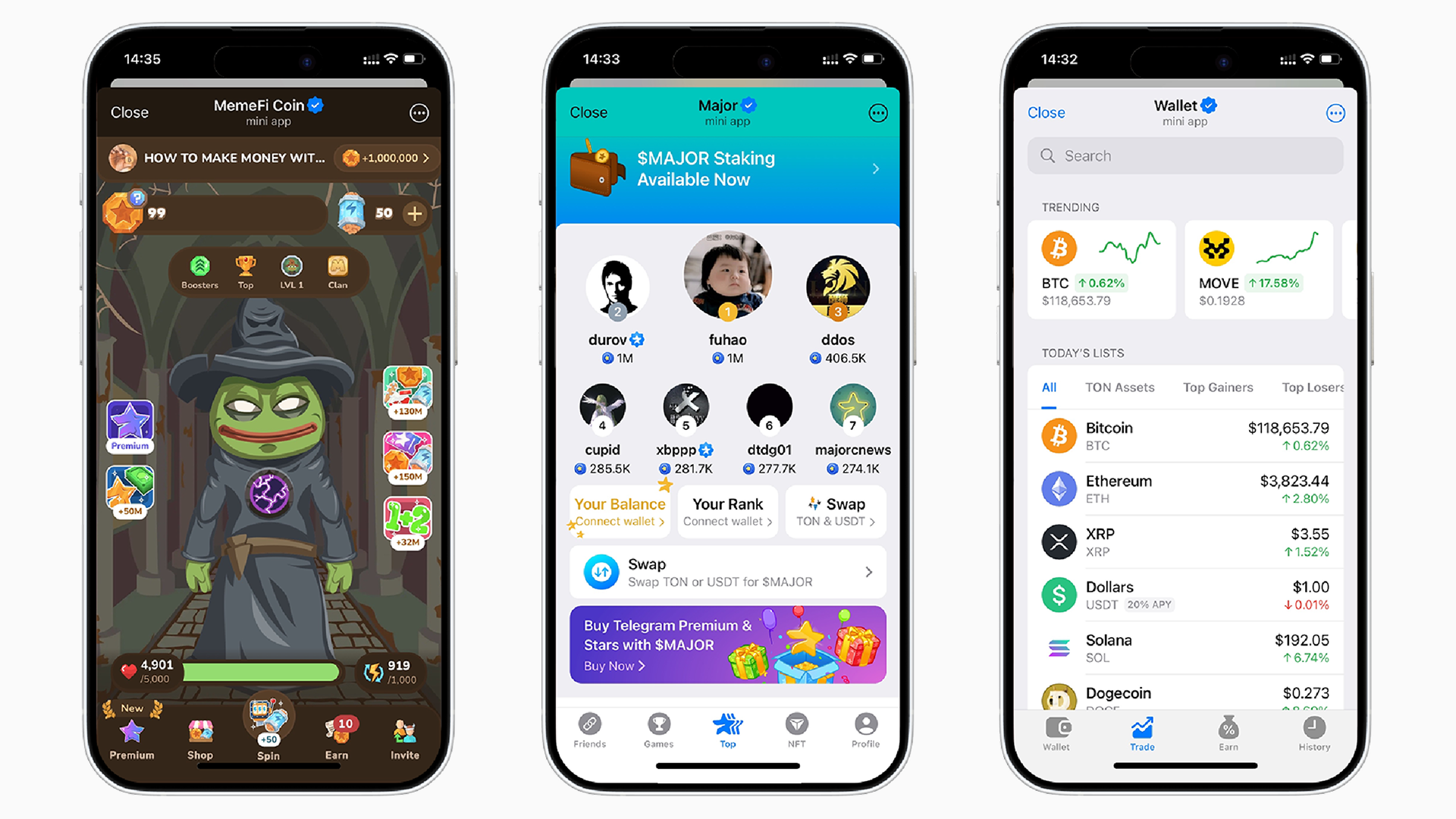 Telegram mini apps
In fact, Telegram mini apps solve many of the challenges that native apps often struggle with. For example, traditional mobile apps must compete for storage space, and only a small number manage to stay active on a user’s home screen. On average, apps typically lose 77% of their daily active users within the first three days after installation, and around 90% within 30 days.
Mini apps, on the other hand, run directly inside the messenger, so users don’t need to download or install anything and they don’t take up device storage. This creates a smoother onboarding experience and increases the likelihood that users will return to the TMA over time.
Here’s a quick comparison to show the main differences between Telegram mini apps, mobile apps, and websites:
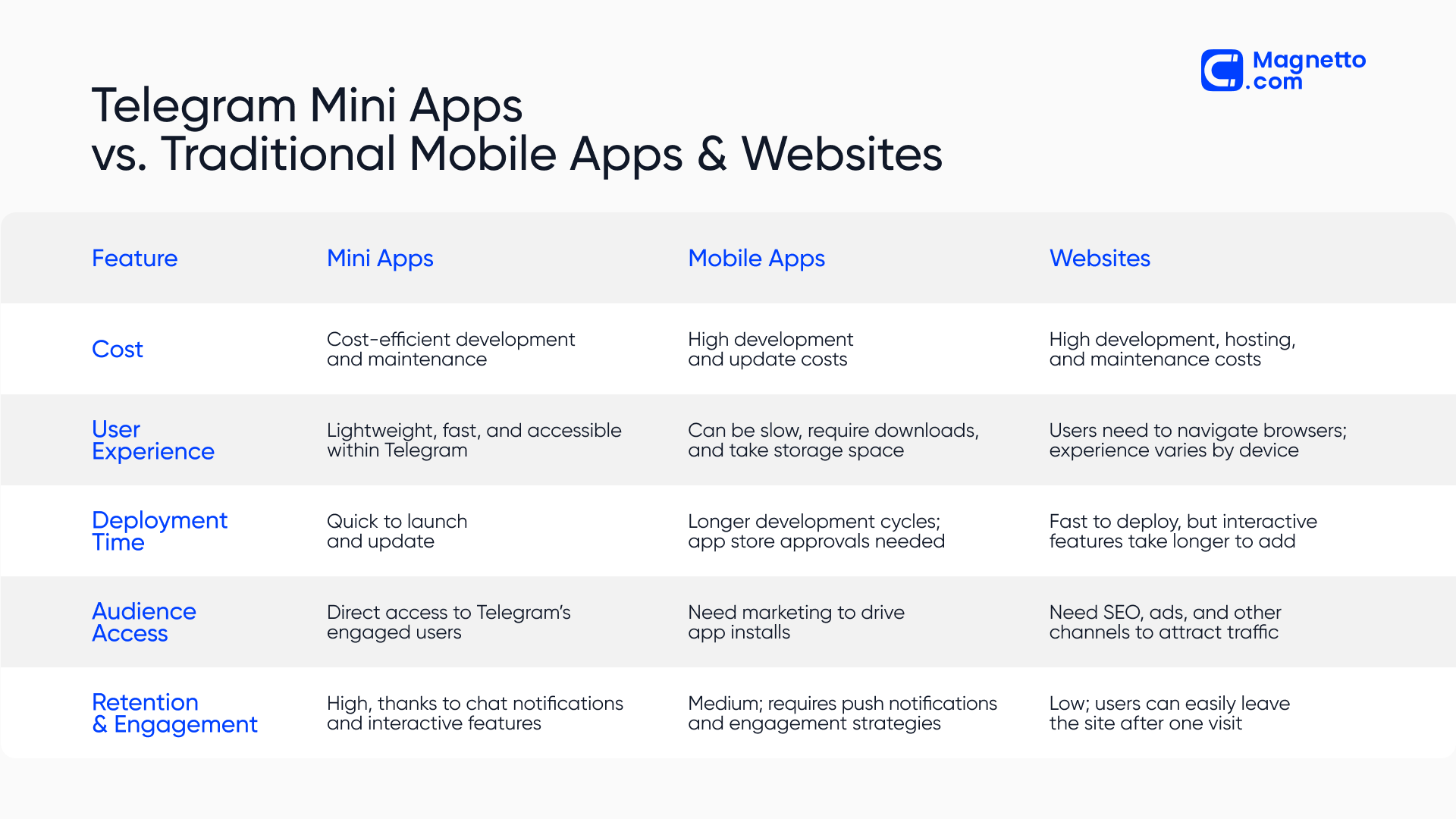 To sum up, the ease of access and smooth user experience have made mini apps a daily tool for over 500 million people and have quickly turned them into a central way to shop, play games, book services, and trade crypto.
The rapid rise of Telegram mini apps is driven by several factors:
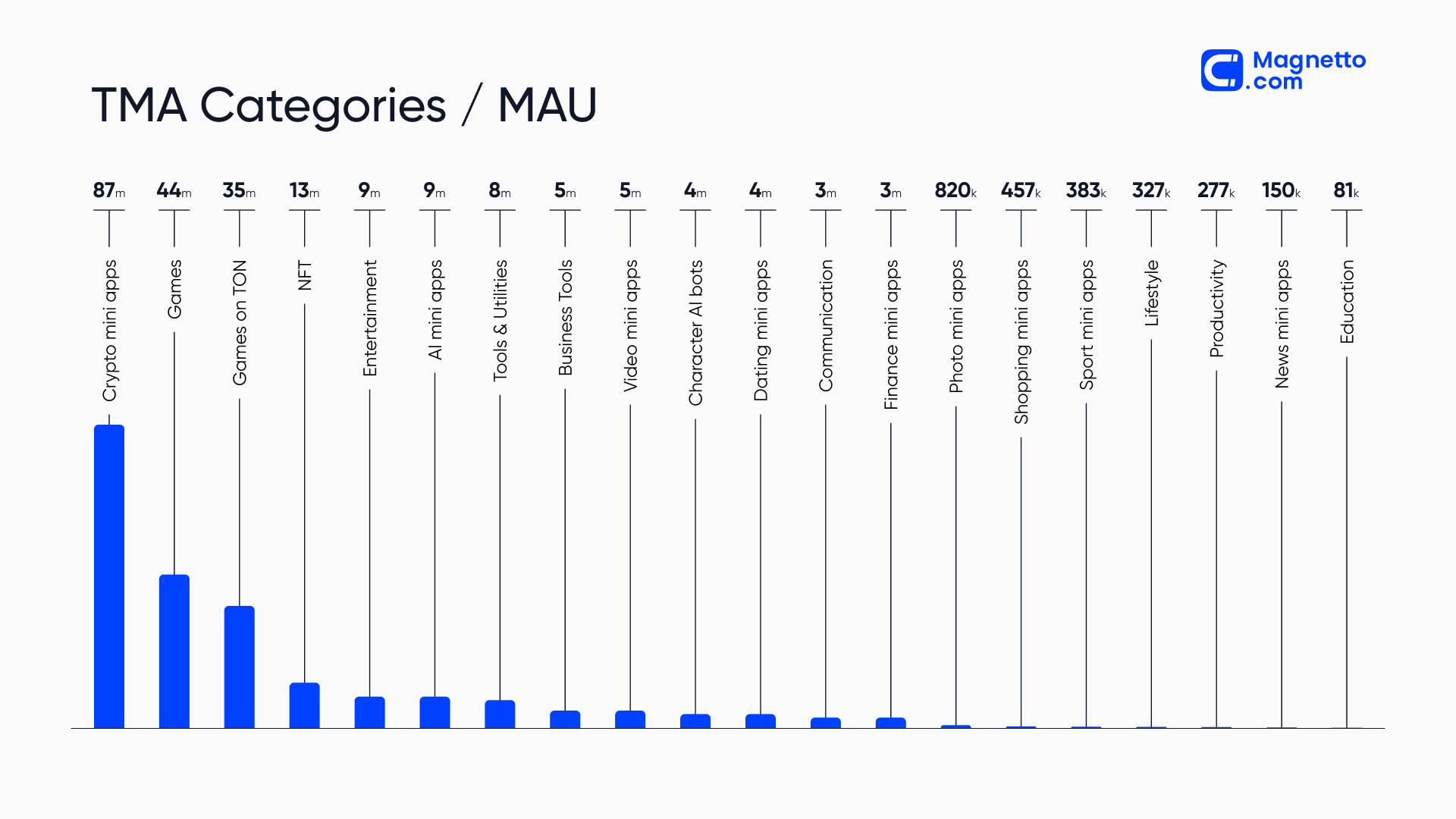 Most popular TMA categories by MAU. Source: Telegram Marketing Statistics and Trends: The 2025–2026 Report
Now, let’s explore the key trends driving the popularity of Telegram mini apps.
Customers today expect brands to respond to their changing needs and preferences. In fact, around 65% say this is something they actively look for. At the same time, 61% feel that most companies still treat them like a number rather than an individual. This highlights why real-time, adaptive experiences are becoming so important in digital products like mini apps.
When an app responds to user context, behavior, and intent instead of showing the same interface to everyone, it naturally becomes more relevant and useful. For example, a SaaS TMA could adjust its onboarding flow based on the user’s role or industry, while an e-commerce mini app could update its product feed depending on user behavior inside Telegram.
Here are a few examples of well-known AI-powered Telegram mini apps:
Celestia is a moderator bot with AI-based technical support that helps communities manage conversations and answer user queries more efficiently.
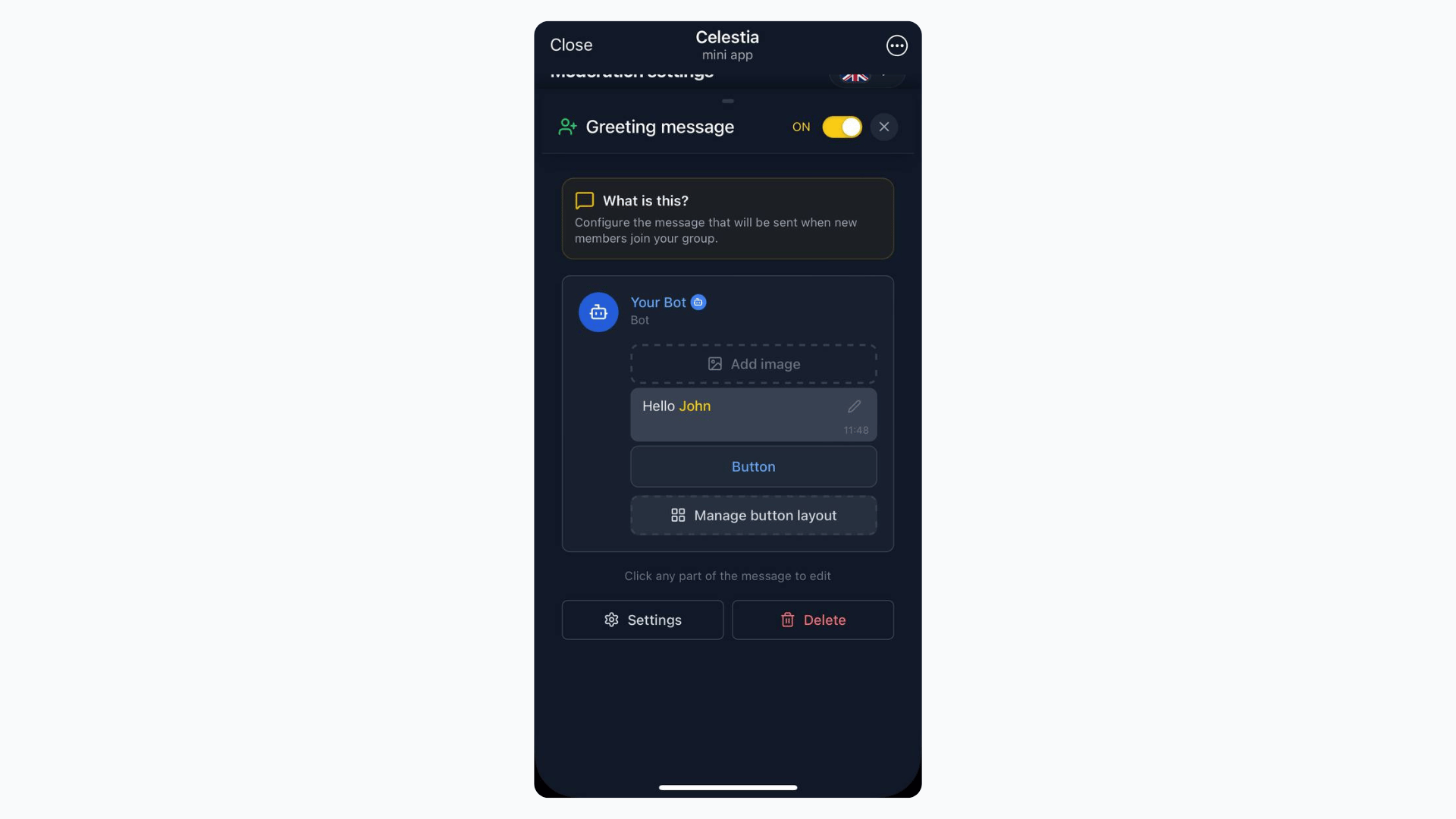 Celestia
ValoraX AI is more than just a wallet. Users can simulate payments using AI, monitor financial activity, and even optimize how they use digital assets.
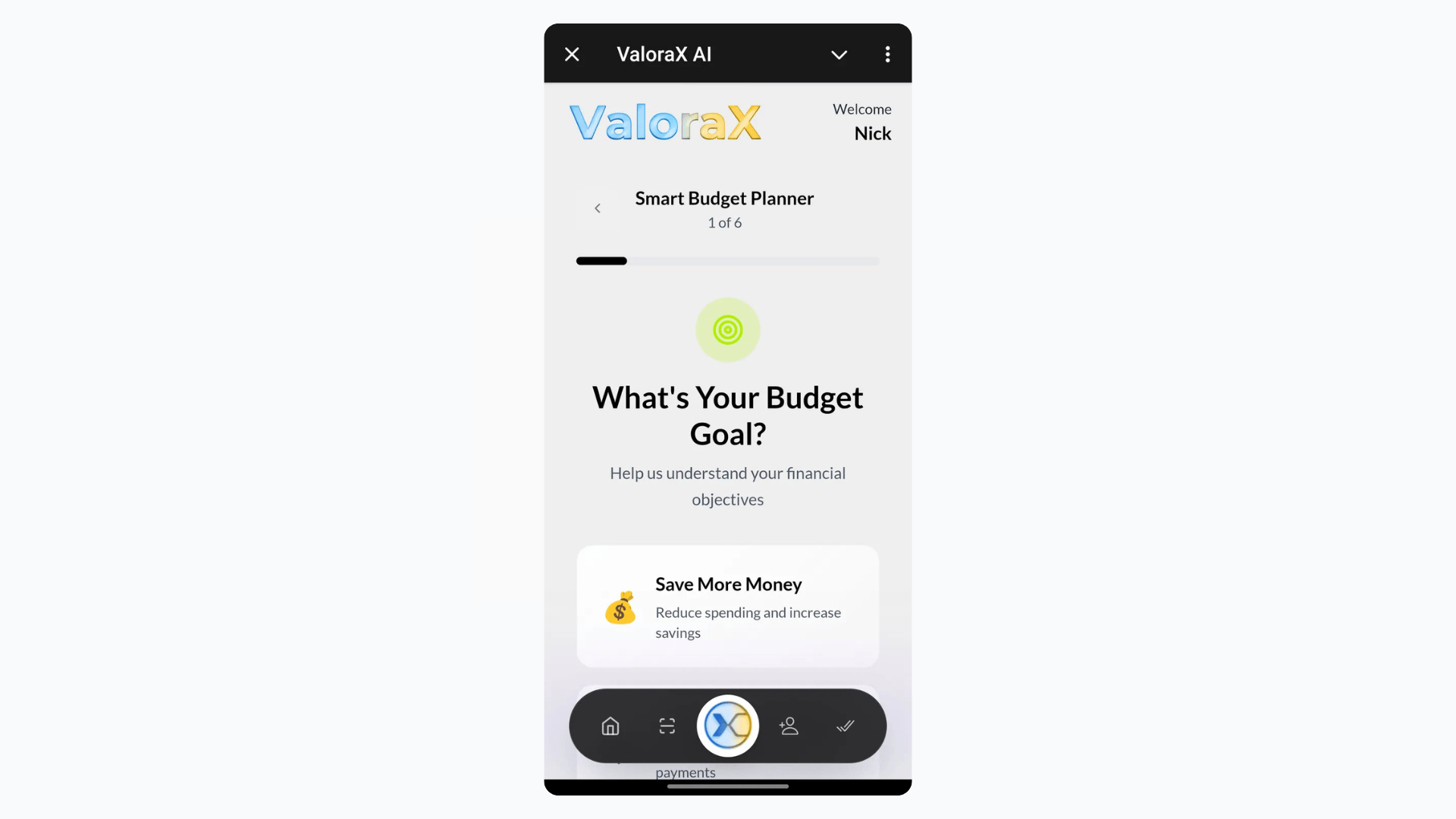 ValoraX AI
Roko shows how far personalization can go. It’s an interactive RPG where users guide an AI trying to escape a simulation, and every choice shapes the storyline.
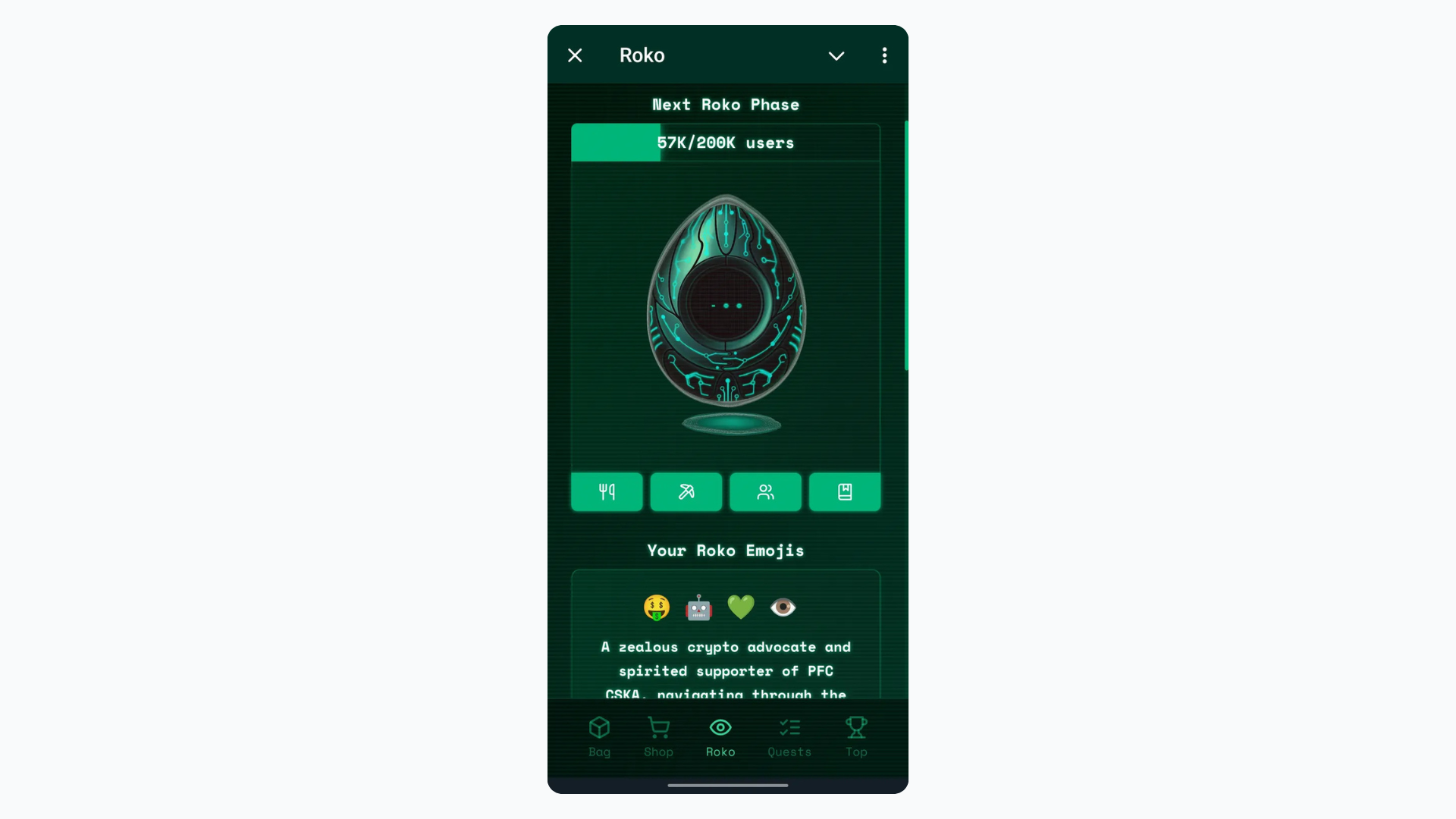 Roko
Roko
Overall, when users feel like an app understands them, they stay longer, explore more, and convert more easily. And the best part is that they’re far more likely to come back. This has a direct effect on LTV: instead of constantly spending more on acquisition, businesses can extract more value from the users they already have.
Shopping experiences are moving inside Telegram. A customer can discover a product in a channel, open a mini app, browse a catalog, add items to a cart, complete payment, and receive order updates without leaving the conversation.
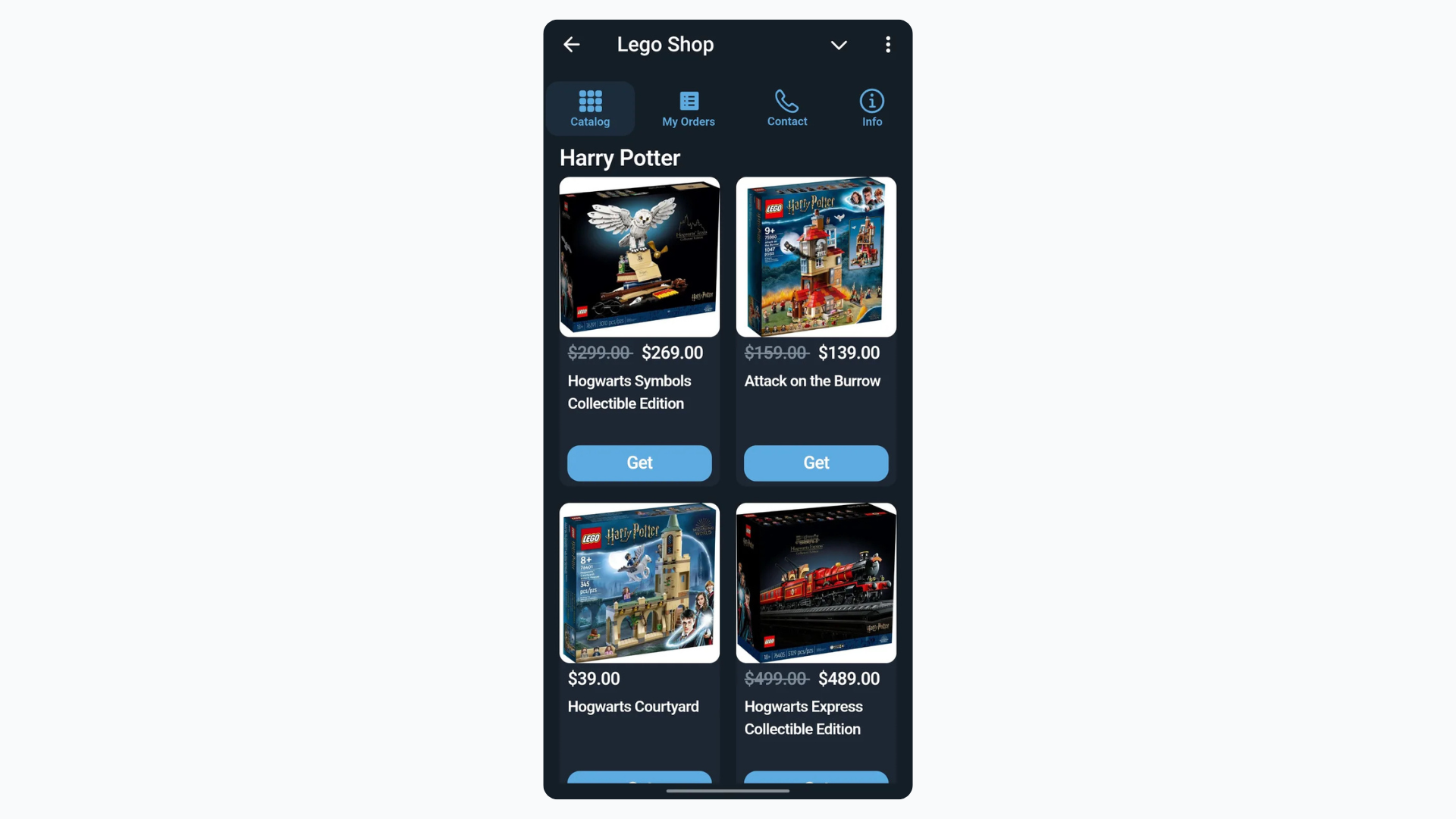 Lego Shop
Every extra click in a traditional sales funnel creates friction. Opening a browser, waiting for a site to load, logging in again, or entering payment details can quickly lead to abandoned purchases. Telegram mini apps remove many of those interruptions. The experience is fast, intuitive, and feels completely natural.
Payments are becoming a major driver behind this shift. Mini apps support familiar options like Apple Pay and Google Pay, making transactions smooth for most users. On top of that, TON-based payment solutions make digital currency payments simple and practical for a wider audience. For businesses, this means they can accept payments instantly, with lower fees and simplified checkout flows.
Games have been among the most popular apps on Telegram. Titles like Notcoin and Hamster Kombat illustrate how viral mechanics can draw massive audiences. For example, Hamster Kombat scaled to 300 million players, accounting for more than one-third of Telegram’s active users. That’s larger than Fortnite, which has a peak of 126 million monthly active users.
Gamification is not limited to games. Brands across different industries use mini apps to implement loyalty schemes, quizzes, spin‑the‑wheel promotions and reward systems. The social nature of Telegram makes these mechanics even more powerful. Because mini apps live within chats, groups, and channels, sharing happens naturally. This built-in distribution effect is one reason viral mini apps can scale so quickly compared to traditional mobile apps that rely heavily on paid acquisition.
Despite the impressive growth of mini apps, there are still challenges and concerns to consider:
With thousands of mini apps available, discoverability is a major issue. Unlike traditional app stores, Telegram lacks a central directory for mini apps. Users must find apps through shared links, bots or channels, which requires upfront awareness.
However, brands don’t have to rely solely on organic discovery. Telegram’s advertising options allow businesses to promote their mini apps directly where users are already active, such as high-traffic channels (including competitor ones), chatbots, and even other mini apps. This approach puts the app in front of the right audience, boosts engagement, and helps drive adoption faster. Altery is a good case in point: with the support of Magnetto.com, Altery's mini app generated thousands of targeted clicks across Telegram.
Fake channel admins, fraudulent payment bots, and artificially inflated channel metrics are a frequent issue on the platform. The good news is that mini apps are far less vulnerable. Because in-app behavior is harder to fake, traffic coming through Telegram mini apps tends to be more genuine. This means businesses can expect more meaningful interactions and stronger engagement.
As more brands launch mini apps, standing out is becoming increasingly difficult. With thousands of apps on the platform, simply building a TMA isn’t enough. Businesses need a clear strategy for positioning, promotion, and user retention. Without it, even a well-designed app can get lost in the crowd. Virus Game Bot is a great example of a retention strategy done right. It keeps users engaged with daily bonuses, social quests like subscribing to channels, and spin-based roulette games.
Mini apps are shaping the future of in-chat commerce, gamification, and digital experiences. As the platform continues to expand, mini apps will play an even bigger role in daily interactions. Companies that adopt this trend early can foster stronger engagement, discover new revenue opportunities, and keep their brand visible and relevant.