.png?width=4758&height=806&name=Frame%202131330738%20(1).png)


Telegram Ads


On average, 60% of consumers take six or more steps to research a new brand or product before making a decision. They read reviews, browse websites, check social media, and compare options, and each interaction influences their perception of your business. That’s why a strong, consistent online presence is crucial: it positions your company as trustworthy, professional, and ready to meet customer needs.
In this article, we’ll explore six actionable strategies that help your brand stand out online, build trust with your audience, and drive meaningful business growth.
Your online presence is much more than simply owning a website; it’s how your company appears and interacts across multiple digital environments. Someone might first discover your business online through a Google search. Later, they may look through your public pages, read a few testimonials, or browse your blog to see whether your expertise feels genuine. By the time they decide to contact you or buy from you, they’ve already formed a clear opinion about your brand.
Strengthening your online presence brings several real advantages:
In short, a strong online presence helps your company stay visible, earn trust, and build lasting relationships with your audience. Every interaction tells your brand’s story and encourages people to choose your business confidently.
A strong online presence starts with a well-designed website. While digital platforms constantly change, your website remains the place where you can fully control messaging, design, and customer experience. Let’s explore how to make your site more appealing to users and encourage them to stay longer, engage with your brand, and take meaningful actions through smart website management.
More than 62% of global website traffic comes through mobile devices. The way visitors experience your site on a phone directly affects how they interact with your business online and whether they stay or leave. Moreover, Google uses mobile‑first indexing: this means that the search engine primarily looks at how your website performs on mobile devices when deciding where you rank in search results.
To make sure your website delivers a smooth and satisfying mobile experience, follow these simple steps:
Users today have short attention spans and lots of alternatives, which means every second counts. That is why when someone lands on your homepage, they should know within moments what your product or service does and why it matters. Highlight the problems your business solves, the benefits customers can expect, and what makes you stand out from competitors.
Websites aren’t set-it-and-forget-it assets. To keep your site running smoothly, regularly check page load speeds, fix broken links, and track user behavior to see how visitors interact with your site. By doing routine checks, you can catch small issues before they turn into bigger problems and maintain a seamless experience for your visitors.
Over 53% of all website traffic comes from organic search. However, the majority of clicks go to the top-ranking pages. The first result alone captures 27.6% of clicks, while results on the second page barely see engagement: just 0.63% of users click beyond page one. Simply put, if your site isn’t showing up for your niche’s top keywords, your competitors are taking that traffic. This is exactly why investing in search engine optimization matters.
Besides, one of the biggest advantages of SEO is that its impact compounds over time. Unlike paid advertising, which stops bringing visitors the moment you stop paying, a well-optimized page can continue attracting traffic for months or even years.
Let’s take a closer look at the key parts of an effective SEO strategy.
First, it’s important to understand what your audience is actually searching for. To conduct the keyword research effectively, start by brainstorming a list of topics related to your business and the problems your customers are trying to solve. Then use keyword research tools such as Google Keyword Planner or Ahrefs to explore how often those terms are searched and how competitive they are. Looking at the keywords your competitors rank for can also reveal valuable opportunities you might have missed.
It’s also worth noting that more specific search phrases, often called long-tail keywords, tend to convert better because they reflect clearer intent. For example, someone searching for “best project management tools for small teams” usually has a specific goal in mind and is closer to making a decision than someone searching simply for “project management.”
Keyword research should guide your website strategy. The insights you gather can help you decide what blog posts, guides, or landing pages to create next. When your materials directly answer the questions people are already searching for, it becomes much easier to attract the right visitors and turn search traffic into real business opportunities.
Once you know what people are searching for, the next step is making sure your website communicates that information clearly to both users and search engines. On-page SEO focuses on optimizing individual pages so they can rank higher in search results and provide a better experience for visitors.
One of the most important elements is placing keywords in the right locations. Your main keyword should appear in the page title, headings, and introduction so both readers and search engines quickly understand what the page is about. It’s important that the text feels natural and readable; overusing keywords can disrupt the flow and even damage your search performance.
Page structure matters just as much as keywords. Use headings and subheadings to break up text, keep paragraphs short, and highlight important points. This makes your pages easy to scan and helps readers quickly find the information they need.
Finally, linking to other pages on your site helps search engines recognize the structure and connections within your website and also guides users to related topics they might find useful. This can boost engagement and keep your audience exploring your website longer.
Off‑page SEO refers to everything that happens outside your website but still influences how search engines evaluate your brand’s authority and relevance. One of the most powerful off‑page signals continues to be backlinks. When reputable sites link to you, it tells search engines your content is valuable. Numbers back it up: pages ranking in the #1 position on Google typically have 3.8 times more backlinks than those in positions 2–10.
A few effective ways brands build backlinks include:
According to recent data, backlink strategies such as guest posting are used by nearly two‑thirds of link builders because they consistently generate high‑quality links.
Considering that most businesses invest 10–29% of their budget into content marketing, it’s clear that brands recognize the lasting value of this strategy. Beyond driving traffic, it also strengthens credibility, nurtures loyalty, and builds long-term brand authority.
Another advantage is cost-efficiency. Compared to traditional marketing campaigns, this strategy requires 62% lower costs to launch and manage, yet it can deliver higher returns in terms of engagement, leads, and brand awareness. A single high-quality blog post, case study, or video can continue attracting traffic and generating value months or even years after it’s published.
Brands that publish updates on a regular schedule are more likely to earn trust and recognition. Even simple routines, like posting a weekly blog or a monthly guide, show both your audience and search engines that your brand is active and reliable.
Blog posts and guides are essential for SEO and information, but adding videos, infographics, and interactive tools can help reach more people. For example, interactive formats generate about 53% more engagement than static ones, which means quizzes and polls can hold attention and spark interaction more effectively than plain text alone.
Creating great resources is only the first step. It’s equally important to get it in front of the right audience. Share your articles, guides, or videos across your online communities, email newsletters, and relevant industry forums. Thoughtful promotion increases engagement, drives traffic, and helps you earn credibility signals like backlinks and mentions.
More than 93% of internet users worldwide now use social media every month. On average, each user actively visits nearly seven different platforms monthly and spends over 18 hours a week scrolling, clicking, and interacting. More importantly, 58% of consumers discover new brands on these platforms before anywhere else. This is where your audience already spends a large portion of their time, which means your presence and consistent community management there are crucial for visibility and engagement.
According to the latest study, 48% of respondents say people first engage with their community before making a purchase. This shift has not gone unnoticed: 69% of businesses plan to make community-building a bigger part of their strategy in 2026. Encourage conversations, share exclusive insights, and recognize active members to keep your community engaged and loyal.
Since the typical user visits multiple platforms each month, it’s important to meet your audience where they already are. Each platform has unique strengths that demand tailored management: LinkedIn is ideal for professional thought leadership, Instagram for visual storytelling, X for real-time updates, and TikTok for short-form, engaging videos. Adapt your message for each platform, but make sure to keep your brand voice consistent.
Today’s users prefer quick, immersive experiences that don't demand too much time but still feel valuable. Short‑form videos and stories are especially effective, and businesses using these formats often see significantly higher interaction rates than with static posts. In fact, 73% of consumers prefer learning about products through video, and engagement with short video formats has been steadily rising across platforms.
Even though traditional platforms like Facebook or Instagram help businesses reach large audiences, they also come with some limitations, such as AI-driven algorithms that control which of your posts people actually see. Telegram, now the second most popular messenger app worldwide, operates differently. Let’s explore how to make the most of its unique ecosystem.
Every month, Telegram users generate over 1 trillion views in channels. For many people, it has become a daily routine to read updates in their favourite channels and take part in discussions. Nearly half of users check 6-15 channels regularly, and over 37% keep notifications enabled for up to 5 channels.
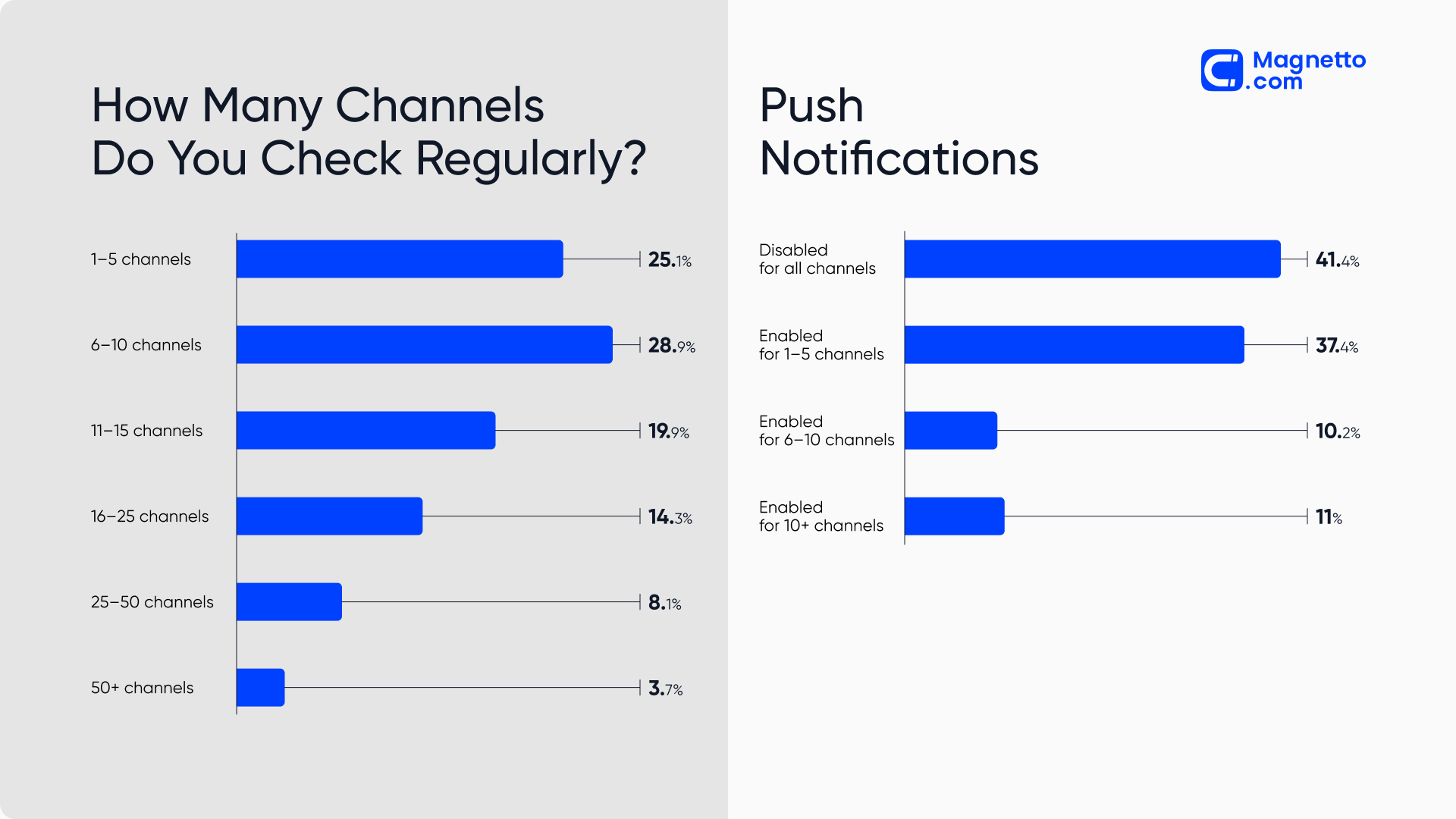 Telegram channel statistics. Source: Telegram Marketing Statistics and Trends: The 2025–2026 Report
What makes Telegram channels so effective for businesses is that they deliver updates straight to subscribers without being filtered by algorithms. Brands can share valuable insights, industry updates, exclusive materials, or early announcements directly with interested followers. That explains why Telegram posts achieve an average open rate of 55–60%, which is significantly higher than the visibility most posts receive on traditional networks.
With a Telegram bot or mini apps, you can go beyond simple updates and create more interactive experiences for your audience. A Telegram bot can:
Bots not only improves user experience and customer support, but also helps businesses save 30% of their time by handling repetitive tasks and cutting down manual effort.
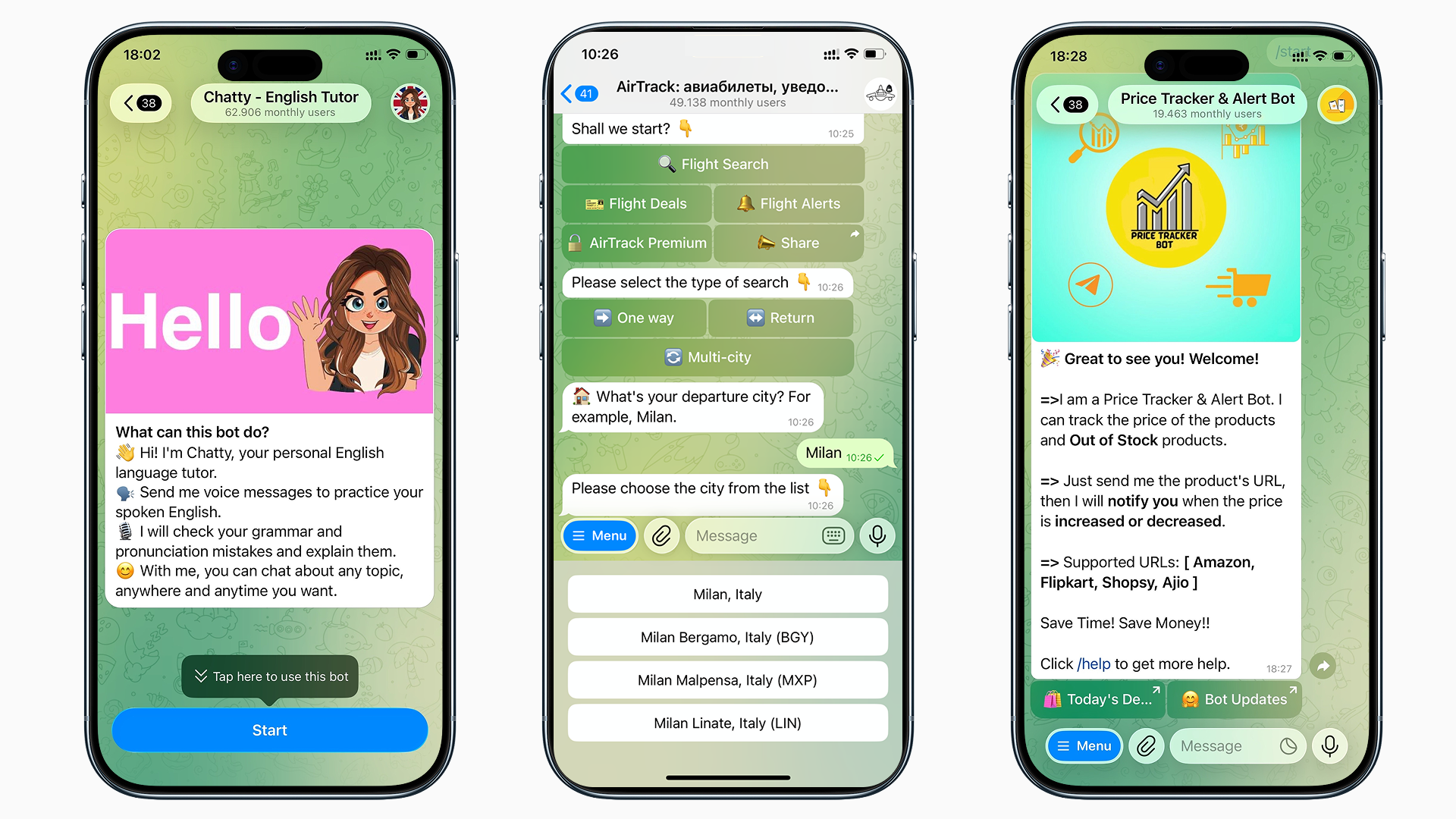
Telegram bots
Telegram mini apps expand these possibilities even further. They allow businesses to create more advanced, interactive experiences directly inside the platform, such as crypto wallets, booking systems, product catalogs, tap-to-earn games, and more. Considering that over 500 million people already engage with TMAs regularly, more brands build these experiences as convenient alternatives to standalone apps and websites.
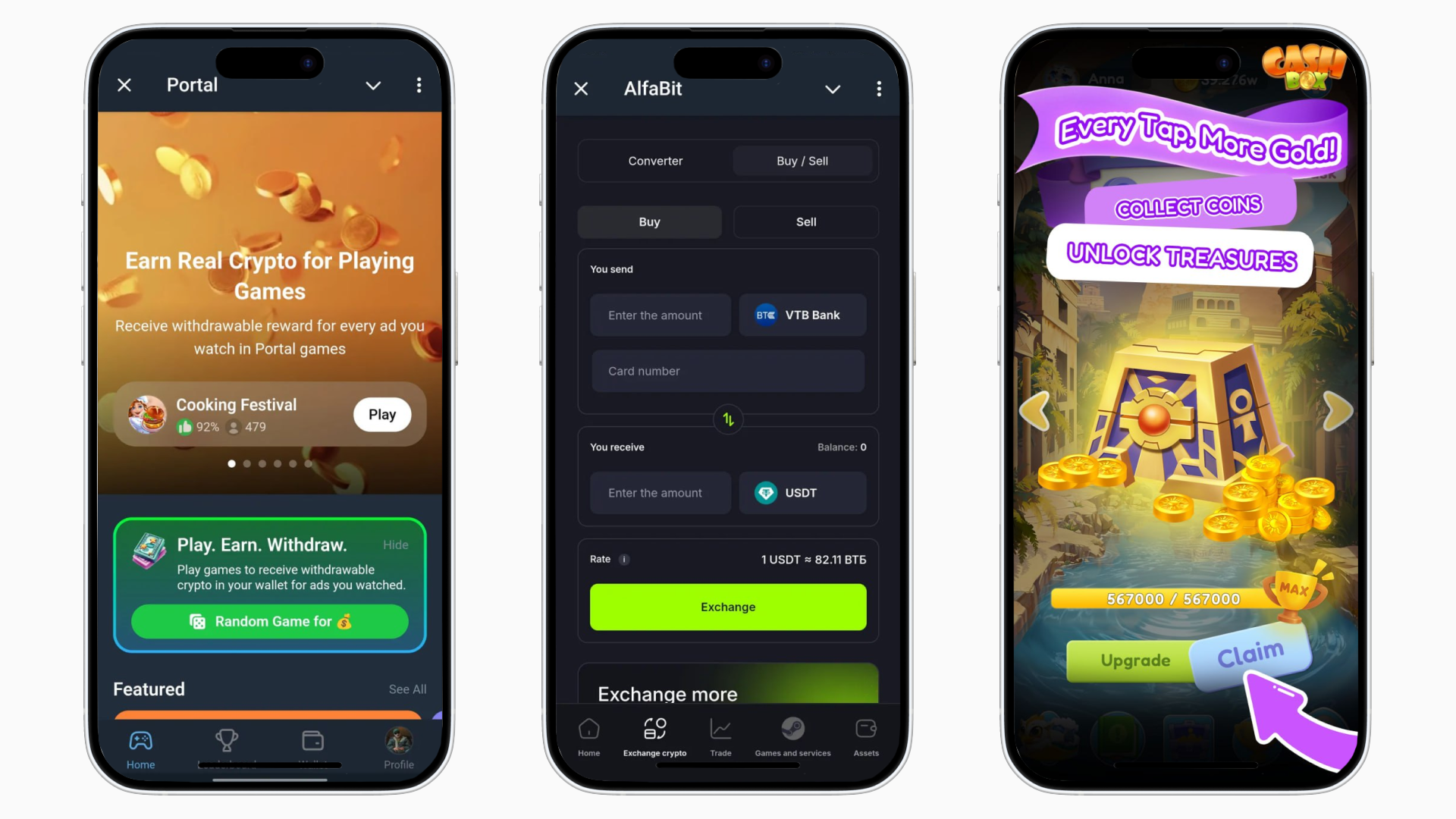 Telegram mini apps
With Telegram Ads, you can effectively reach your target audience in three prominent placements: inside private and public channels (including your competitors’ ones), chatbots, and in search results through keyword targeting. Sponsored messages blend into the platform’s native interface and can be enhanced with images, short videos, and custom or regular emojis.
.png?width=1920&height=1080&name=Telegram%20Ads%20examples%20(3).png) Telegram Ads
Telegram Ads
One of the biggest advantages of Telegram advertising is its context-driven targeting. Instead of competing for attention in a crowded feed, your message reaches users while they are actively browsing content related to that subject. This makes the ad feel more relevant and increases the chances that people will pay attention and engage with it.
For instance, to help OKX attract more participants to its crypto campaigns, we tested more than 100 bots across categories like trading, investments, and currency exchange. Through careful Telegram ads management, we identified the top-performing bots and boosted community growth for our client.
In a nutshell, Telegram is a vital tool for businesses to strengthen their online presence. The platform offers a more authentic and efficient way to connect with users compared to traditional digital channels, and since the competition is still light, brands have a unique opportunity to stand out and engage more meaningfully with their audience.
Trust plays a huge role in how customers evaluate businesses online. Reviews, testimonials, and public mentions shape first impressions long before a customer interacts with your business.
Tools like Google Alerts, Mention, or Brand24 can track feedback, mentions, and online discussions. When you keep a close eye on what’s being said about your service or product, you can quickly respond to negative feedback, address misunderstandings, and highlight positive interactions. In fact, 88% of consumers are more likely to purchase from a company that responds to all feedback, both positive and negative. This kind of active reputation management shows customers you are listening and willing to improve.
Positive reviews are among the most powerful forms of reputation building. Encourage satisfied customers to share their experiences on platforms like Google, Clutch, Trustpilot, or industry-specific sites. Make it easy for them: provide direct links or simple instructions, and consider sending follow-up emails after a purchase or service interaction.
Case studies, awards, and influencer mentions all reinforce your credibility. Sharing these across your website, newsletters, and digital platforms helps potential customers see real examples of your expertise and reliability. The more visible your reputation signals, the stronger your online presence becomes.
Building a strong online presence is essential for lasting business growth. A well-optimized website and smart SEO help the right audience find you, while valuable resources and consistent engagement on platforms like Telegram build trust and loyalty. When approached strategically, your business stays top-of-mind, strengthens relationships, and turns casual visitors into long-term customers.