.png?width=4758&height=806&name=Frame%202131330738%20(1).png)


Telegram Ads


Every single day, over 2.5 million people join Telegram, which makes the platform one of the most effective advertising ecosystems for businesses. The downside? The number of channels is so large that it’s easy to waste budget on the wrong ones. In this article, we’ll walk through how to filter out low-quality communities, understand a channel’s audience, and make data-driven decisions when choosing where to advertise.
People use Telegram for various purposes, including chatting, playing games, interacting with bots, and following their favorite channels. And the user trust in channels is quite high: 73% consider specific public authors credible, and 27% rely on news channels.
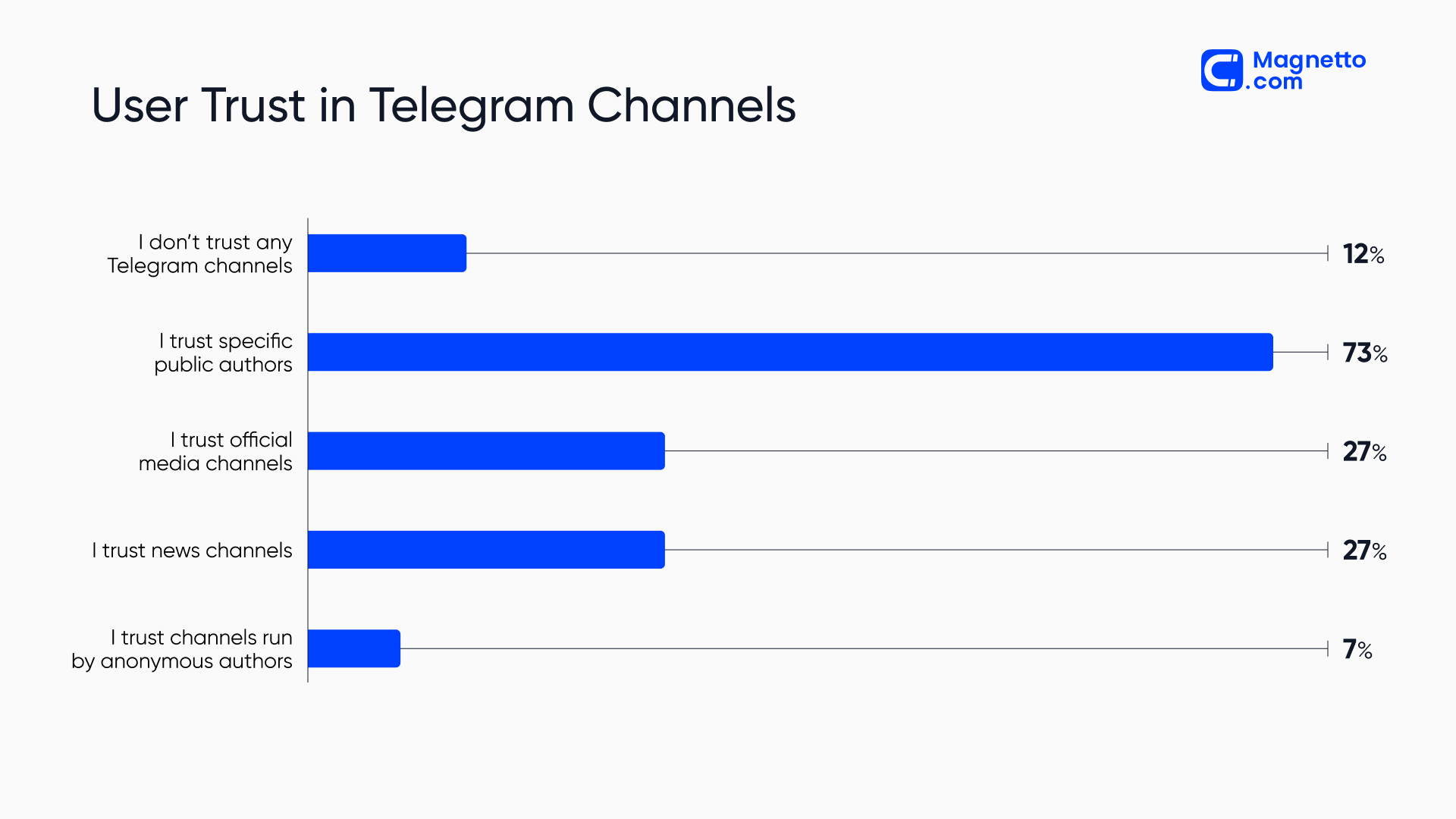 User trust in Telegram channels. Source: Telegram Marketing Statistics and Trends: The 2025 Report
Compared to platforms such as Instagram or TikTok, there’s no algorithm on Telegram hiding channels’ posts or deciding who gets to see them. Every piece of content, including sponsored messages, reaches its intended audience. This naturally drives stronger engagement: Telegram channels pull in more than 1 trillion views every month — a number that shows how much visibility businesses can achieve here.
There are two ways to advertise on Telegram channels: through Telegram Ads and direct collaborations with influencers. Telegram Ads are banner-style placements that show up at the bottom of channels, right where users expect to see updates. Influencer partnerships, by contrast, blend in with the content — they look like regular posts and aren’t marked as sponsored. You can learn more about these two different advertising formats and their benefits for businesses in our article comparing Telegram Ads and influencer marketing.
.png?width=1920&height=1080&name=Telegram%20Ads%20examples%20(3).png)
Telegram Ads
Whatever method you use, your ads will only be effective if they appear in the right places. Here’s why channel selection matters:
To sum up, targeting the right channels allow businesses to spend less and reach people who are genuinely interested and ready to take action.
When you understand who you're speaking to, finding the right channels for your advertising campaign becomes far more intuitive.
The first thing businesses should do is to outline the basics of their ideal viewer. Think about age ranges, general interests, the type of content they consume, and the tone they naturally respond to. Geography is important as well, especially if your product or service is tied to a specific market.
To speed up your research and uncover more relevant communities with your audience, you can use the Similar Channels feature. You’ll find it in the channel’s description:
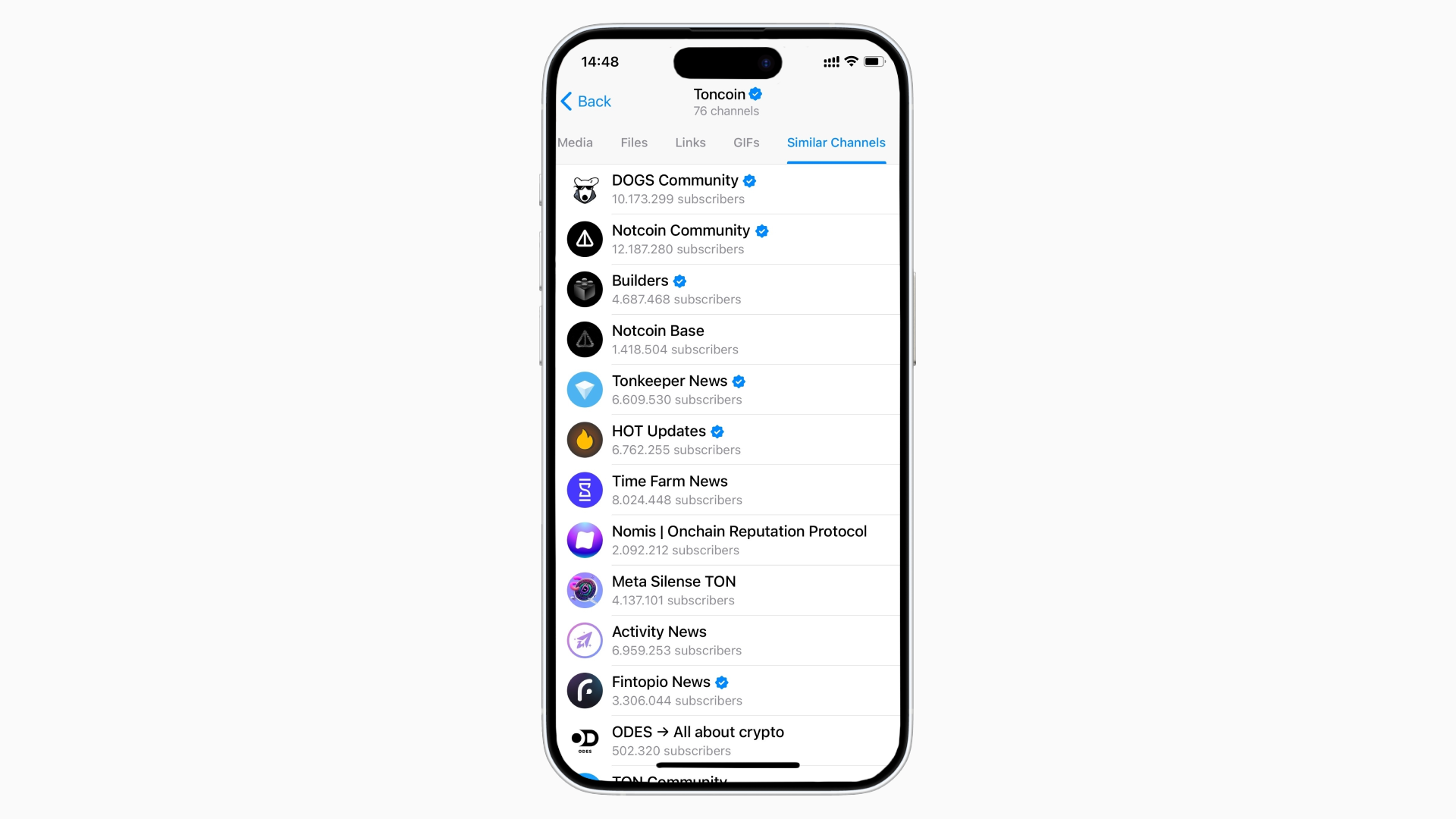 Similar channels
Your target audience can have a number of interests, so to find out the top-performing traffic sources, it’s worth testing many options. For example, in our Telegram campaign for the fintech platform Altery, the Magnetto.com team evaluated thousands of relevant channels across banking, IT, crypto, emigration, and other topics. This approach helped us fine-tune our targeting and identify the channels that drove the highest-quality traffic for our client.
Once you’ve found channels that look like a good fit, it’s important to look beyond the number of subscribers before setting up your targeting. When it comes to Telegram channel analysis, here are the key metrics businesses should pay attention to for more effective advertising:
A good starting point is comparing the number of views a channel gets with its total subscriber count. This helps businesses understand the channel’s real reach instead of relying on the number shown at the top.
When the statistics look irregular, it can be a warning sign. For example, if a post gets about 10% of its views within the first few hours and then suddenly jumps to 50–60%, that spike may indicate that the channel admin has purchased fake subscribers. Based on our experience, authentic communities rarely behave this way, which is why we recommend paying close attention to such sudden jumps.
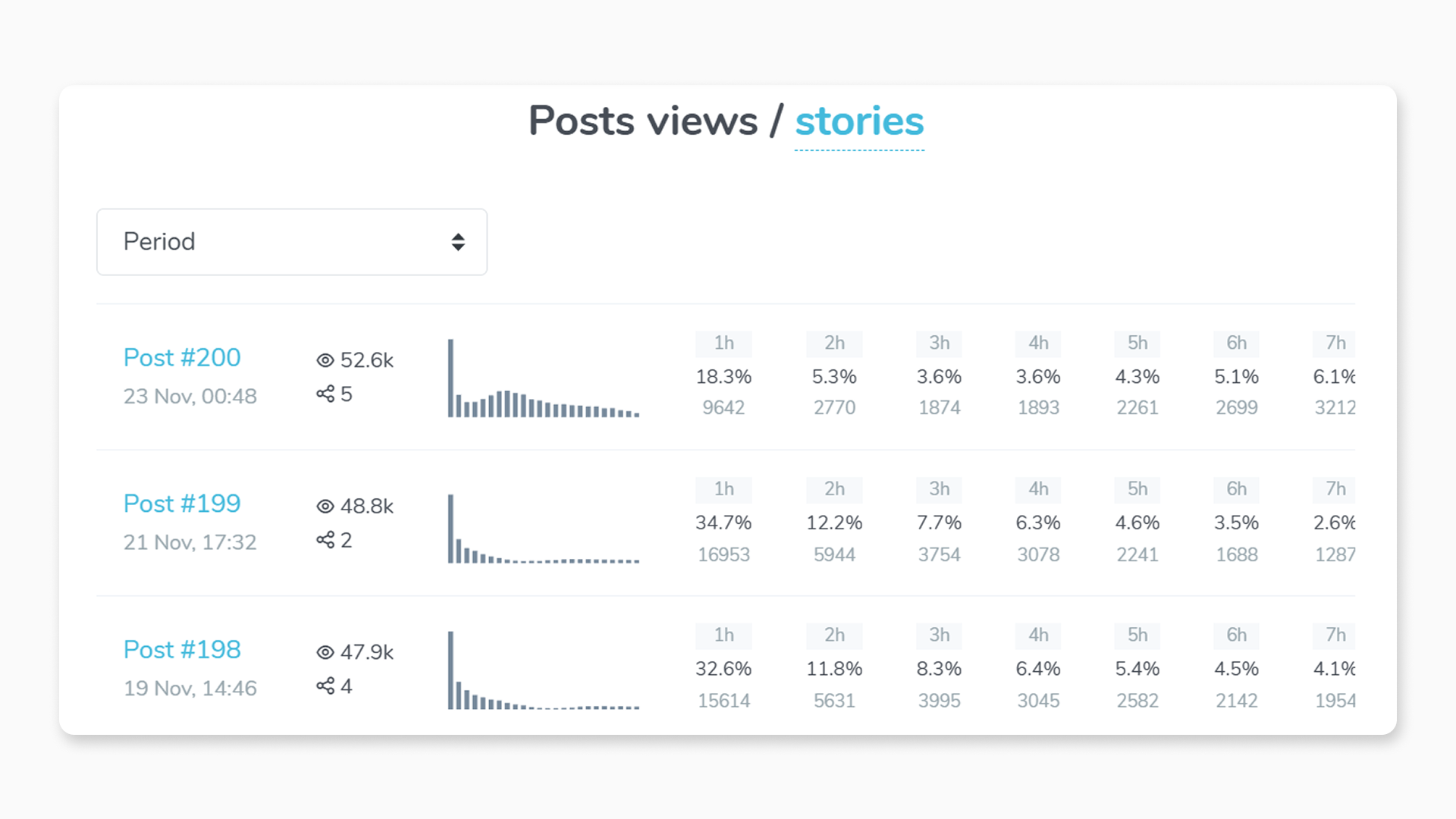 Post views of a Telegram channel (example)
ERR and ER give you a clearer picture of how active and responsive a channel’s audience is. ERR shows what percentage of subscribers actually view the posts.
ER, on the other hand, reflects the share of readers who go beyond just viewing and engage with the content through reactions, comments, or shares. In other words, ER measures the ratio of all interactions to the total number of post views — a simple way to see whether the audience is genuinely engaged and likely to respond to your advertising.
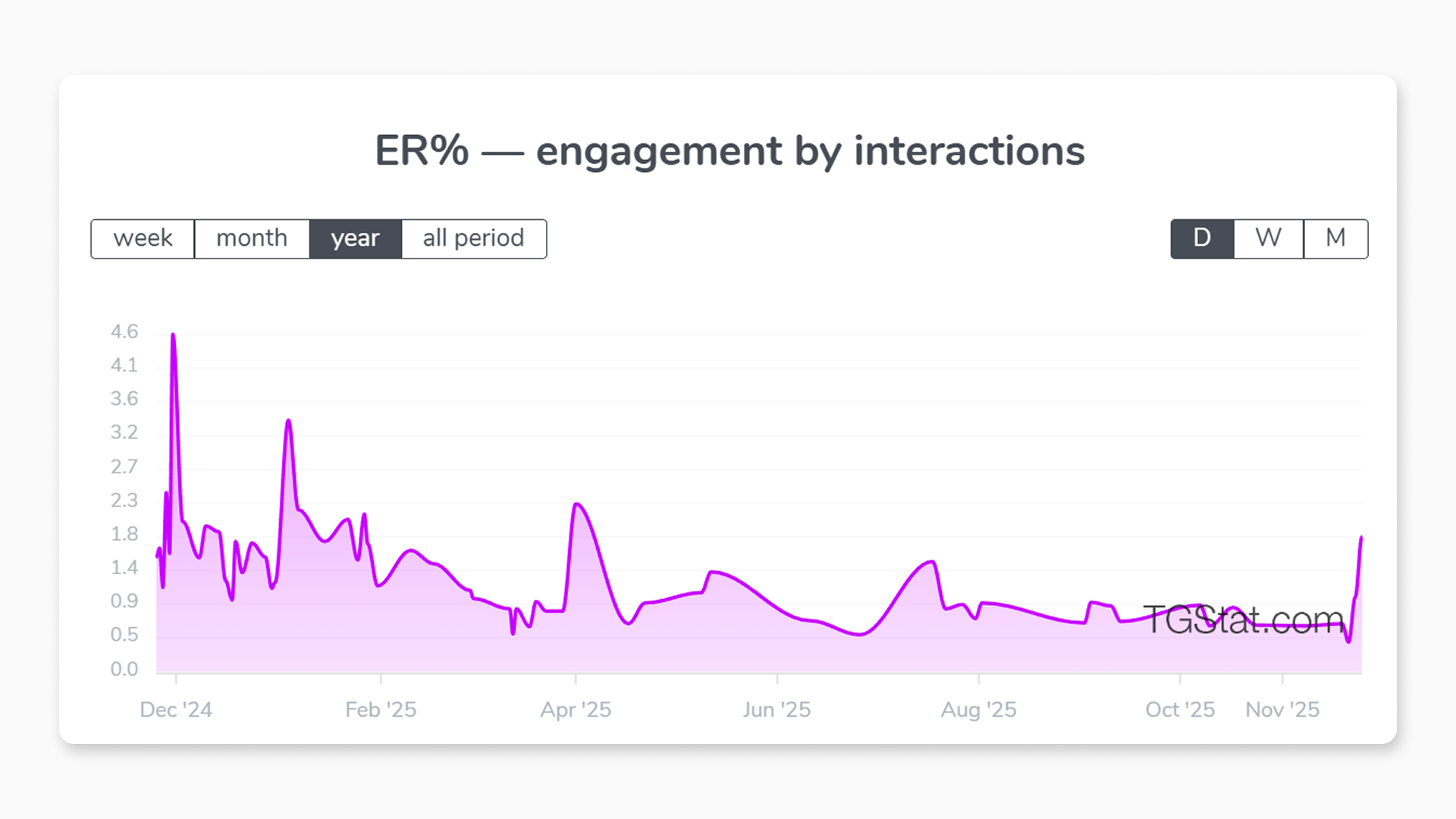 Engagement rate of a Telegram channel (example)
A healthy growth curve usually progresses consistently. You’ll see small ups and downs, but nothing extreme. Channels that suddenly lose a large number of subscribers may be posting irrelevant content or pushing too many promotions. On the flip side, sharp growth spikes are also a warning for businesses: they might come from aggressive tactics like giveaways. Those subscribers don’t always stick around, and they rarely engage well with ads.
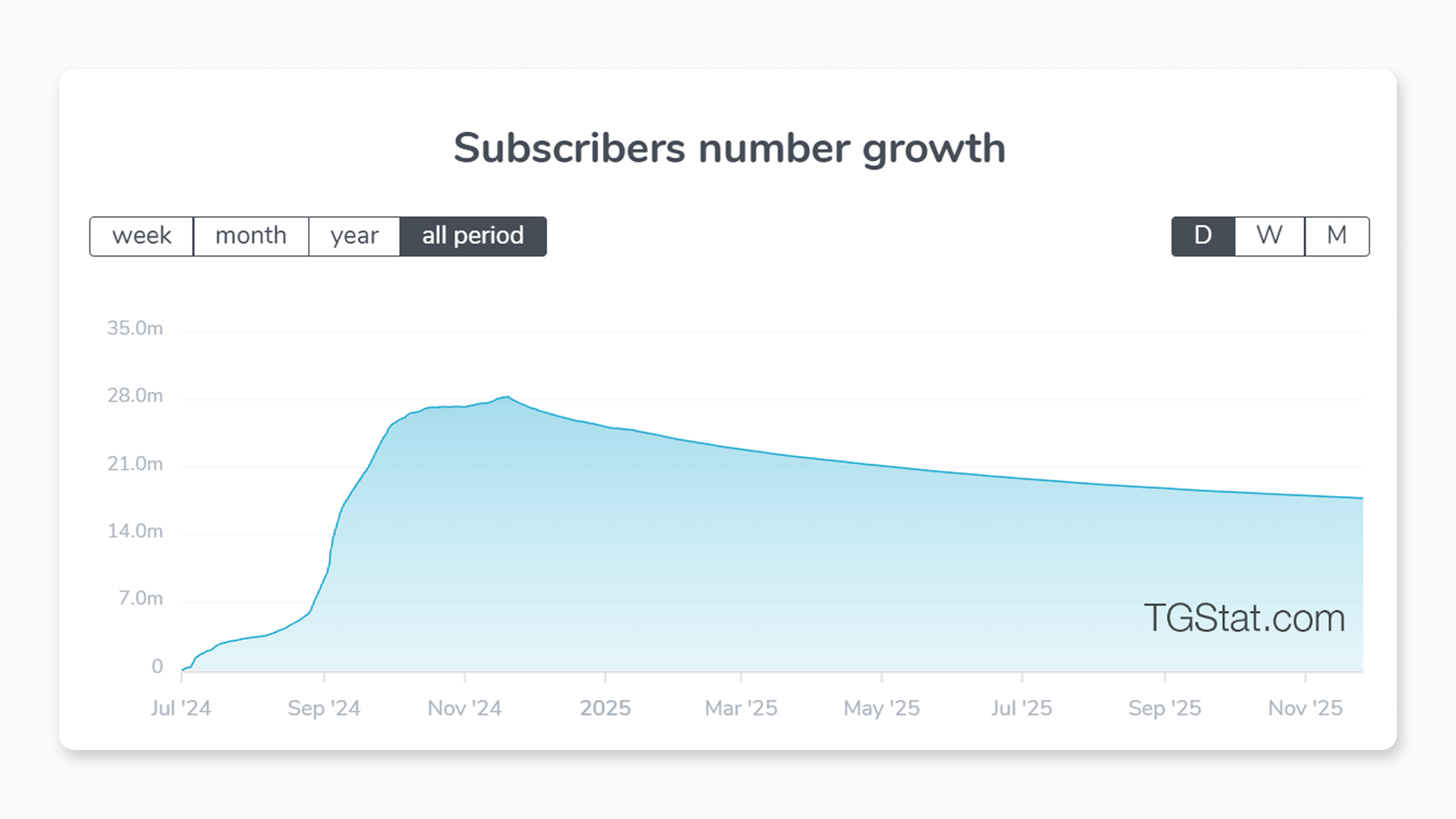 Subscribers number growth of a Telegram channel (example)
CPM shows the amount you pay for every thousand impressions and helps you understand whether a Telegram Ads placement is priced fairly. If a channel has great engagement, authentic growth, and strong content performance, paying a bit more could be completely worth it. Nevertheless, we suggest starting with the minimum bid — 0.1 TON — to test your ad’s performance before scaling up.
We have already mentioned one of the methods businesses can use to spot channels with bot traffic — sudden jumps in post views. There are also other ways to reveal low-quality and ineffective communities on the platform, including:
A quick review of a channel’s statistics can help you save your advertising budget and make sure your promotions reach real people, not inflated metrics.
These are the most common mistakes businesses make when targeting Telegram channels:
Selecting channels based solely on subscriber count. A large audience looks impressive, but it doesn’t tell you anything about real reach and engagement. Sometimes, communities with a moderate number of followers can drive stronger interaction and conversions because their subscribers are genuinely interested in the content and perceive ads more as recommendations than promotions.
Ignoring audience fit. If the community’s interests don’t align with your product or service, your ad won't resonate. That’s why matching the audience’s interests, tone, and expectations is just as important as checking performance metrics like the number of views.
Skipping testing small placements before scaling. Starting with a small, lower-cost placement lets you see real user behavior before investing heavily. Without these early tests, you risk spending your marketing budget on ineffective placements — a common pitfall for businesses rushing to scale too quickly.
Not checking post frequency. Some channels publish content non-stop, which can bury your sponsored post in the feed before most subscribers even see it. Make sure the channel posts often enough to keep users engaged, but balanced so your ad still stands out.
Planning to run a Telegram Ads campaign? Check out 8 mistakes to avoid before and after launch, with advice from our expert team.
Looking at performance gives businesses insight into whether the advertising message reached the right audience, the engagement it sparked, and if it’s worth using the channel again. In short, it's a quick way to check if your targeting was accurate.
Start with the basics: reach, CTR, and conversions. Reach shows the number of people who saw the ad, CTR reflects the appeal of your message, and conversions reveal whether people took meaningful action. To track this accurately, you should use invite links (for channel traffic) or UTM parameters (for bot traffic).
Your analysis also depends on what exactly you’re promoting in your campaign. If the goal is to grow a Telegram channel, you may want to look beyond the first wave of subscribers and pay attention to lifetime value — the time these new users remain part of your audience. If a certain channel brings in cheap subscribers, but they quickly unsubscribe, this is a sign of low-quality traffic.
Telegram can be a powerful marketing channel for businesses, but only if you take a thoughtful approach to targeting. Some channels look huge and promising, yet their followers barely react to the content. The key is to understand where your target audience actually spends time on the platform, look beyond the number of subscribers, and invest in channels that show genuine, consistent engagement.