51.1% of TikTok users and 52.5% of Facebook users use the platforms to research brands and products. Strong purchase intent exists on both sides, but that does not mean both platforms will perform equally well for your business. The way users discover products, engage with content, and move through the buying journey differs significantly between TikTok and Facebook. As a result, choosing the wrong platform can lead to higher acquisition costs, lower conversion rates, and wasted ad spend, even when your offer is strong.
In this guide, we'll explore how the two platforms stack up in 2026 across user demographics, average advertising costs, buyer behavior, and conversion performance. By the end of this comparison, you'll have a clearer understanding of where each platform fits within your marketing funnel and how to allocate your advertising budget more effectively.
Who Uses TikTok and Facebook
Although TikTok and Facebook both connect brands with large audiences, their user demographics vary across age groups, regions, and other key characteristics. Understanding these demographic differences can help you invest ad budgets more strategically.
TikTok
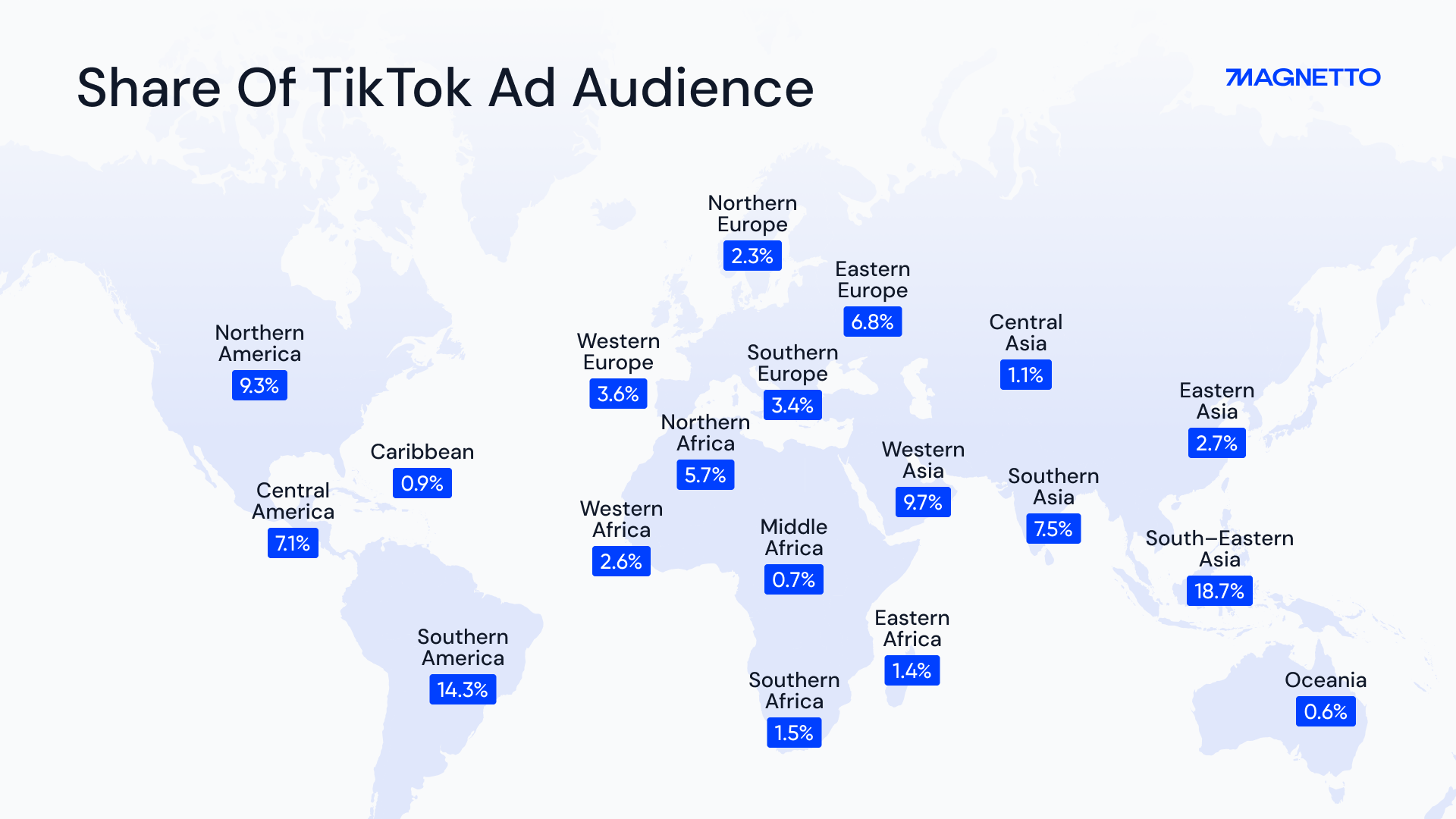
TikTok’s nearly 2 billion users are spread across the globe, but the platform is particularly popular in South-Eastern Asia, which accounts for 18.7% of its global user base. Strong user bases can also be found in Southern America (14.3%), Western Asia (9.7%), and Northern America (9.3%).
Source of data: Datareportal
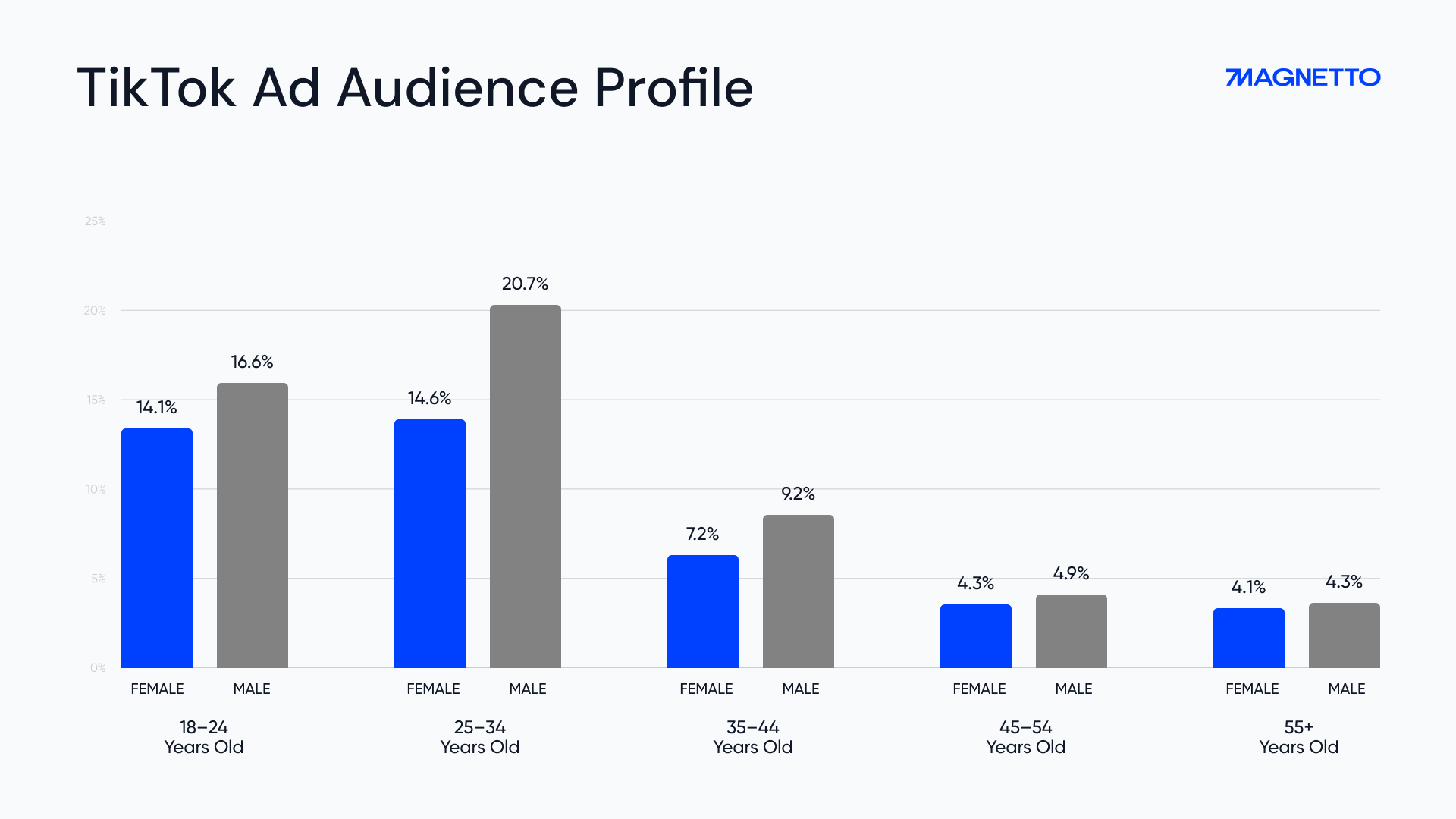
The app’s demographic profile in 2026 is still younger than Facebook’s, but it is no longer limited to teens and college students. Men aged 25–34 account for 20.7% of TikTok’s user base, while women aged 25-34 account for 14.6%. The next biggest segments are men aged 18-24 at 16.6% and women aged 18-24 at 14.1%. That means the platform’s reachable ad audience is heavily concentrated in the 18-34 bracket, with a particularly strong base among younger millennials.
 Source of data: Datareportal
Facebook
Despite growing competition from newer platforms, Facebook remains the biggest social network in the world, with more than 3 billion users. The platform’s strongest presence is in Asia, particularly in Southern Asia and South-Eastern Asia, which together make up over 40% of its global advertising audience.
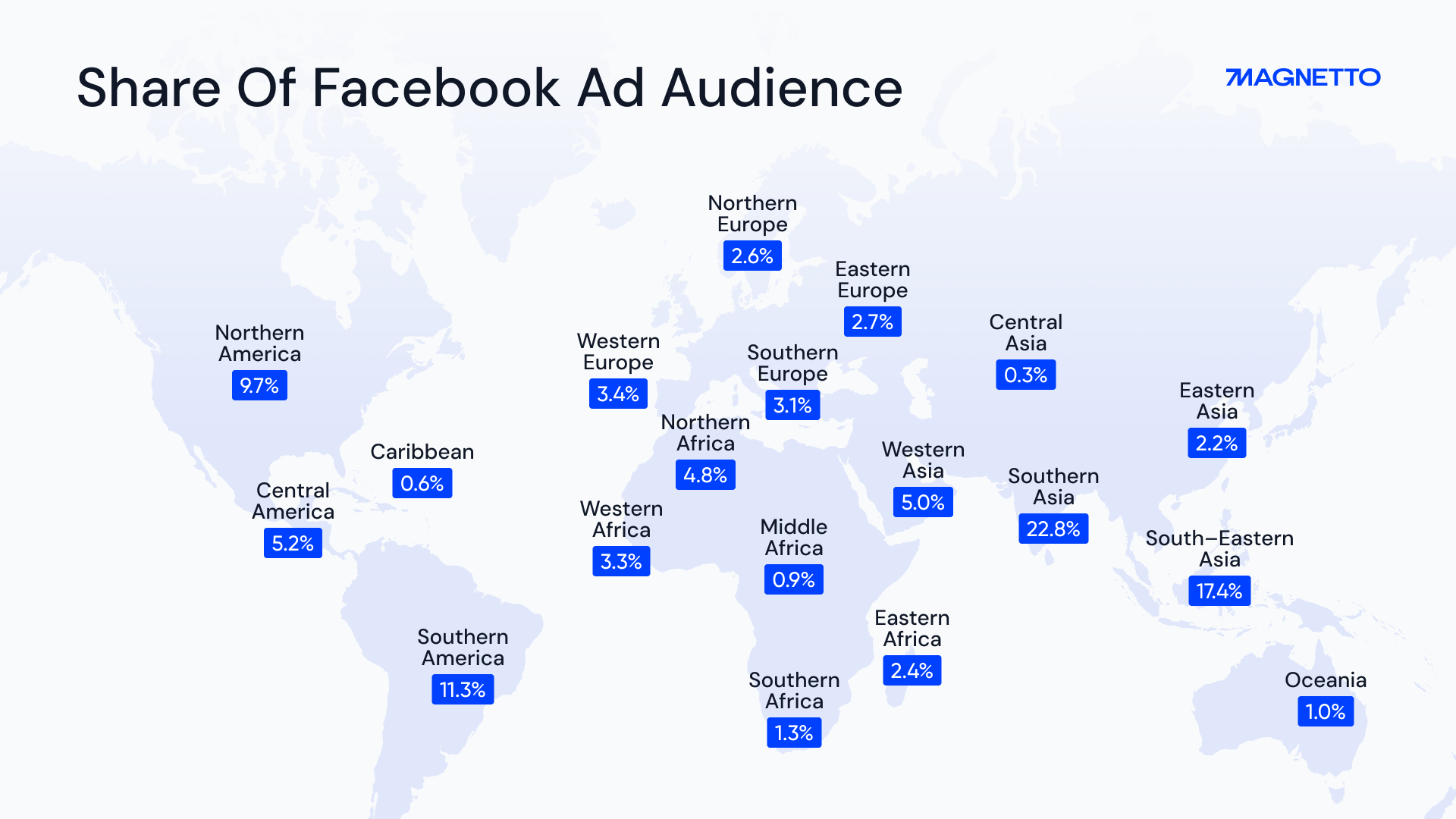 Source of data: Datareportal
Facebook’s user base skews slightly older than TikTok’s. Men aged 25–34 represent the largest share (18.5%), followed by women in the same age group (12.7%). Compared with TikTok, Facebook maintains stronger reach among people aged 35-44, 45-54, and 55+, which makes it a better fit for advertisers selling to homeowners, parents, professionals, and higher-income households rather than only younger impulse buyers.
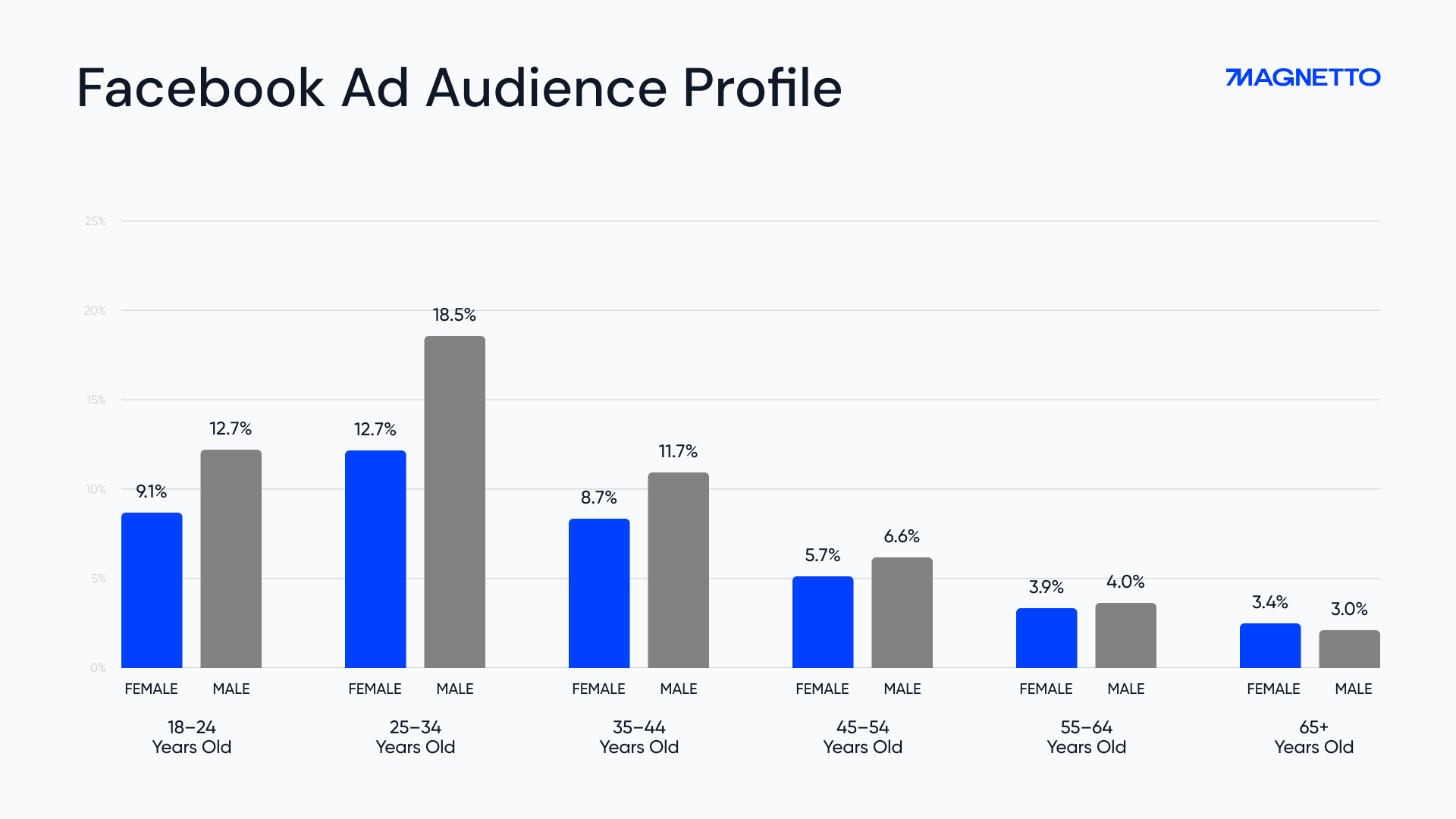 Source of data: Datareportal
Key Metrics Comparison
Here’s a side-by-side comparison of the two platforms:
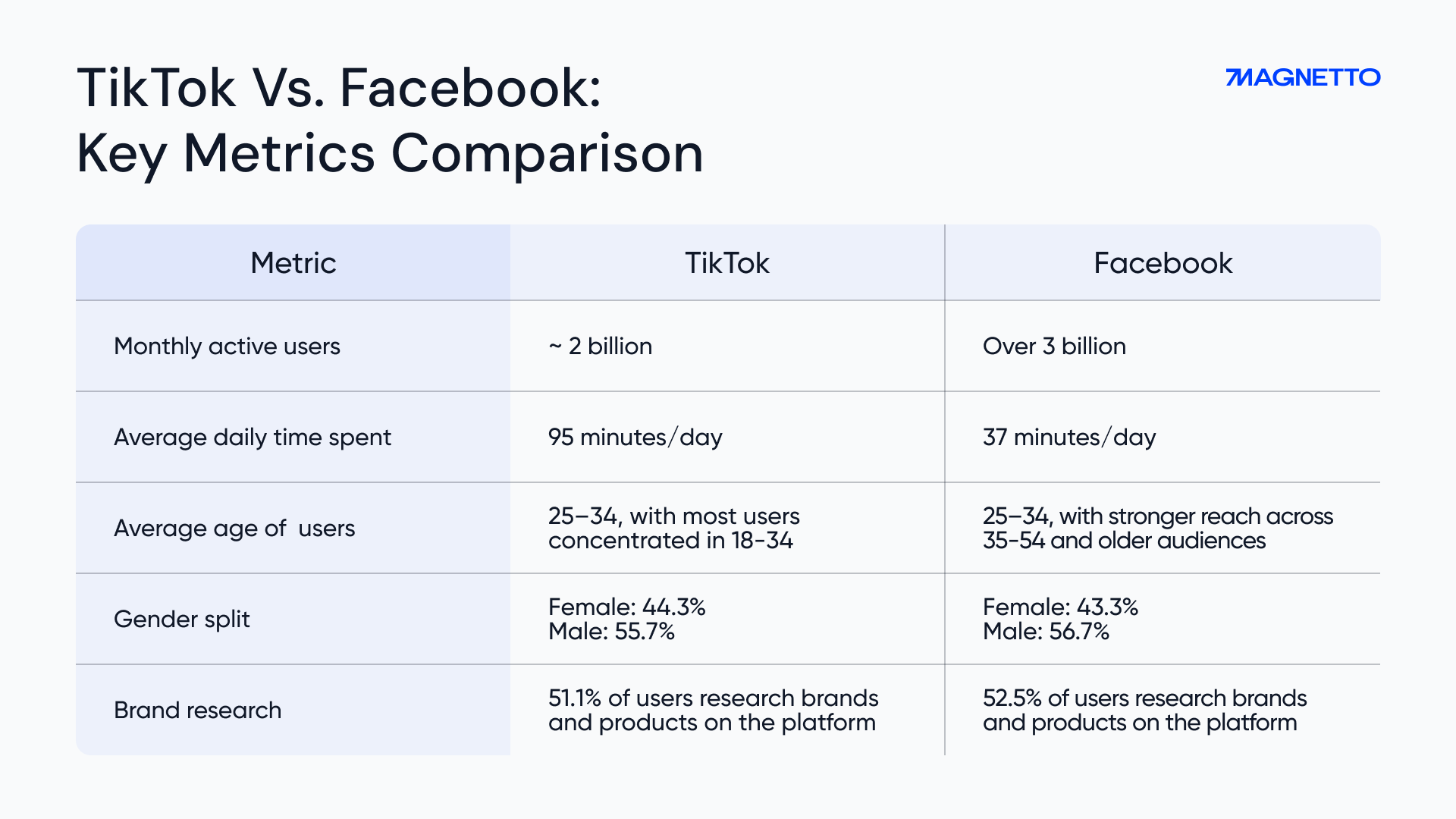 TikTok is particularly effective at capturing attention and reaching younger consumers, especially those aged 18–34. Its fast-paced, visual format makes it ideal for product discovery, impulse purchases, and campaigns that rely on strong creative content to stop the scroll. Facebook, on the other hand, attracts a broader and, on average, slightly older user base. This makes it a strong choice for brands reaching established consumers, promoting higher-consideration purchases, or building relationships over a longer customer journey.
How Each Platform Works
TikTok Ads
TikTok Ads appear inside a feed built around recommendation. Users open the app to watch short videos selected by the For You algorithm, which serves content based on viewing behavior, interests, and engagement patterns.
That is why TikTok advertising works best when it looks and feels native to the feed. In-feed video ads, Spark Ads, creator-led campaigns, live shopping clips, and product demos all perform best when they resemble organic content rather than traditional ads. On this platform, creative is often the deciding factor between a video that gets ignored and one that earns attention, engagement, and clicks.
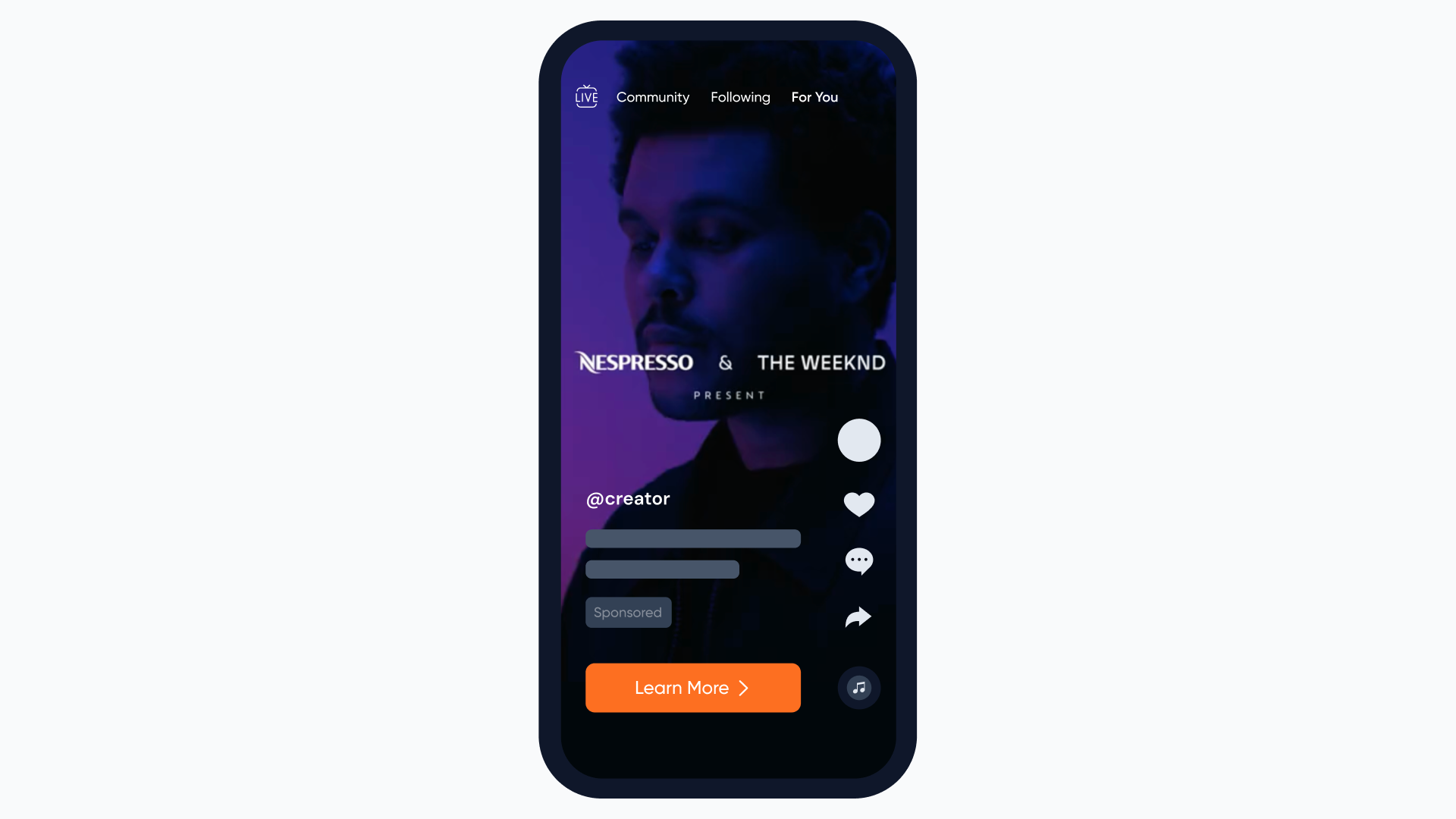
TikTok Ads
The platform has become especially powerful for discovery commerce. In 2025, TikTok Shop sales in the U.S. had grown by 120% year over year. What’s more, 83% of TikTok Shop shoppers had discovered a new product on the platform while 70% had discovered a new brand there. Those numbers help explain why TikTok is so effective for categories like beauty, fashion, supplements, home gadgets, and other products that can be sold visually. A single video can introduce the product, show how it works, add social proof through a creator, and trigger a purchase in the same session. That’s also why creative testing plays such a big role on TikTok: the brands that keep adapting their videos to what works on the platform usually see stronger conversion results over time.
Facebook Ads
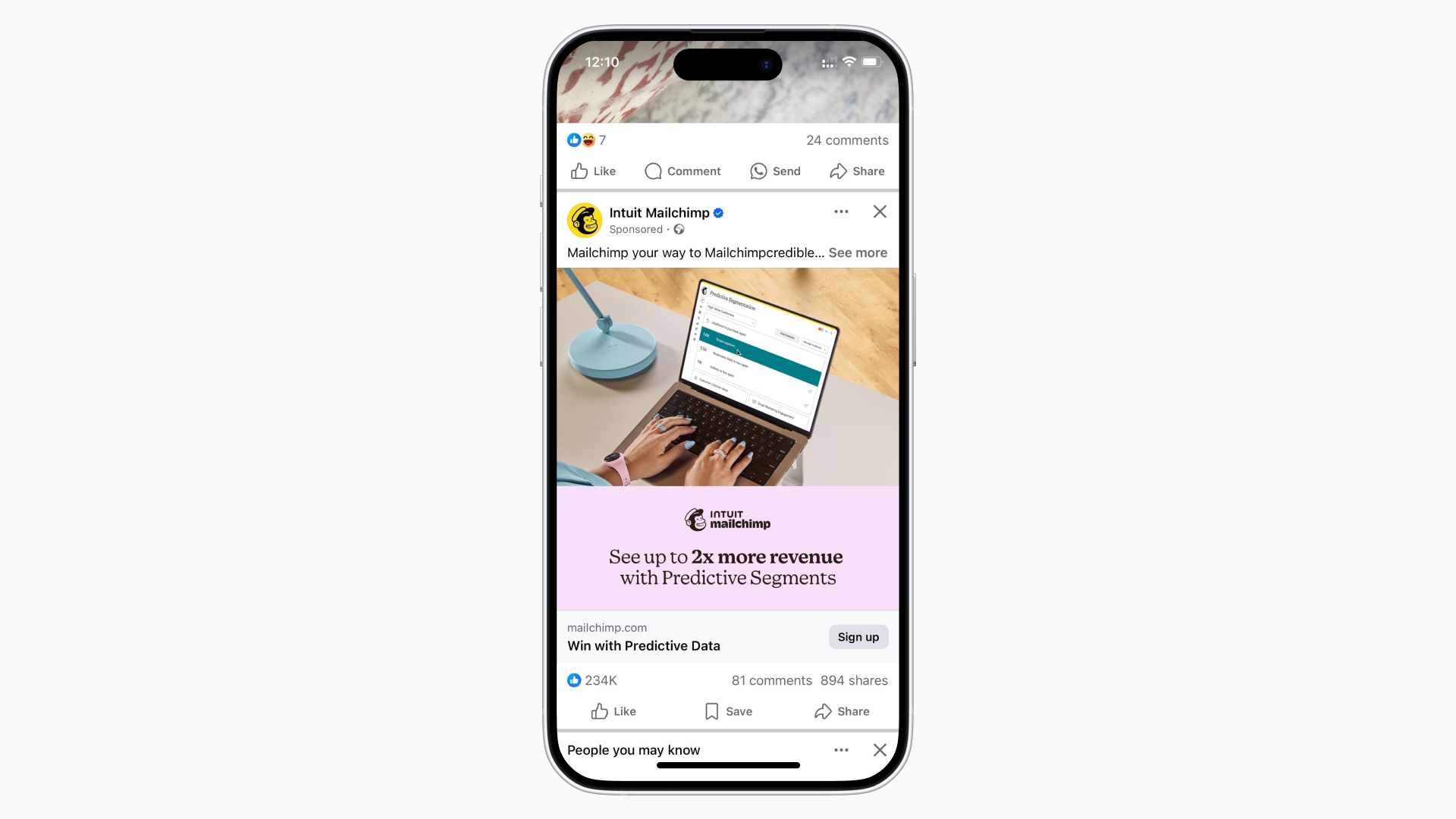
Facebook Ads operate in a much broader environment. Through Meta Ads Manager, advertisers can run campaigns across Facebook, Instagram, Messenger, and Audience Network, using formats such as image ads, carousels, reels ads, video ads, collection ads, lead forms, and catalog campaigns.
 Facebook Ads
Facebook users are already used to discovering and buying products within Meta’s platforms. More than 1 billion people across 70 countries use Facebook Marketplace, and around 40% of Facebook’s users shop on Marketplace regularly. Brands can advertise within this environment, putting their products in front of users as they browse listings and compare options.
One of the biggest strengths of Meta is its ability to turn initial interest into conversions. If someone visits your website, engages with a lead form, views a product on Instagram, or adds an item to their cart without completing a purchase, you can reach them again with tailored ads across Facebook and Instagram. This makes Meta particularly effective for businesses with longer sales cycles or existing customer data, which helps brands stay visible throughout the buying journey rather than relying on a single interaction.
TikTok vs. Facebook: Which Industries Benefit Most
TikTok tends to perform best in industries where visual storytelling plays a key role in driving purchases:
- Beauty and skincare
- Fashion and accessories
- Wellness products and supplements
- Home gadgets and impulse-buy ecommerce products
- Food and beverage brands with strong creator-led content
- Mobile-first DTC brands focused on younger consumers
Facebook is usually the stronger fit for industries where the buyer needs more information, more reassurance, or more than one touchpoint before taking action. That includes:
- Local services
- Home improvement businesses
- Real estate lead generation
- Healthcare providers and clinics
- Financial services and insurance
- B2B lead generation
- Ecommerce brands with longer or more complex buying journeys
This comparison highlights a key difference between the two platforms. TikTok is particularly effective for visually appealing products that benefit from discovery and impulse purchases, while Facebook typically performs better for businesses that rely on trust, lead generation, or a longer decision-making process. However, the best choice depends not only on the industry itself, but also on the target market, offer, customer journey, and campaign objectives.
Which Platform Converts Better
One of the key factors in choosing the right platform is the primary objective of the advertising campaign. Let’s take a closer look at how each platform performs depending on the objective and what average costs you can expect.
Brand Awareness Campaigns
For brand awareness, TikTok has a strong case in 2026. The platform is designed for fast, scrollable video content, which gives advertisers a strong opportunity to capture attention and reach large numbers of new users in a short time. A strong creative can generate views, engagement, and brand recall even when users have never interacted with the brand before. It also tends to do that more efficiently than Facebook. Recent 2026 benchmark data puts TikTok CPM at close to $10, while Facebook Ads CPM is over $16 on average. That difference matters when the goal is broad reach, video views, or first-touch exposure, because a lower CPM allows brands to buy more impressions for the same budget.
Lead Generation Campaigns
If the goal is lead generation, Facebook still has the edge for many businesses. Meta Lead Ads make it easy to collect contact details without sending people to a separate landing page, and the platform is much better at retargeting people who clicked, visited, or opened a form without converting.
TikTok can still work for leads, especially for webinar signups, free trials, quizzes, or other low-friction offers. Its clicks are usually cheaper, with average CPCs around $0.50–$1.50. But TikTok traffic is often colder, so converting that click into a qualified lead usually takes stronger creative and a simpler offer.
So if you need a steady flow of leads for real estate, clinics, education, legal services, or home services, Facebook is usually the safer bet. TikTok can help at the top of the funnel, but Meta is still better at turning interest into an actual lead.
E-commerce and Online Sales
For e-commerce, the answer depends on what you sell, who you sell it to, and how your funnel is built.
TikTok can outperform Facebook for products with strong visual appeal, clear demonstrations, and impulse-buy potential. It works especially well when the brand has a content engine producing fresh UGC-style videos, reviews, and problem-solution hooks. In those cases, TikTok can drive a large volume of new-customer traffic and first purchases at a relatively low average cost.
Facebook usually performs better when the e-commerce brand relies on retargeting, dynamic product ads, repeat purchase flows, and broader demographic coverage. Meta’s catalog tools and remarketing depth still make it one of the best places to recover abandoned carts and push warm users toward purchase.
Local Business Advertising
For local business advertising, Meta remains the safer choice in most cases.
A local service business often needs lead forms, booking requests, call actions, geographic targeting, and repeated exposure to nearby users. Facebook is built for that. Local gyms, dentists, clinics, med spas, restaurants, salons, contractors, and real estate agents can all use Meta’s location targeting, lead-gen tools, and retargeting options in a way that fits a local sales process.
TikTok can still help local businesses if the content is strong enough to create local visibility, especially in hospitality, beauty, fitness, and food. But for predictable local lead generation, Facebook is still ahead.
TikTok can still help local businesses if the content is strong enough to create local visibility, especially in hospitality, beauty, fitness, and food. But for predictable local lead generation, Facebook is still ahead because it gives advertisers more control over geography, follow-up, and repeat exposure.
Final Verdict
This comparison makes one thing clear: TikTok and Facebook serve different roles in the advertising funnel, and the right choice depends on what you need the campaign to achieve.
Use TikTok when your goal is:
- Reaching cold audiences at a lower average CPM
- Creating demand for visually demonstrable products
- Launching offers to Gen Z and younger millennial buyers
- Feeding the top of the funnel with first-touch traffic
Use Facebook when your goal is:
- Generating leads for services or higher-consideration offers
- Increasing repeat purchases and customer lifetime value
- Reaching buyers aged 30+ and broader household audiences
- Running conversion campaigns with stronger remarketing and follow-up tools
TikTok and Facebook can both drive growth, but only when supported by the right strategy. Magnetto helps brands plan, launch, and optimize paid social campaigns that generate quality leads, drive sales, and make ad spend more efficient. Contact our team to discuss how we can boost your paid social performance.
.png?width=4758&height=806&name=Frame%202131330738%20(1).png)